

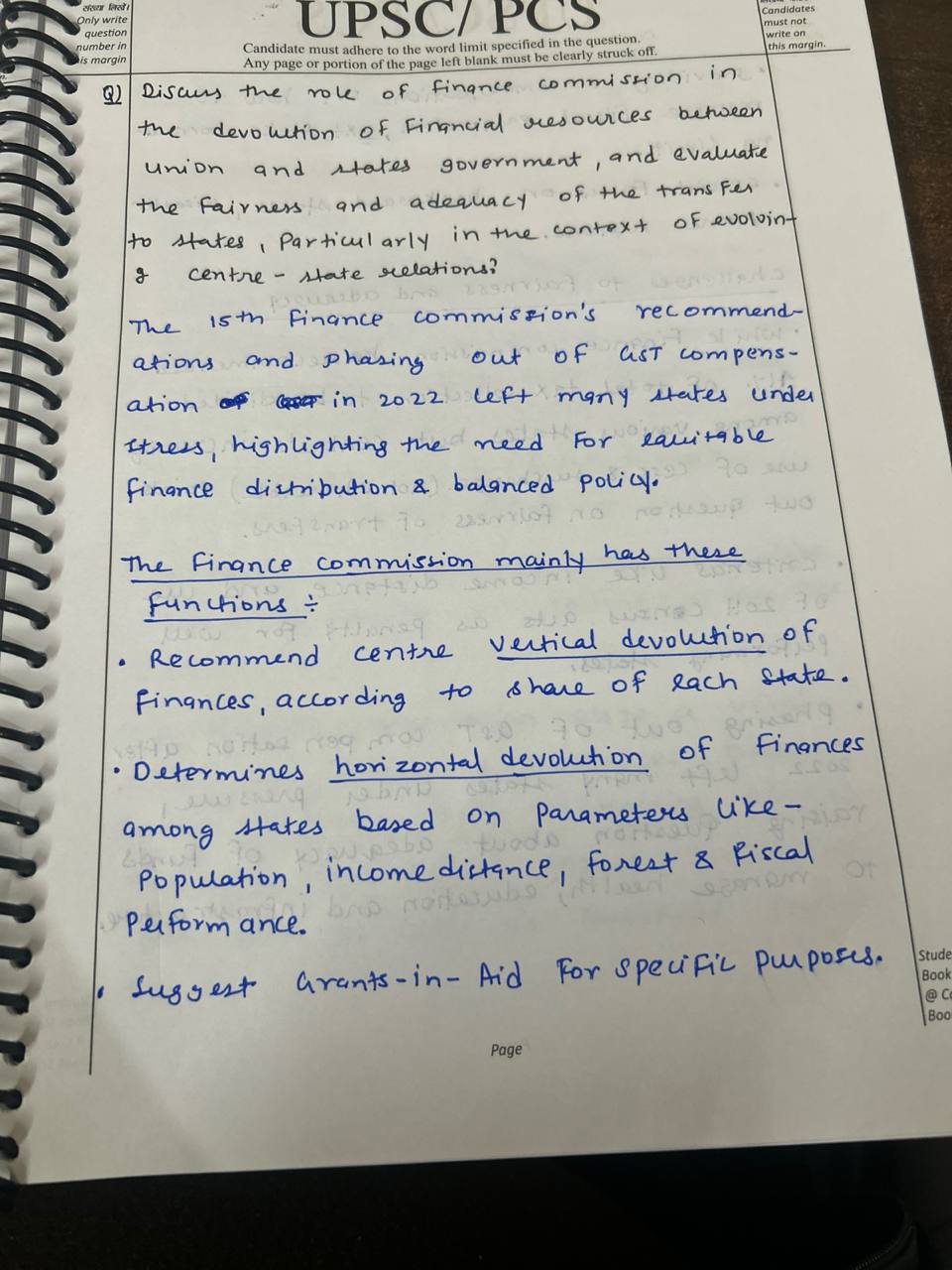
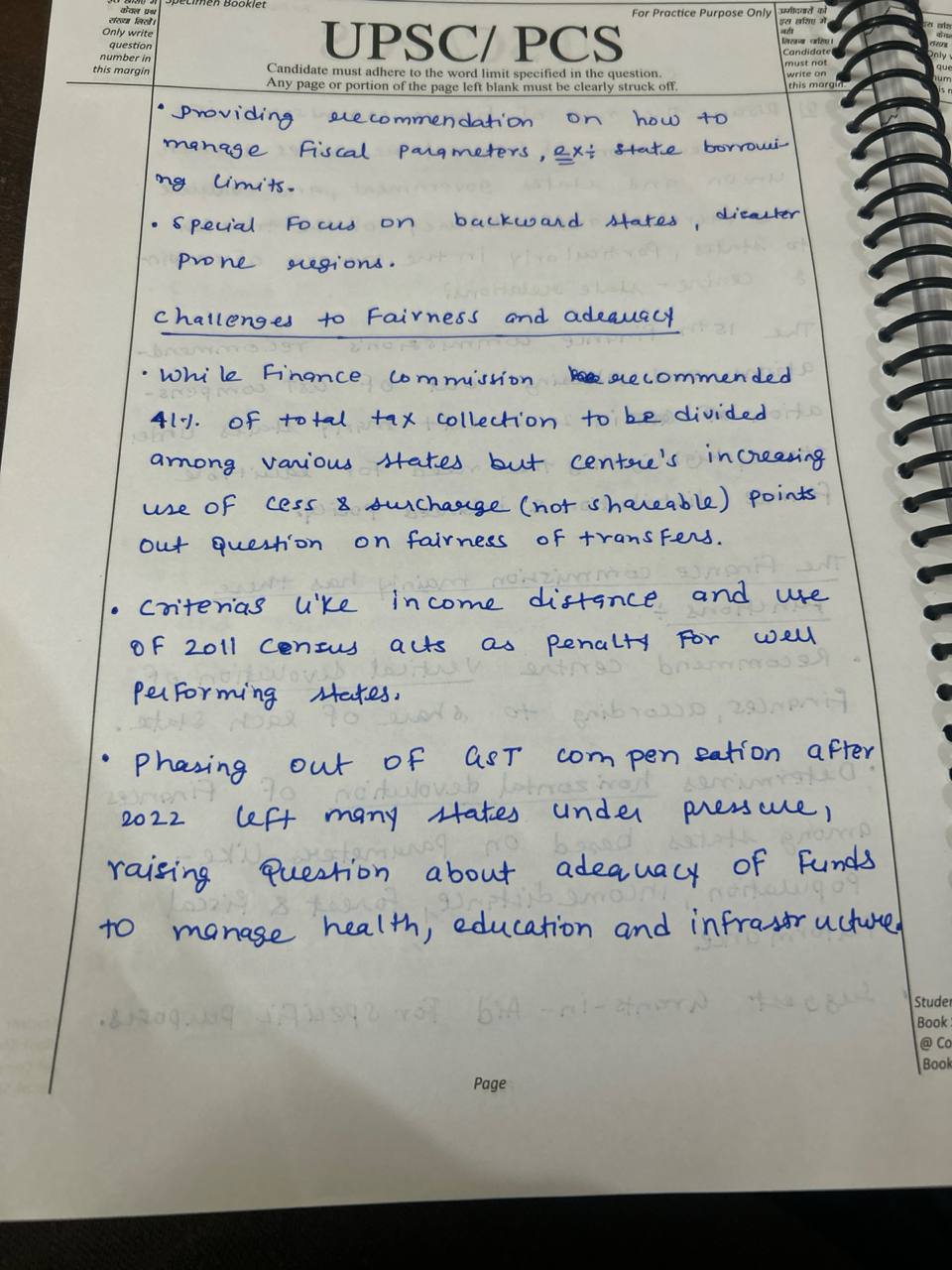
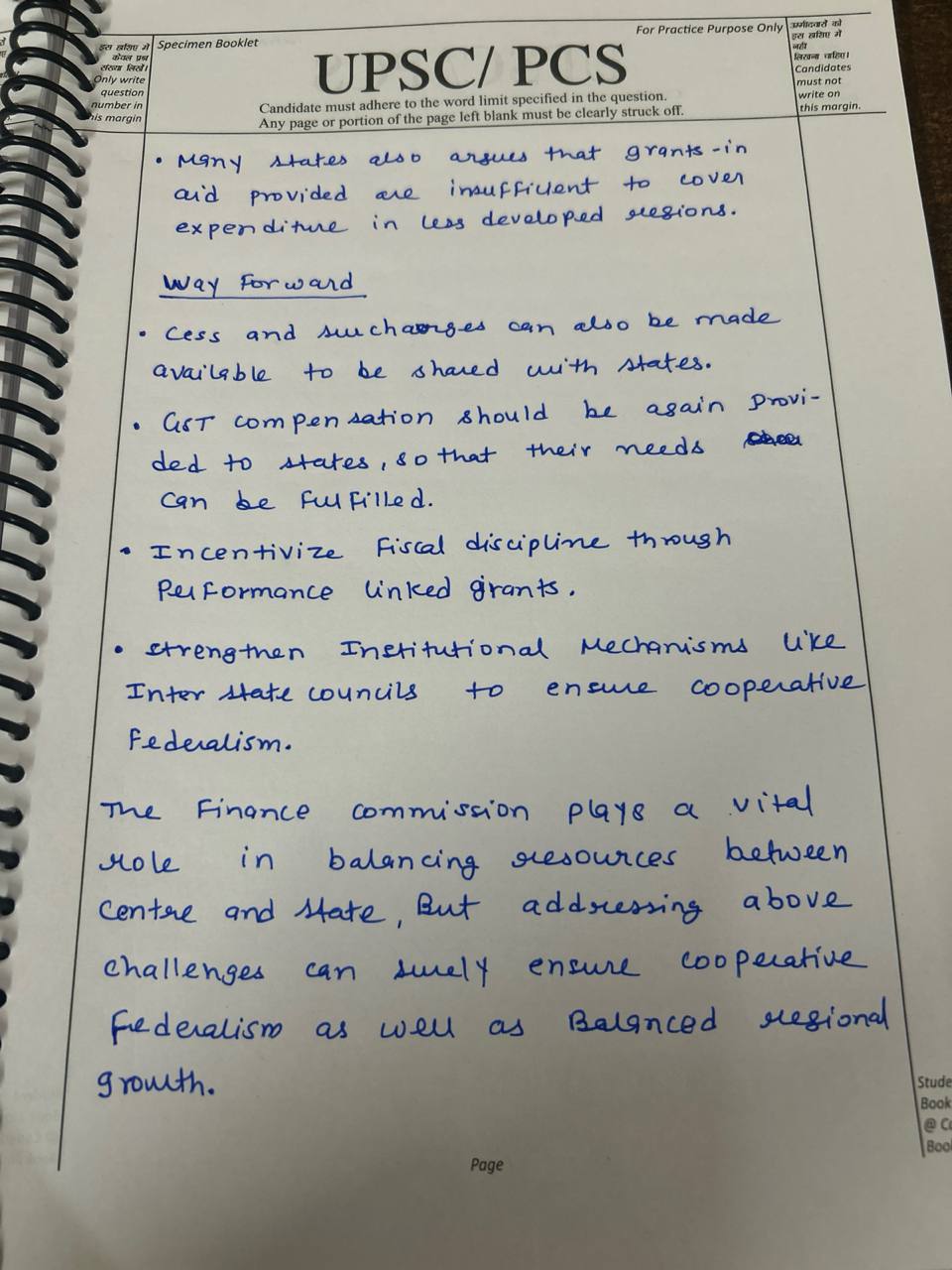
Examine the fairness and sufficiency of the transfers to the states, especially in light of the changing center-state fiscal relations, and discuss the role played by the Finance Commission in the devolution of financial resources between the Union and state ...


Model Answer Role of Outcome Budgeting in Efficient Allocation of Resources in India Outcome Budgeting (OB) is a strategic framework employed by the Indian government to link budgetary allocations to specific outputs and outcomes. It serves as a tool for improving the efficiency of resource allocatiRead more
Model Answer
Role of Outcome Budgeting in Efficient Allocation of Resources in India
Outcome Budgeting (OB) is a strategic framework employed by the Indian government to link budgetary allocations to specific outputs and outcomes. It serves as a tool for improving the efficiency of resource allocation, ensuring that funds are used to achieve measurable goals. Here’s how Outcome Budgeting plays a pivotal role:
Better Conceptualization of Budgeting
Unlike traditional budgeting, which primarily focuses on financial outlays, Outcome Budgeting emphasizes the desired outcomes from the expenditure. This method requires ministries and departments to plan their budget with a clear focus on achieving specific, measurable results. For instance, by setting clear targets for development schemes, the government ensures that each rupee spent contributes to the expected socio-economic objectives, such as poverty alleviation or infrastructure development.
Defined Outputs and Outcomes
Outcome Budgeting requires clear identification of outputs (the goods or services produced) and outcomes (the impact or benefit derived from these goods or services). This transparency helps ministries plan better and allocate resources more effectively to areas with higher potential for impact. For example, the Pradhan Mantri Fasal Bima Yojana has defined targets like timely claim settlements, which ensures that resources are directed to programs that deliver measurable results.
Cost Reduction and Improved Efficiency
One of the most important aspects of Outcome Budgeting is its ability to identify inefficient expenditure. Schemes that fail to meet their objectives can be reassessed or discontinued, redirecting funds to more effective programs. This helps reduce waste and ensures that taxpayers’ money is spent where it can have the greatest impact.
Supporting Socio-Economic Goals
Outcome Budgeting supports the government’s socio-economic objectives by promoting transparency, accountability, and citizen participation. For example, programs like PM KISAN aim to provide income support to farmers, directly contributing to financial inclusion and rural development. This system also allows for regular evaluations, ensuring that schemes are continuously improved to meet their intended outcomes.
In conclusion, Outcome Budgeting is integral to ensuring that public resources in India are allocated efficiently, with a focus on achieving tangible, positive socio-economic outcomes. By enhancing transparency, targeting priority areas, and fostering accountability, it supports the overarching goal of effective governance.
See less


See less