
Mains Answer Writing Latest Questions


The three main constituent groups involved in organizing the Games are the International Olympic Committee (IOC), the National Olympic Committees (NOCs), and the International Sports Federations (IFs), not the government of the host country. While the government of the host country ...

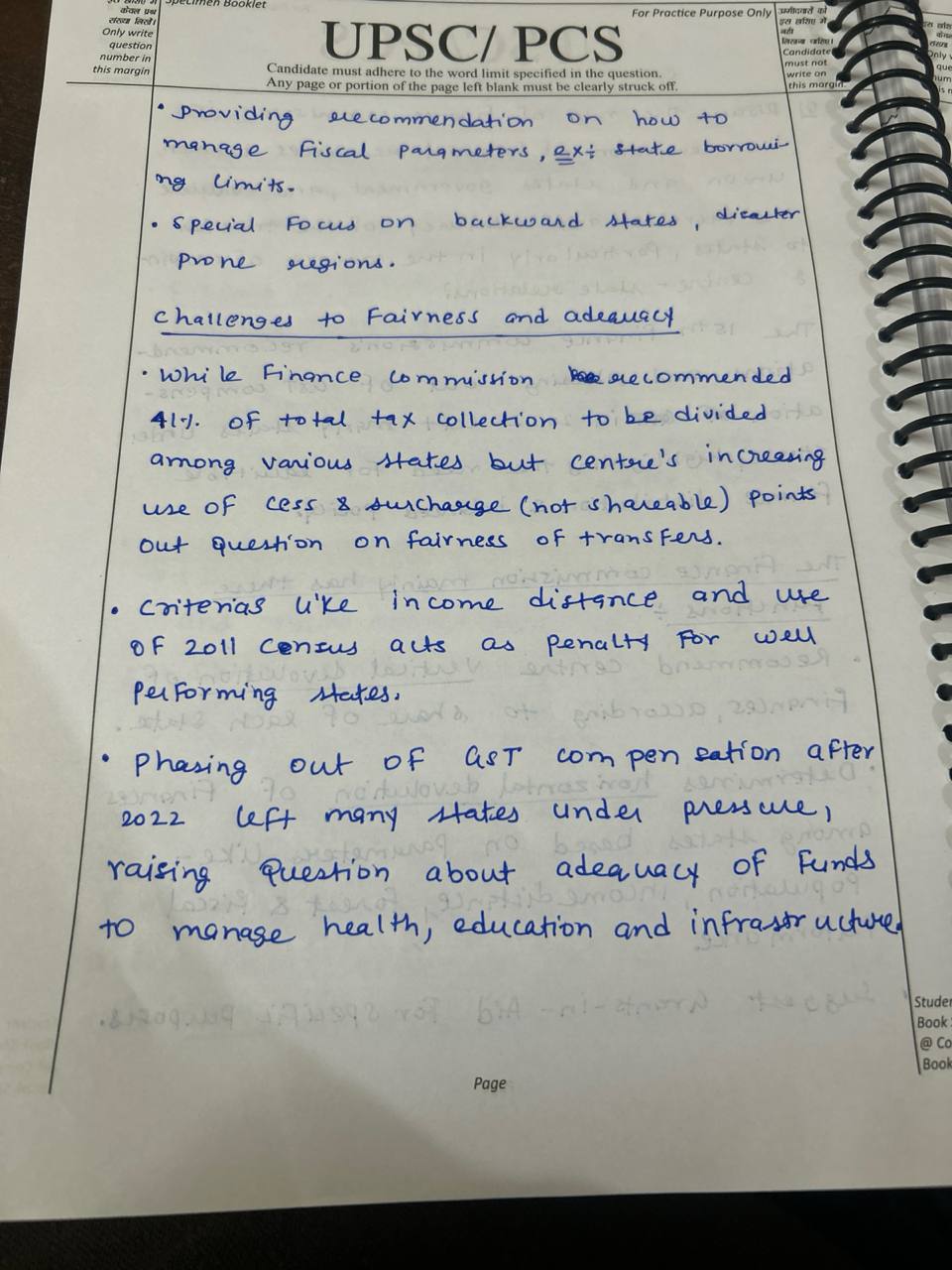
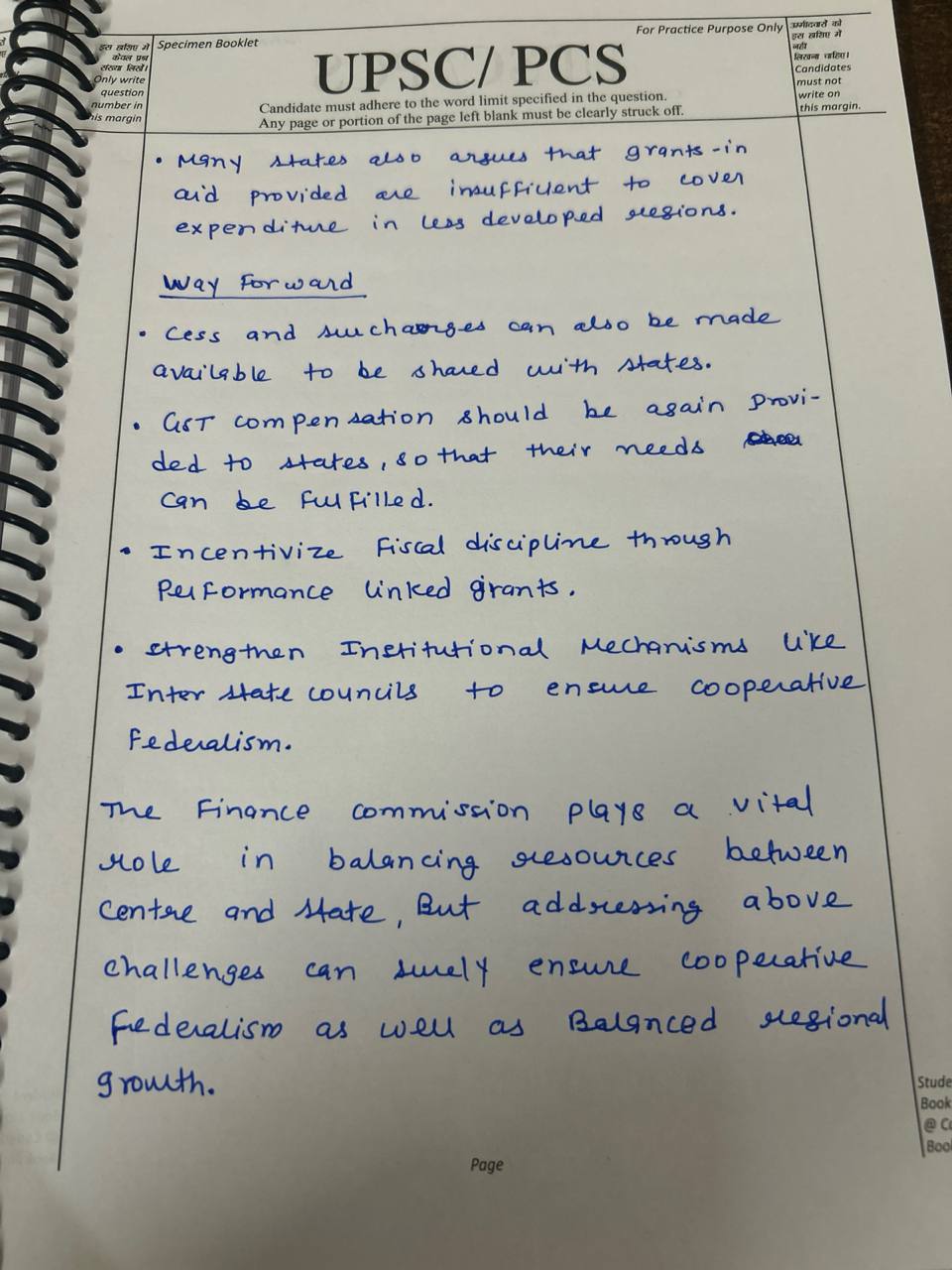
Examine the fairness and sufficiency of the transfers to the states, especially in light of the changing center-state fiscal relations, and discuss the role played by the Finance Commission in the devolution of financial resources between the Union and state ...



-
Bitcoin's price volatility stems from a complex interplay of factors that collectively shape its market dynamics. At its core, Bitcoin's value is significantly influenced by market demand and speculative trading activities. Fluctuations can be drastic as investors react to perceived opportunities orRead more
Bitcoin’s price volatility stems from a complex interplay of factors that collectively shape its market dynamics. At its core, Bitcoin’s value is significantly influenced by market demand and speculative trading activities. Fluctuations can be drastic as investors react to perceived opportunities or risks, driving rapid price changes. Moreover, regulatory developments play a pivotal role; positive news such as regulatory acceptance or institutional adoption often boosts prices, while regulatory crackdowns or negative scrutiny can lead to sell-offs.
Market liquidity is another critical determinant, with Bitcoin’s relatively smaller market size compared to traditional assets amplifying price movements in response to large trades. Investor sentiment, influenced by media coverage and social media trends, further fuels volatility, as sentiment shifts can trigger mass buying or selling. Technological factors, such as network upgrades or security vulnerabilities, also impact prices by affecting investor confidence.
Additionally, macro-economic events like global economic instability or inflation concerns can position Bitcoin as a hedge or safe-haven asset, influencing demand. Finally, the decentralized nature of Bitcoin markets can make them susceptible to manipulation, contributing to sudden and dramatic price fluctuations.
See less


What could be the key highlights in the 2024 budget to be presented by Mrs. Nirmala Sitaraman?
-
The 2024 budget presented by Finance Minister Nirmala Sitharaman is likely to focus on several key areas aimed at fostering economic growth and stability in India. Key highlights might include: Infrastructure Development: Significant investments in infrastructure projects to boost economic activityRead more
The 2024 budget presented by Finance Minister Nirmala Sitharaman is likely to focus on several key areas aimed at fostering economic growth and stability in India. Key highlights might include:
- Infrastructure Development: Significant investments in infrastructure projects to boost economic activity and job creation. This could include new highways, railways, and urban infrastructure projects.
- Digital Economy and Technology: Increased funding for digital initiatives and technology development, promoting innovation, and expanding the digital infrastructure to enhance connectivity.
- Healthcare and Education: Enhanced budget allocations for healthcare and education to improve public health systems and educational outcomes, reflecting lessons learned from the COVID-19 pandemic.
- Agriculture and Rural Development: Initiatives to support farmers, such as subsidies, loan waivers, and investment in rural infrastructure, to ensure sustainable agricultural growth and rural development.
- Tax Reforms: Possible changes in tax structures, including relief for the middle class, rationalization of GST rates, and measures to improve tax compliance and administration.
- Environmental Sustainability: Investments in green energy and sustainability projects to address climate change and promote renewable energy sources.
- MSME Support: Enhanced support for Micro, Small, and Medium Enterprises (MSMEs) through credit facilities, subsidies, and policy support to stimulate growth and employment in this sector.
- Foreign Investment: Policies to attract foreign investment by simplifying regulations and offering incentives.
These measures aim to balance economic growth with social welfare and environmental sustainability, ensuring inclusive development.
See less


Does the Sky touching taxes paid by Indian taxpayers truly justifies the returns given to citizens by the government?
-
Implementation of High Taxation ‘Policies’ in India: Do They Yield Enough Return to the Public?In other words, does the humongous sum paid as taxes by the Indian citizens ever commensurate with the services and other infrastructural returns? With people contributing nearly 20 per cent of the indirecRead more
Implementation of High Taxation ‘Policies’ in India: Do They Yield Enough Return to the Public?
In other words, does the humongous sum paid as taxes by the Indian citizens ever commensurate with the services and other infrastructural returns? With people contributing nearly 20 per cent of the indirect and direct taxes, the expectation from the citizens’ perspective, is effective management, quality services, and facilities.
Tax Utilization Challenge
See less
1. Inadequate Public Services: Health, education, and law enforcement services are poorly developed and managed, forcing people to rely on the private sector.
2. Wastage and inefficiencies: Corruption and administrative ineffectiveness rendered all these spending useless.
3. Tax Compliance: Direct tax collection has been low, with as few as 1% of Indians being tax compliant; hence the compliant taxpayers bear a higher burden and offer complacency to the non-compliant ones.
Progress and Positives
1. Infrastructural growth: Investment in construction of highways, metro rail, and digital infrastructure; a positive indication for the utilization in application of some of these resources.
2. Welfare schemes: Disadvantaged sections are reached out by this programs but their implementation is not even,
With the exception of a few sectors which have some developments, the return is not commensurate with the exorbitant taxes collected. Better efficiency, broader tax base and accountability in all public spending will eliminate this difference.


What does the term “public debt” mean to you? Why is a high level of national debt seen as concerning? Talk about it in relation to India. (Answer in 200 words)
-
Public debt, also known as government debt or national debt, refers to the total amount of money owed by a country's government to its citizens, businesses, and foreign investors. It is a cumulative result of budget deficits, borrowing for various purposes, and interest payments. High public debt isRead more
Public debt, also known as government debt or national debt, refers to the total amount of money owed by a country’s government to its citizens, businesses, and foreign investors. It is a cumulative result of budget deficits, borrowing for various purposes, and interest payments.
High public debt is a matter of concern for several reasons:
1. Burden on future generations: High debt may lead to increased taxation and reduced government spending on essential services, affecting future generations.
2. Inflation: Excessive borrowing can lead to inflation, reducing the purchasing power of citizens.
3. Reduced credit rating: High debt may lower a country’s credit rating, increasing borrowing costs and reducing investor confidence.
4. Reduced fiscal space: High debt limits a government’s ability to respond to economic downturns or fund development projects.
In the context of India, high public debt is a concern due to:
– Rising debt to GDP ratio (currently over 90%)
– Large fiscal deficits
– Increasing reliance on market borrowing
– Pressure on interest payments (around 50% of tax revenue)
– Limited fiscal space for development spending
To address these concerns, India needs to focus on fiscal consolidation, improve tax compliance, and enhance economic growth through structural reforms.
See less


-
According to the Union Budget for 2024-25, India continues to lay the emphasis on infrastructure – transport and urban, releasing ₹11.11 lakh crore for capital spending or 3.4% of the GDP. Major Infrastructure Projects: - Transportation: - Pradhan Mantri Gram Sadak Yojana (PMGSY) Phase IV: DesignedRead more
According to the Union Budget for 2024-25, India continues to lay the emphasis on infrastructure – transport and urban, releasing ₹11.11 lakh crore for capital spending or 3.4% of the GDP.
Major Infrastructure Projects:
– Transportation:
– Pradhan Mantri Gram Sadak Yojana (PMGSY) Phase IV: Designed to establish an all-weather transport link to a current 25,000 eligible rural habitation arising from the population factors.– Urban Development:
– Transit-Oriented Development Plans: Preparing specific strategies in 14 large metropolitan areas with populations more than 3 million with regards to land use and transport to handle the problem of the sustainable development of urban areas.
– Urban Housing: An outlay of ₹2.2 lakh crore for improving urban infrastructure including housing over the next five and more financial help in the form of interest subsidies to support affordable housing loans.
-Water Supply and Sanitation: Partnership with state governments and multilateral development banks, in water supply, sewage treatment and solid waste management projects in 100 large cities via bankable projects.Funding Mechanisms:
– Long-Term Interest-Free Loans to States: Allocationing ₹ 1.5 lakh crore for promoting the state-level investments in infrastructures encouraging the cooperative federalism in developmental sector.
– Private Sector Participation: To facilitate private investment in the infrastructure sector by encouraging measures such as viability gap funding, enabling policies & regulations for market based financing of infrastructure projects.
– Fiscal Support: The large capital outlay is backed by a receipt from the Reserve Bank of India to ensure the government sustains robust fiscal support for infrastructure in the period up to the Financial Year 2019- 20.
The aforementioned efforts depict a global framework on infrastructure advancement; with the principal goal of boosting economic development, transport connections and standards of living of inhabitants in India’s urban structures.
See less
Examine how the government is using cutting-edge financing tools like crowdfunding, social impact bonds, and green bonds to raise more money for social welfare and development projects. Also, consider how these tools might be used to supplement more conventional budgetary ...
-
Government Strategies to Leverage Innovative Financing Mechanisms Innovative financing mechanisms, such as green bonds, social impact bonds, and crowdfunding, have emerged as pivotal tools for mobilizing additional resources for development projects and social welfare programs. These mechanisms offeRead more
Government Strategies to Leverage Innovative Financing Mechanisms
Innovative financing mechanisms, such as green bonds, social impact bonds, and crowdfunding, have emerged as pivotal tools for mobilizing additional resources for development projects and social welfare programs. These mechanisms offer potential to complement traditional budgetary resources and enhance the effectiveness of development initiatives.
1. Green Bonds
Definition and Purpose: Green bonds are debt instruments issued to raise funds specifically for projects with environmental benefits. The proceeds are used for projects that address climate change, reduce carbon emissions, or improve environmental sustainability.
Recent Examples:
- India’s Green Bonds Market: In 2023, India witnessed significant growth in its green bonds market, with the issuance of green bonds by organizations like the National Bank for Agriculture and Rural Development (NABARD). These bonds fund renewable energy projects and sustainable infrastructure development.
- International Example: The European Union issued green bonds as part of its Green Deal, aiming to finance projects related to renewable energy, sustainable agriculture, and pollution reduction.
Impact and Potential: Green bonds attract investment from both domestic and international markets, providing a substantial pool of funds for environmental projects. They complement traditional funding by tapping into a niche market of investors interested in sustainable development, thus bolstering the budgetary resources allocated to environmental sustainability.
2. Social Impact Bonds (SIBs)
Definition and Purpose: Social impact bonds are a type of contract where private investors provide upfront capital for social programs and are repaid by the government only if the programs achieve predefined social outcomes. They are designed to improve social outcomes while shifting the financial risk away from public funds.
Recent Examples:
- India’s Early Childhood Development Program: In 2023, India launched its first Social Impact Bond to fund early childhood development programs. The bond involves private investors who will be repaid based on the improvement in child health and education indicators.
- International Example: The UK has implemented SIBs for programs addressing recidivism rates among ex-offenders, where private investors fund rehabilitation programs and receive returns based on successful outcomes.
Impact and Potential: SIBs align financial incentives with social outcomes, encouraging innovation and efficiency in service delivery. They provide a mechanism to address social issues without upfront public expenditure, thereby complementing traditional budgetary resources and fostering public-private partnerships.
3. Crowdfunding
Definition and Purpose: Crowdfunding involves raising small amounts of money from a large number of people, typically via online platforms, to fund development projects or social initiatives. It democratizes the funding process and allows direct participation from the public.
Recent Examples:
- India’s Crowdfunding for Education: In 2023, several educational NGOs used crowdfunding platforms to raise funds for rural education projects, including the construction of schools and distribution of learning materials.
- International Example: In the United States, platforms like GoFundMe have been used to fund community-driven projects and social welfare initiatives, such as disaster relief and local health services.
Impact and Potential: Crowdfunding harnesses public engagement and broadens the resource base beyond traditional institutional funding. It allows for community-driven initiatives and can complement traditional resources by providing additional capital and raising awareness about various causes.
Evaluation of Complementary Potential
Advantages:
- Diversification of Funding Sources: Innovative financing mechanisms diversify funding sources, reducing reliance on traditional budgetary allocations and increasing financial resilience.
- Increased Efficiency and Innovation: Mechanisms like SIBs and green bonds encourage efficient and innovative approaches to project implementation, driven by performance-based outcomes.
- Enhanced Public Participation: Crowdfunding enables greater public engagement and support for development projects, fostering a sense of ownership and community involvement.
Challenges:
- Risk and Uncertainty: Innovative financing mechanisms carry risks, including market volatility for green bonds and uncertain returns on SIBs, which can impact the stability of funding.
- Implementation Complexity: The structuring and management of these mechanisms require expertise and can be complex, potentially leading to administrative challenges.
In conclusion, innovative financing mechanisms offer valuable opportunities to complement traditional budgetary resources by providing additional funding, enhancing efficiency, and fostering public engagement. Their successful integration into development strategies can lead to more sustainable and impactful outcomes for social welfare programs and infrastructure projects.
See less

It is the annual budget of the Republic of India set by Ministry of Finance for the following financial year, with the revenues to be gathered by Department of Revenue to identify planned government spending and expected government revenue and the expenditures gathered by Department of ExpendituresRead more
It is the annual budget of the Republic of India set by Ministry of Finance for the following financial year, with the revenues to be gathered by Department of Revenue to identify planned government spending and expected government revenue and the expenditures gathered by Department of Expenditures of the public sector, to forecast economic conditions in compliance with government policy.
For the Current Tax slab (2024) it’s:
Rs 0 – Rs 3,00,000 – 0%,
Rs 3,00,001 and Rs 7,00,000 – 5%,
Rs 7,00,001 and Rs 10,00,000-10%,
Rs 10,00,001 and Rs 12,00,000 – 15%,
Rs 12,00,001 and Rs 15,00,000-20% and
Rs 15,00,001 and above – 30%
See less