

What effects do ocean currents have on the distribution of marine resources around the world?


The mid-ocean ridge stands as Earth's most expansive mountain range along the divergent plate boundaries, spanning almost 65,000 km in length, with over 90 percent of it submerged beneath the deep ocean. Among the globally recognized mid-ocean ridges, the Mid-Atlantic Ridge and the East Pacific RiseRead more
The mid-ocean ridge stands as Earth’s most expansive mountain range along the divergent plate boundaries, spanning almost 65,000 km in length, with over 90 percent of it submerged beneath the deep ocean. Among the globally recognized mid-ocean ridges, the Mid-Atlantic Ridge and the East Pacific Rise are particularly well-researched. This vast mountain range unlocks insights into the age progression of oceanic crust as it distances itself from mid-ocean ridges as discussed below:
Changes in the Age of Oceanic Crust as One Moves Away from the Mid-Oceanic Ridge:
- Younger Near the Mid-Ocean Ridge: Oceanic crust is formed at mid-ocean ridges through volcanic activity, where magma rises and solidifies. As new crust forms at these ridges, it is initially very young, often only a few million years old. This young crust is characterized by high heat flow and is relatively thin.
- Progressively Older Away from the Ridge: As the oceanic crust moves away from the mid-ocean ridge, it ages. This happens because the newly formed crust at the ridge is constantly pushing the older crust away. Therefore, the farther you move from the ridge, the older the oceanic crust becomes.
- Increasing Age, Thickness, and Depth: Older oceanic crust is not only older in terms of its formation but also thicker and found at greater depths. This is because it has had more time to cool and thicken over the course of millions of years. It is also characterized by lower heat flow compared to the younger crust near the ridge.
Revelations about the Sea Floor Spreading:
- Confirmation of Sea Floor Spreading: The increase in crustal age with distance from the midocean ridge provides strong evidence for the concept of sea floor spreading. (Sea floor spreading is the process by which new oceanic crust is formed at midocean ridges and then moves away from the ridge over time). The older crust found farther from the ridge corroborates the idea that new crust is continuously created at the ridge axis.
- Symmetric Patterns: The agedepth relationship on both sides of a mid-ocean ridge is often symmetric. This means that if you measure the age of oceanic crust on one side of the ridge and then cross to the other side, you will find a similar pattern of increasing age as you move away from the ridge. This symmetry supports the notion that the new crust is created at the ridge and spreads outward in opposite directions.
- Quantifying Plate Movement: By studying the age of oceanic crust, scientists can estimate the rate at which tectonic plates are moving apart. Knowing the rate of sea floor spreading helps in understanding the dynamics of plate tectonics and the geological processes that shape Earth’s surface.
- Rejuvenation of the Ocean Basins: Younger oceanic crust near mid-ocean ridges is typically characterized by higher heat flow, active volcanism, and shallower depths, while older crust farther from the ridge is cooler, thicker, and found at greater depths. These differences in crustal characteristics along with age provide insights into the history and evolution of ocean basins, demonstrating how they have expanded over time due to sea floor spreading.
The transition of oceanic crust away from a mid-ocean ridge marks a significant transformation, demonstrating the dynamic forces at play in Earth’s crust and forming a cornerstone in our comprehension of sea floor spreading. While our current understanding has constraints, especially in dating older oceanic crust, future advances in geological research and technology offer promise in delving deeper into this process and broadening our comprehension of Earth’s geological dynamics.
See less


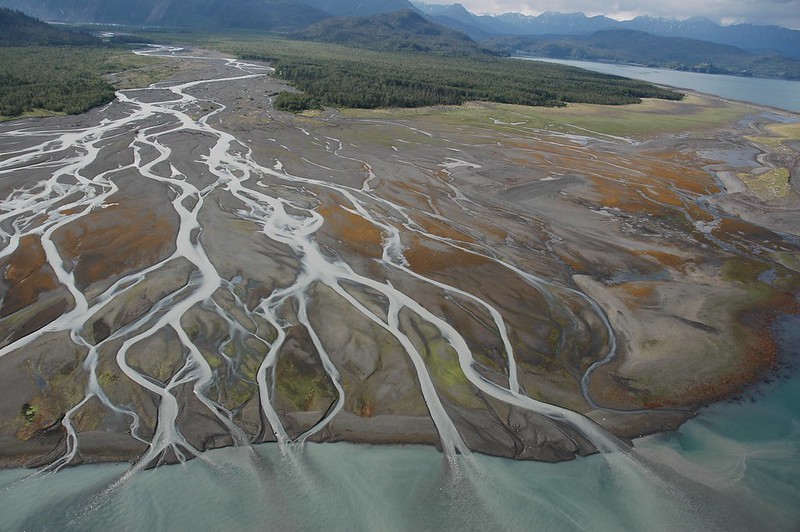


An ocean current is a continuous, directed movement of seawater in the ocean, driven by various forces such as wind, temperature, salinity, and the Earth's rotation. Examples of ocean currents include the Peruvian current, Labrador current, and Falkland current. These currents play a crucial role inRead more
An ocean current is a continuous, directed movement of seawater in the ocean, driven by various forces such as wind, temperature, salinity, and the Earth’s rotation. Examples of ocean currents include the Peruvian current, Labrador current, and Falkland current. These currents play a crucial role in concentrating and dispersing various marine resources—valuable materials and assets derived from the world’s oceans and seas—leading to the differential distribution of marine resources worldwide.
Influence of Ocean Currents on the Worldwide Distribution of Marine Resources:
Ocean currents, driven by various natural forces, shape the distribution of valuable marine assets in several ways. Recognizing their profound influence is essential for preserving and responsibly managing these invaluable marine resources on a global scale, ensuring both ecological balance and sustainable utilization as we explore and harness the riches of our oceans.
See less