

Assess the impact of satellite-based climate monitoring systems in managing and mitigating climate risks. What are the advantages and limitations of relying on these systems for accurate climate data?


A satellite consists of several critical subsystems that work together to ensure its successful operation in space: 1. **Power Subsystem**: Provides the necessary electrical power through solar panels and batteries. 2. **Communication Subsystem**: Enables communication with ground stations using antRead more
A satellite consists of several critical subsystems that work together to ensure its successful operation in space:
1. **Power Subsystem**: Provides the necessary electrical power through solar panels and batteries.
2. **Communication Subsystem**: Enables communication with ground stations using antennas and transponders.
3. **Telemetry, Tracking, and Command (TT&C) Subsystem**: Monitors the satellite’s health and transmits data back to Earth.
4. **Attitude and Orbit Control Subsystem (AOCS)**: Maintains the satellite’s orientation and corrects its orbit using thrusters and gyroscopes.
5. **Thermal Control Subsystem**: Regulates the satellite’s temperature using insulation, radiators, and heaters.
6. **Payload Subsystem**: The mission-specific equipment, such as cameras, sensors, or transponders, depending on the satellite’s purpose.
7. **Structural Subsystem**: Provides the mechanical support for all components, ensuring structural integrity during launch and operation.
The terms **satellite** and **rocket** are not the same. A satellite is an object placed into orbit around the Earth or another celestial body to perform specific functions like communication, weather monitoring, or scientific observation. A rocket, on the other hand, is a vehicle designed to propel payloads, such as satellites, into space using thrust generated by expelling exhaust gases. Essentially, a rocket is the delivery system that carries satellites into their designated orbits, while the satellite is the payload that operates in space once deployed.
See less


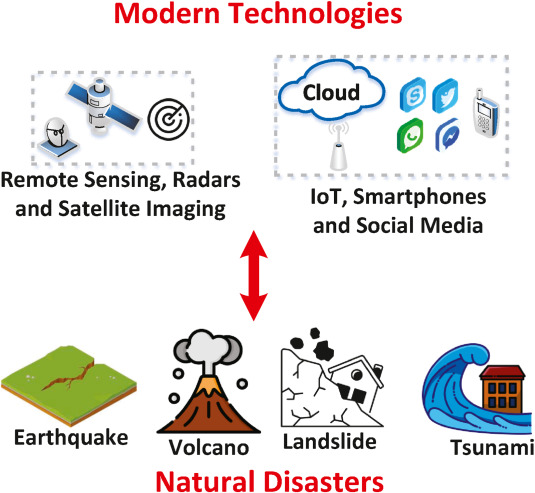 Advancements in satellite technology significantly enhance global climate monitoring and disaster response by providing detailed, timely, and accurate data. Here’s how:
Satellite-based climate monitoring systems significantly contribute to managing and mitigating climate risks. *Advantages:* 1. Global coverage: Satellites provide comprehensive data on climate patterns. 2. High-resolution imagery: Detailed information on weather events, sea level rise, and land useRead more
Satellite-based climate monitoring systems significantly contribute to managing and mitigating climate risks.
*Advantages:*
1. Global coverage: Satellites provide comprehensive data on climate patterns.
2. High-resolution imagery: Detailed information on weather events, sea level rise, and land use changes.
3. Real-time monitoring: Timely data for early warning systems and emergency response.
4. Consistency: Standardized data collection ensures comparability over time.
5. Cost-effectiveness: Reduced costs compared to ground-based observation networks.
*Limitations:*
1. Data accuracy: Sensor calibration, atmospheric interference, and orbital degradation affect accuracy.
2. Spatial resolution: Limited resolution for local-scale climate phenomena.
3. Temporal resolution: Gaps in data due to orbital cycles and satellite lifespan.
4. Inter-satellite inconsistencies: Differences in sensor design and calibration.
5. Dependence on technology: Vulnerability to technological failures and obsolescence.
*Impact on Climate Risk Management:*
1. Improved weather forecasting
2. Enhanced disaster preparedness and response
3. Informed decision-making for climate adaptation
4. Monitoring of climate change indicators (e.g., sea level rise, glacier melting)
5. Validation of climate models
*Applications:*
1. Weather forecasting and warning systems
2. Climate modeling and prediction
3. Disaster risk reduction and management
4. Agriculture and water resource management
5. Urban planning and infrastructure development
*Examples of Satellite-Based Climate Monitoring Systems:*
1. NASA’s Terra and Aqua satellites
2. European Space Agency’s Copernicus program
3. National Oceanic and Atmospheric Administration’s (NOAA) GOES-R series
4. Indian Space Research Organisation’s (ISRO) INSAT and Kalpana satellites
*Way forward:*
1. Next-generation satellite constellations (e.g., NASA’s Orbiting Carbon Observatory)
2. Integration with ground-based observations and models
3. Advanced data analytics and machine learning
4. International cooperation and data sharing
5. Development of climate-resilient infrastructure
See less