

How does India’s constitutional reservation system affect the political landscape and social dynamics?


The fall of the Soviet Union was a complex event with several key contributing factors: Economic Stagnation: The Soviet command economy, while achieving rapid growth initially, became sluggish and inefficient by the 1970s. Centralized planning stifled innovation and consumer goods production. RelianRead more
The fall of the Soviet Union was a complex event with several key contributing factors:
Economic Stagnation:
- The Soviet command economy, while achieving rapid growth initially, became sluggish and inefficient by the 1970s.
- Centralized planning stifled innovation and consumer goods production.
- Reliance on heavy industries came at the expense of agriculture and light industry, leading to shortages and low living standards.
- The decline in oil prices in the 1980s, a major source of revenue, further crippled the economy.
Political Repression:
- The authoritarian one-party system stifled dissent and political participation.
- Lack of political reforms led to a legitimacy crisis for the Communist Party.
- Gorbachev’s reforms of glasnost (openness) and perestroika (restructuring) aimed to revitalize the system, but they backfired.
- Glasnost allowed for criticism of the government, fueling nationalist movements in various republics.
Nationalist Aspirations:
- The Soviet Union was a multi-ethnic state, and many ethnic groups within its borders resented Russification policies.
- With the loosening of central control under Gorbachev, these nationalist movements gained momentum, demanding greater autonomy or even independence.
The Interplay:
- Economic stagnation led to declining living standards and growing public dissatisfaction.
- Political repression fueled resentment towards the central government.
- With glasnost, nationalist aspirations found voice, further weakening central authority.
- The government’s inability to address these issues ultimately led to the Soviet Union’s fragmentation.
Consequences:
- Domestically: The Soviet Union dissolved into 15 independent states. Many former republics faced economic hardship and ethnic tensions. Russia emerged as the dominant successor state, but struggled with a tumultuous transition to a market economy and democracy.
- Internationally: The Cold War ended with the collapse of the Soviet Union, leaving the United States as the sole superpower. The global power balance shifted dramatically. New regional conflicts arose, and concerns about nuclear proliferation increased.


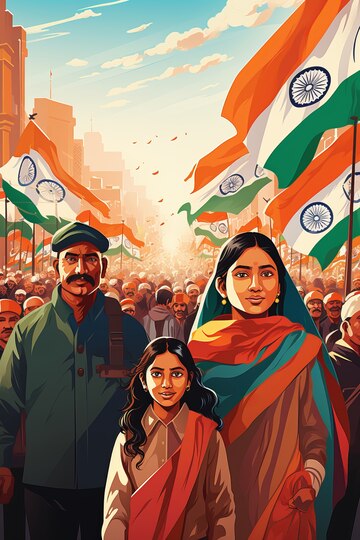
India's constitutional reservation system, designed to uplift historically marginalized communities like Scheduled Castes (SCs), Scheduled Tribes (STs), and Other Backward Classes (OBCs), profoundly impacts the political landscape and social dynamics. Politically, it has led to the rise of caste-basRead more
India’s constitutional reservation system, designed to uplift historically marginalized communities like Scheduled Castes (SCs), Scheduled Tribes (STs), and Other Backward Classes (OBCs), profoundly impacts the political landscape and social dynamics. Politically, it has led to the rise of caste-based parties and leaders who advocate for the rights of these groups. This system has shifted political power from dominant castes to those previously marginalized, fostering greater representation in legislatures and public offices.
Socially, the reservation system has facilitated increased access to education, employment, and political participation for disadvantaged communities, contributing to their socioeconomic advancement. However, it has also sparked debates and tensions among different caste groups, particularly concerning the perceived fairness and effectiveness of the system. Some argue that reservations perpetuate caste identities and social divisions, while others see them as essential for achieving true equality in a deeply stratified society.
The system’s impact is dual-edged: while it has empowered millions and helped address historical injustices, it has also led to competitive caste politics and sometimes exacerbated social tensions, reflecting the complex interplay between affirmative action and societal harmony.
See less