

How can biometric authentication methods improve cybersecurity compared to traditional password-based systems?
Mains Answer Writing Latest Questions

RAVI KantBegginer
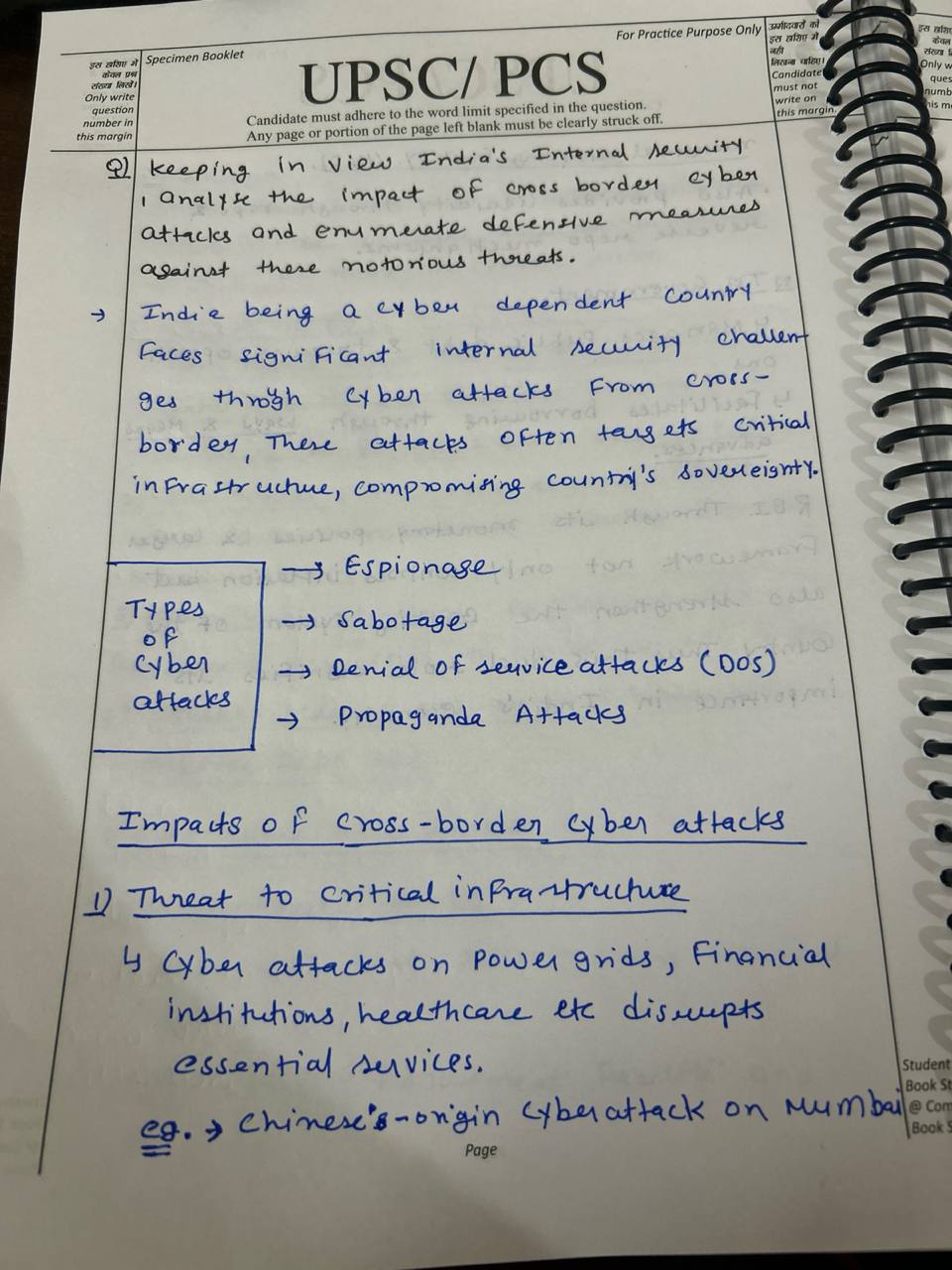
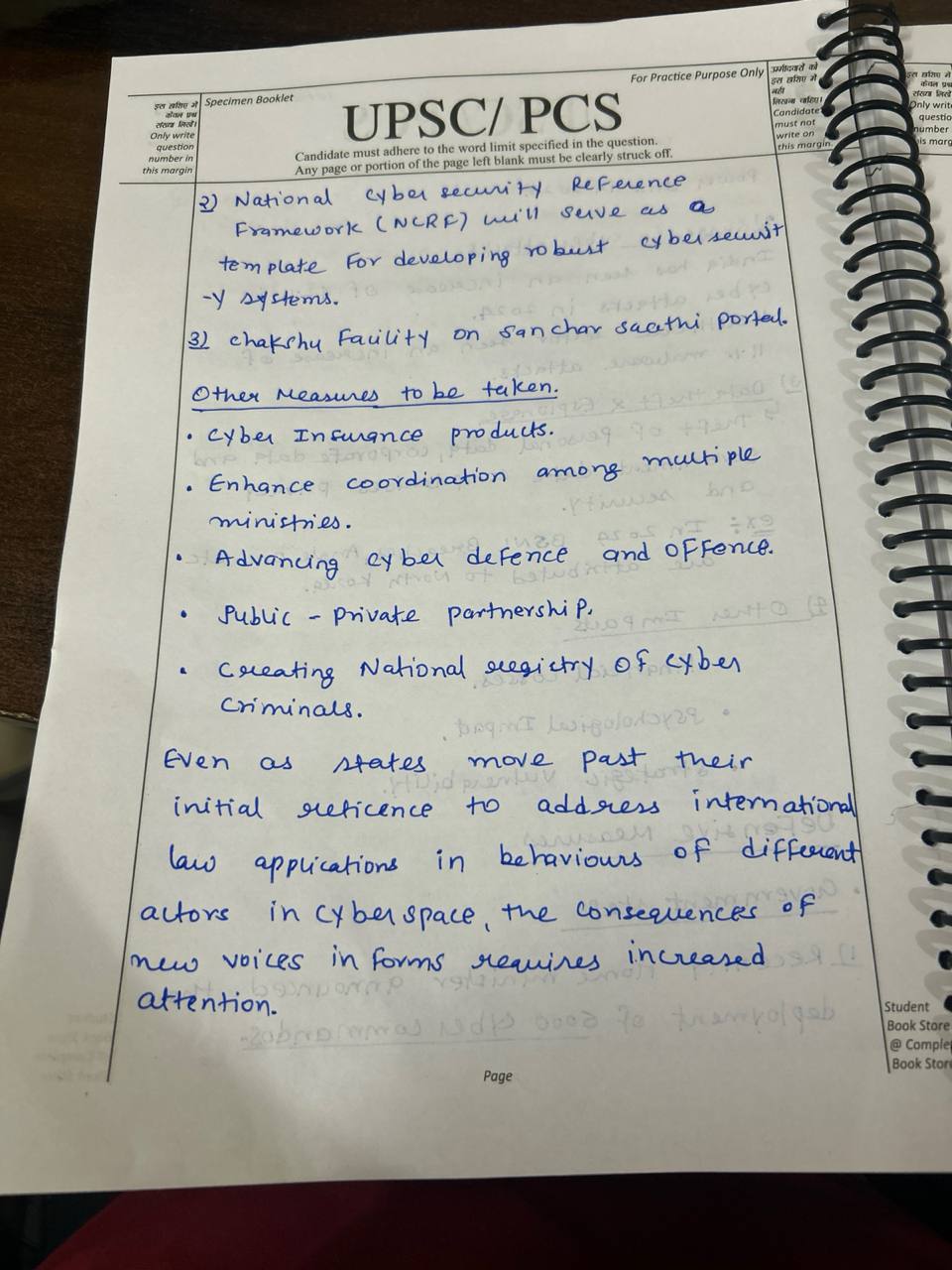
Keeping in view India’s internal security , analyse the impact of cross – border cyber attacks and enumerate defensive measures against these notorious threats .



How do regulations like GDPR and the proposed Indian Personal Data Protection Bill impact data security practices?
-
Regulations like GDPR (General Data Protection Regulation) in the EU and the proposed Indian Personal Data Protection Bill significantly impact data security practices. Overall, GDPR and similar regulations not only elevate data security practices but also foster a culture of privacy-consciousness wRead more
Regulations like GDPR (General Data Protection Regulation) in the EU and the proposed Indian Personal Data Protection Bill significantly impact data security practices.
Overall, GDPR and similar regulations not only elevate data security practices but also foster a culture of privacy-consciousness within organizations, benefiting both businesses and consumers alike.
See less


Akash YadavBegginer
-
Indian businesses are increasingly recognizing the importance of training their employees to recognize and defend against cyberattacks. Beyond awareness campaigns, here are some concrete steps they are taking: 1. Structured Training Programs Regular Cybersecurity Training: Many organizations are insRead more
Indian businesses are increasingly recognizing the importance of training their employees to recognize and defend against cyberattacks. Beyond awareness campaigns, here are some concrete steps they are taking:
1. Structured Training Programs
- Regular Cybersecurity Training: Many organizations are instituting mandatory cybersecurity training sessions for employees, covering topics like phishing, password management, and safe internet practices.
- Role-Based Training: Tailoring cybersecurity training to the specific roles and responsibilities of employees, ensuring that staff understand the particular threats and protections relevant to their positions.
2. Simulation Exercises and Drills
- Phishing Simulations: Conducting regular phishing simulation exercises to test employees’ ability to identify and respond to phishing attempts. Feedback from these exercises helps improve their vigilance.
- Incident Response Drills: Performing cybersecurity drills that simulate real-world attack scenarios to prepare employees for potential breaches and ensure they know how to respond effectively.
3. Certification and Professional Development
- Cybersecurity Certifications: Encouraging and sponsoring employees to obtain recognized cybersecurity certifications such as Certified Information Systems Security Professional (CISSP), Certified Ethical Hacker (CEH), and CompTIA Security+.
- Continuous Learning Platforms: Providing access to online courses and resources on platforms like Coursera, Udemy, or LinkedIn Learning, focusing on various aspects of cybersecurity.
4. Advanced Security Workshops
- Technical Workshops: Offering in-depth technical workshops for IT and security teams to stay updated on the latest threats and defense mechanisms.
- Threat Intelligence Sharing: Participating in industry-specific threat intelligence sharing initiatives, where employees can learn about the latest cyber threats and mitigation strategies.
5. Gamification of Cybersecurity Training
- Interactive Learning Modules: Using gamified learning modules that make cybersecurity training engaging and interactive. These modules often include quizzes, challenges, and interactive scenarios.
- Cybersecurity Competitions: Organizing internal competitions and hackathons that encourage employees to test their cybersecurity skills and learn through hands-on practice.
6. Onboarding Training
- New Hire Orientation: Including comprehensive cybersecurity training as part of the onboarding process for new employees to instill good security practices from the start.
- Periodic Refresher Courses: Offering refresher courses at regular intervals to ensure all employees stay informed about the latest security protocols and threats.
7. Security Awareness Programs
- Security Newsletters and Updates: Sending out regular newsletters or updates that highlight recent cybersecurity incidents, best practices, and tips for staying secure.
- Interactive Webinars and Seminars: Hosting webinars and seminars featuring cybersecurity experts to discuss current threats and protective measures.
8. Security Policies and Guidelines
- Clear Security Policies: Developing and disseminating clear cybersecurity policies and guidelines that employees must follow, ensuring everyone understands their role in maintaining security.
- Regular Policy Reviews: Conducting regular reviews and updates of security policies to adapt to evolving threats and ensure compliance with the latest standards.
9. Use of Security Tools and Platforms
- Security Awareness Platforms: Implementing platforms like KnowBe4, Wombat Security, or PhishMe to deliver continuous security awareness training and simulate attacks.
- Automated Training Systems: Utilizing automated systems that provide personalized training content based on the specific vulnerabilities and behaviors of employees.
10. Creating a Cybersecurity Culture
- Leadership Engagement: Ensuring that organizational leaders actively participate in and promote cybersecurity initiatives, setting an example for all employees.
- Encouraging Reporting: Establishing a culture where employees feel comfortable reporting suspicious activities without fear of repercussions, thus promoting proactive defense measures.
By adopting these strategies, Indian businesses are enhancing their employees’ ability to recognize and defend against cyberattacks, thereby strengthening their overall cybersecurity posture.
See less


Taha JhabuawalaBegginer
-
Organizations can strengthen their incident response capabilities in several ways to minimize the impact of cybersecurity incidents: Develop an Incident Response Plan: Organizations should create a comprehensive incident response plan that outlines the steps to be taken in the event of a cybersecuriRead more
Organizations can strengthen their incident response capabilities in several ways to minimize the impact of cybersecurity incidents:
-
Develop an Incident Response Plan: Organizations should create a comprehensive incident response plan that outlines the steps to be taken in the event of a cybersecurity incident. This plan should include roles and responsibilities of team members, communication protocols, and a clear escalation process.
-
Conduct Regular Training and Drills: Regular training sessions and simulation drills can help employees understand their roles during a cybersecurity incident and familiarize them with the incident response plan. This can improve the organization’s overall preparedness to handle incidents effectively.
-
Implement Monitoring and Detection Systems: Deploying advanced monitoring and detection systems can help organizations identify cybersecurity incidents in their early stages. This allows for a faster response, reducing the impact of the incident.
-
Establish Communication Protocols: Clear communication protocols should be established to ensure that all relevant stakeholders are informed promptly in the event of a cybersecurity incident. This ensures a coordinated response and minimizes confusion during high-stress situations.
-
Engage in Threat Intelligence and Information Sharing: Organizations can benefit from sharing threat intelligence with other entities in their industry to stay updated on the latest cyber threats. This shared knowledge can help in proactively preventing and responding to potential incidents.
-
Implement a Response Team: Having a dedicated incident response team, either internally or through a third-party service, can ensure that there are experts available to analyze and contain cybersecurity incidents as they arise. This team should be well-trained and have access to the necessary resources to respond effectively.
-
Conduct Post-Incident Analysis: After an incident, organizations should conduct a thorough post-incident analysis to understand what happened and identify areas for improvement in their incident response capabilities. This analysis can help in refining the incident response plan and implementing necessary changes.
-


What are the primary ethical challenges in implementing transparent data practices?
-
Implementing transparent data practices presents several ethical challenges: Privacy vs. Transparency: Balancing transparency with the need to protect individuals' privacy can be challenging. Providing too much detail about data collection and processing might inadvertently expose sensitive informatRead more
Implementing transparent data practices presents several ethical challenges:
- Privacy vs. Transparency: Balancing transparency with the need to protect individuals’ privacy can be challenging. Providing too much detail about data collection and processing might inadvertently expose sensitive information or lead to privacy breaches.
- Informed Consent: Ensuring that individuals fully understand and consent to how their data will be used is a fundamental ethical challenge. This involves clear and comprehensible communication about data practices, which can be difficult in complex systems.
- Data Ownership: Determining who owns the data and has the right to access, use, and share it is a significant ethical issue. This involves respecting individuals’ rights to their personal data while navigating legal and organizational constraints.
- Data Accuracy and Misuse: Transparent data practices require accurate data collection and reporting. There is an ethical responsibility to ensure that data is not misrepresented or used in ways that could harm individuals or groups.
- Bias and Discrimination: Ensuring transparency in data practices can reveal biases in data collection and processing. Addressing these biases and preventing discriminatory practices is a critical ethical concern.
- Security Risks: Increased transparency can sometimes lead to heightened security risks. Clearly communicating data practices might expose systems to threats if not managed carefully.
- Confidentiality of Sensitive Information: Transparent data practices must ensure that sensitive information, such as medical or financial data, is handled with the highest level of confidentiality, even while striving for transparency.
- Regulatory Compliance: Adhering to regulations and standards while striving for transparency can be complex. Organizations must navigate varying laws and guidelines that might impact how data practices are communicated.
- Ethical Use of Data: Transparency requires not only clear communication but also ethical use of data. Organizations must ensure that data is used in ways that align with ethical principles and societal values.
- Trust and Accountability: Building and maintaining trust with individuals is crucial. Transparent data practices must be coupled with mechanisms for accountability to ensure that data handling practices are ethical and that individuals have recourse if their data is misused.
Addressing these challenges involves implementing robust data governance frameworks, engaging in ongoing dialogue with stakeholders, and fostering a culture of ethical responsibility in data practices.
See less


Rishita SinghBegginer
Evaluate the effectiveness of India’s current cyber security framework in safeguarding critical infrastructure and personal data. In light of increasing cyber threats, what reforms are needed to strengthen India’s national security in cyberspace? (250 words)
-
This answer was edited.
The cyber security framework plays a major role in tackling cyber threats via the National Cyber Security Policy (2013) which has made progress against digital threats since it's inception . Evaluation of cyber security framework: Strengths : 1)Legal and regulatory framework: The Information TechnolRead more
The cyber security framework plays a major role in tackling cyber threats via the National Cyber Security Policy (2013) which has made progress against digital threats since it’s inception .
Evaluation of cyber security framework:
Strengths :
1)Legal and regulatory framework: The Information Technology act (2000) and National Cyber Security Policy (2013) aim to detect cyber threats towards data protection and online transactions. The legal framework criminalizes cyber offences and develop country’s protection against threats.
2) Setting up institutions such as :
- Indian Computer Emergency Response Team(CERT-In) which is responsible for threat response and management.
- National Critical Information Infrastructure Protection Centre (NCIIPC) which provides physical protection against threats such as Social engineering or natural disasters.
- National Cyber Coordination Centre (NCCC) which provides communication between various agencies .
3) National Cyber Security Policy:Marks strategic objectives effective cyber ecosystem via promotion of research and development .
4) Focus on capacity building.
5) Provide indigenous solution: NCRF promotes participation of companies like TCS ,Wipro, Cyber ark etc for cyber defence.
6) Public-private partnership
Reforms to further strengthen defences:
1) Awareness campaigns: best possible way of defending threats is informed masses.
2) Continuous review and adaptation: dynamic scenario which requires regular evaluation and modification.
3) Increased budget allocation: both by government and private parties monitored by top management ( 10% of IT budget recommended).
4) Training programmes as recently announced by HM Amit Shah of training 5000 commandos .
5) Acts such as Digital India which would encompass A.I , cybersecurity and data privacy.
See less
Taha JhabuawalaBegginer
-
Cybersecurity is much more than firewalls and clever software; it is also about people. A comprehensive personnel awareness and training program thus becomes essential. To create a program that really stays, keep the following points in mind: Understand Your Rival (and Your Group): Understanding theRead more
Cybersecurity is much more than firewalls and clever software; it is also about people. A comprehensive personnel awareness and training program thus becomes essential. To create a program that really stays, keep the following points in mind:
Understand Your Rival (and Your Group): Understanding the peculiar cyberthreats that your sector faces and the role that your personnel play is essential. Customize training to target the risks and access levels that are most important to your company.
Beyond Knowledge-Building Habits: It’s critical to train staff members how to spot phishing attempts, flag suspicious behavior, and generate secure passwords. The objective is to bring about long-lasting behavioral change, not merely awareness.
Keep it Fresh – Regular Training is Key: Cybercriminals are constantly adapting their tactics. Regular training updates, ideally every quarter or twice a year, ensure your employees stay sharp on the latest threats and best practices.
Participation is Essential : Forget the Dull Lectures: Training may be made interesting and memorable by using interactive modules, simulations, and real-world events. Even entertaining twists may be added using gamification!
Assess and Enhance : Education Never Ends: Quizzes and phishing simulations allow you to track employee development. Analyze the findings to identify areas where employees require further assistance, and then utilize this information to continually enhance your training program.
Your staff may take the lead in thwarting cyberattacks by developing a well-thought-out, captivating training program. Recall that everyone contributes to the creation of a strong cybersecurity culture.
See less


1721 Rukmoddin PatelBegginer
-
Cyberspace is particularly difficult to secure due to a number of factors: the ability of malicious actors to operate from anywhere in the world, the linkages between cyberspace and physical systems, and the difficulty of reducing vulnerabilities and consequences in complex cyber networks. ImplementRead more
Cyberspace is particularly difficult to secure due to a number of factors: the ability of malicious actors to operate from anywhere in the world, the linkages between cyberspace and physical systems, and the difficulty of reducing vulnerabilities and consequences in complex cyber networks. Implementing safe cybersecurity best practices is important for individuals as well as organizations of all sizes. Using strong passwords, updating your software, thinking before you click on suspicious links, and turning on multi-factor authentication are the basics of what we call “cyber hygiene” and will drastically improve your online safety. These cybersecurity basics apply to both individuals and organizations. For both government and private entities, developing and implementing tailored cybersecurity plans and processes is key to protecting and maintaining business operations. As information technology becomes increasingly integrated with all aspects of our society, there is increased risk for wide scale or high-consequence events that could cause harm or disrupt services upon which our economy and the daily lives of millions of Americans depend.
See less


shivamxLearner
What is data mining and why it is important in todays generation and what are the techniques used for this?
-
Data mining is the process of sorting through large data sets to identify patterns and relationships that can help solve business problems through data analysis. Data mining techniques and tools help enterprises to predict future trends and make more informed business decisions. Top Data Mining ToolRead more
Data mining is the process of sorting through large data sets to identify patterns and relationships that can help solve business problems through data analysis. Data mining techniques and tools help enterprises to predict future trends and make more informed business decisions.
Top Data Mining ToolsSee less- Alteryx, a platform for clustering, classifications, and other data-mining techniques.
- Tableau software, a data analytics and visualization platform.
- Talend, which offers a comprehensive suite of apps focused on data integration and integrity. etc… are used for data mining

Biometric authentication methods significantly enhance cybersecurity compared to traditional password-based systems by leveraging unique physical and behavioral characteristics of individuals. Unlike passwords, which can be easily forgotten, guessed, or stolen, biometric data such as fingerprints, fRead more
Biometric authentication methods significantly enhance cybersecurity compared to traditional password-based systems by leveraging unique physical and behavioral characteristics of individuals. Unlike passwords, which can be easily forgotten, guessed, or stolen, biometric data such as fingerprints, facial recognition, iris scans, and voice patterns are inherently unique to each person and difficult to replicate.
Firstly, biometric authentication reduces the risk of unauthorized access. Since biometrics are unique to individuals, it is almost impossible for hackers to use stolen credentials to gain access to sensitive information. In contrast, passwords can be easily compromised through phishing, social engineering, or brute force attacks.
Secondly, biometrics eliminate the need for users to remember complex passwords. This reduces the likelihood of using weak or easily guessable passwords, a common vulnerability in traditional password systems. Users are more likely to adhere to security protocols when they do not have to manage numerous and complex passwords.
Additionally, biometric systems can offer multi-factor authentication (MFA) by combining something the user is (biometric data) with something the user has (a smart card or mobile device). This layered security approach adds an extra hurdle for potential attackers, further enhancing protection.
In conclusion, biometric authentication methods offer a more secure and user-friendly alternative to traditional password-based systems, reducing vulnerabilities and enhancing overall cybersecurity.
See less