
Home/Modern India/Page 50
Modern India
Share
Lost your password? Please enter your email address. You will receive a link and will create a new password via email.
Please briefly explain why you feel this question should be reported.
Please briefly explain why you feel this answer should be reported.
Please briefly explain why you feel this user should be reported.
Suggest some low budget business ideas.
Freelance services (writing, graphic design, programming) Social media management Virtual assistance Online tutoring or teaching Dropshipping e-commerce store Pet sitting or dog walking House cleaning service Lawn care and landscaping Handmade crafts or products Mobile car washing and detailing
- Freelance services (writing, graphic design, programming)
- Social media management
- Virtual assistance
- Online tutoring or teaching
- Dropshipping e-commerce store
- Pet sitting or dog walking
- House cleaning service
- Lawn care and landscaping
- Handmade crafts or products
- Mobile car washing and detailing
See lessPolitical economy
The relationship between politics and economics in India is deeply intertwined, influencing and shaping each other in significant ways. This linkage is evident in various aspects of governance, policy-making, and development. Here’s a detailed analysis of how politics and economics are interconnecteRead more
The relationship between politics and economics in India is deeply intertwined, influencing and shaping each other in significant ways. This linkage is evident in various aspects of governance, policy-making, and development. Here’s a detailed analysis of how politics and economics are interconnected in India, supported by recent examples:
1. Political Influence on Economic Policy
Policy Formulation and Implementation
Economic Reforms and Political Decisions: Political priorities often shape economic policies. For instance, the economic reforms of the 1990s were driven by the political need to address the balance of payments crisis and revive economic growth.
Recent Example: The Goods and Services Tax (GST) implementation in 2017, a significant economic reform, was influenced by political decisions aimed at simplifying the tax system and improving compliance.
Budgetary Allocations
Political Priorities in Budgeting: Government budgets reflect political priorities, with allocations often driven by electoral considerations and political promises.
Recent Example: The Union Budget 2024, with increased allocations for social welfare schemes and infrastructure projects, demonstrates how political agendas impact budgetary decisions.
Election Strategies
Economic Policies as Electoral Tools: Economic policies are frequently used as tools for electoral gains, with governments implementing welfare programs and subsidies to garner voter support.
Recent Example: The Pradhan Mantri Kisan Samman Nidhi (PM-KISAN) scheme, which provides financial support to farmers, was introduced ahead of the 2019 general elections to appeal to the rural electorate.
2. Economic Impact on Political Stability
Economic Performance and Political Popularity
Economic Growth and Electoral Success: The performance of the economy can significantly impact political stability and electoral outcomes. Economic growth often translates into political support, while economic downturns can lead to political discontent.
Recent Example: The economic slowdown during the COVID-19 pandemic and its impact on unemployment and business closures affected the political narrative and public perception of the government’s handling of economic issues.
Public Sentiment and Political Legitimacy
Economic Conditions and Governance: Economic conditions influence public sentiment and the legitimacy of political leaders. Governments face pressure to address economic challenges to maintain political stability.
Recent Example: The farmer protests against the farm laws in 2020-2021 highlighted how economic issues and dissatisfaction with agricultural policies can lead to significant political unrest.
3. Economic Policies Shaping Political Landscape
Regulatory Changes and Political Agendas
Economic Reforms and Political Ideology: Economic reforms often align with the political ideology of the ruling party, shaping the economic landscape according to their vision.
Recent Example: The National Monetization Pipeline (NMP), aimed at privatizing state-owned assets, reflects the current government’s focus on market-driven economic policies and liberalization.
Infrastructure Development and Political Gains
Infrastructure Projects as Political Capital: Major infrastructure projects are frequently used to build political capital and demonstrate governance achievements.
Recent Example: The Delhi-Mumbai Expressway and Ganga rejuvenation projects are promoted as significant achievements of the current government, aimed at improving connectivity and environmental conditions while gaining political favor.
4. Interaction Between Politics and Economics in Policy Challenges
Policy Implementation and Administrative Capacity
Challenges in Execution: The effectiveness of economic policies often depends on political will and administrative capacity. Political factors can either facilitate or hinder policy implementation.
Recent Example: The implementation challenges of the National Education Policy (NEP) 2020 reflect how political decisions and administrative capacities affect the execution of educational reforms.
Corruption and Economic Mismanagement
Impact on Economic Health: Corruption and political interference can lead to economic mismanagement and inefficiencies, affecting overall economic health.
Recent Example: The Scam in the Rafale fighter jet deal raised concerns about corruption and its impact on defense procurement and overall governance.
Social Welfare Policies and Political Strategy
Linking Economic Policies with Social Welfare: Social welfare policies are designed to address economic inequalities and are often used by political parties to gain support from disadvantaged groups.
Recent Example: The Ayushman Bharat scheme, aimed at providing health insurance to low-income families, illustrates how economic policies are linked with social welfare objectives and political strategies.
5. Long-term Implications and Future Prospects
Economic Growth and Political Dynamics
Sustainable Development and Political Stability: Achieving sustainable economic growth is crucial for long-term political stability. Governments need to balance economic reforms with social equity to maintain political support.
Recent Example: The focus on sustainable development goals (SDGs) and climate action in India’s policies reflects the need to align economic growth with long-term political and social objectives.
Globalization and Domestic Politics
Global Economic Integration: India’s integration into the global economy influences domestic politics, as global economic trends and international trade agreements impact national policy decisions.
See lessRecent Example: The India-U.S. trade agreements and participation in global economic forums highlight how international economic dynamics shape domestic political decisions and economic strategies.
In summary, the relationship between politics and economics in India is deeply interconnected. Political decisions influence economic policies, while economic performance affects political stability and legitimacy. This linkage manifests in policy formulation, electoral strategies, and governance challenges, highlighting the complex interplay between political and economic factors in shaping India’s development trajectory.
Assess the extent to which the Revolt was a unified national movement against the British or a series of regional uprisings.
Assessing whether a revolt was a unified national movement or a series of regional uprisings involves examining the coordination, common goals, and participation across different regions. Let’s take the example of the Indian Rebellion of 1857 to illustrate this: Unified National Movement Common GrieRead more
Assessing whether a revolt was a unified national movement or a series of regional uprisings involves examining the coordination, common goals, and participation across different regions. Let’s take the example of the Indian Rebellion of 1857 to illustrate this:
Unified National Movement
Regional Uprisings
Conclusion
The Indian Rebellion of 1857 can be seen as both a unified national movement and a series of regional uprisings. While there was a shared sense of discontent and some common goals, the lack of central coordination and the diverse motivations of different groups highlight the regional nature of many of the uprisings.
See lessDiscuss the emergence of radical and militant strands within the nationalist movement and their impact on the overall trajectory.
The emergence of radical and militant strands within nationalist movements has significantly impacted their trajectories, often altering their strategies, goals, and public perceptions. Here's a detailed discussion on this phenomenon: Historical Context and Emergence 1. Early Nationalist Movements:Read more
The emergence of radical and militant strands within nationalist movements has significantly impacted their trajectories, often altering their strategies, goals, and public perceptions. Here’s a detailed discussion on this phenomenon:
Historical Context and Emergence
See less1. Early Nationalist Movements:
19th Century Europe: Nationalism initially emerged as a liberal movement advocating for self-determination and national unity, inspired by the Enlightenment and the French Revolution. Early nationalists sought to unify fragmented states and establish nation-states based on common cultural and linguistic identities.
Colonial Contexts: In colonies, nationalism was primarily a response to foreign domination, exploitation, and the desire for self-governance.
2. Radicalization and Militant Strands:
Factors Leading to Radicalization:
Frustration with Slow Progress: As peaceful methods and negotiations often yielded slow or unsatisfactory results, more radical factions emerged advocating for immediate and sometimes violent action.
Oppressive Regimes: Brutal repression by colonial or authoritarian regimes often radicalized moderate nationalists, pushing them towards militancy.
Inspirations from Other Movements: Successes of militant actions in other regions inspired similar approaches. For instance, the success of the Bolshevik Revolution influenced many nationalist movements towards adopting more radical methods.
Impact on Nationalist Movements
1. Shift in Strategies:
Militancy and Armed Struggle: Movements like the Irish Republican Army (IRA), Indian revolutionary groups (e.g., Bhagat Singh’s Hindustan Socialist Republican Association), and various African liberation movements adopted armed struggle as a primary means of achieving their goals.
Sabotage and Terrorism: Use of sabotage, assassinations, and terror attacks became common tactics to disrupt colonial or authoritarian rule and draw international attention.
2. Ideological Shifts:
Marxist and Socialist Influence: Many radical nationalist movements incorporated Marxist and socialist ideologies, framing their struggles as not only national but also class struggles. Examples include the Vietnamese Viet Minh and various African liberation movements.
Broader Socio-Political Agendas: Some radical nationalist movements expanded their goals beyond mere independence to include broader socio-political transformations, aiming for systemic changes in economic and social structures.
3. Impact on Moderates and Overall Movement:
Polarization: The emergence of militant strands often led to polarization within nationalist movements, creating tensions between moderates and radicals.
Negotiation Leverage: The presence of militant factions sometimes provided moderates with leverage in negotiations, as governments preferred dealing with non-violent leaders over violent militants.
Public Perception and Support: Militant actions could either galvanize public support by demonstrating commitment and sacrifice or alienate potential supporters due to the violence involved.
Case Studies
1. India:
Moderate Leaders: Leaders like Mahatma Gandhi advocated for non-violent resistance and civil disobedience.
Radical Leaders: Figures like Bhagat Singh and Subhas Chandra Bose adopted more militant approaches, with the latter even collaborating with Axis powers during World War II to fight British rule.
Impact: The radical strand kept the pressure on the British and complemented the non-violent struggle, creating a multifaceted resistance that eventually led to independence.
2. Ireland:
Moderate Approach: The Irish Parliamentary Party sought Home Rule through parliamentary means.
Militant Approach: The Irish Republican Brotherhood and later the IRA pursued armed struggle.
Impact: The Easter Rising and subsequent guerrilla warfare by the IRA were crucial in securing the Anglo-Irish Treaty and the establishment of the Irish Free State.
3. Algeria:
National Liberation Front (FLN): The FLN combined political and military strategies to fight French colonial rule.
Militancy: The FLN’s use of guerrilla warfare and terrorism was instrumental in forcing the French to negotiate.
Impact: The violent struggle played a crucial role in achieving independence in 1962.
Conclusion
The emergence of radical and militant strands within nationalist movements has been a double-edged sword. While it has often accelerated the achievement of independence by exerting pressure on colonial or oppressive regimes, it has also led to internal divisions, ethical dilemmas, and sometimes prolonged violence. The overall trajectory of nationalist movements is deeply influenced by the interplay between moderate and radical elements, shaping the path to self-determination and the post-independence socio-political landscape.
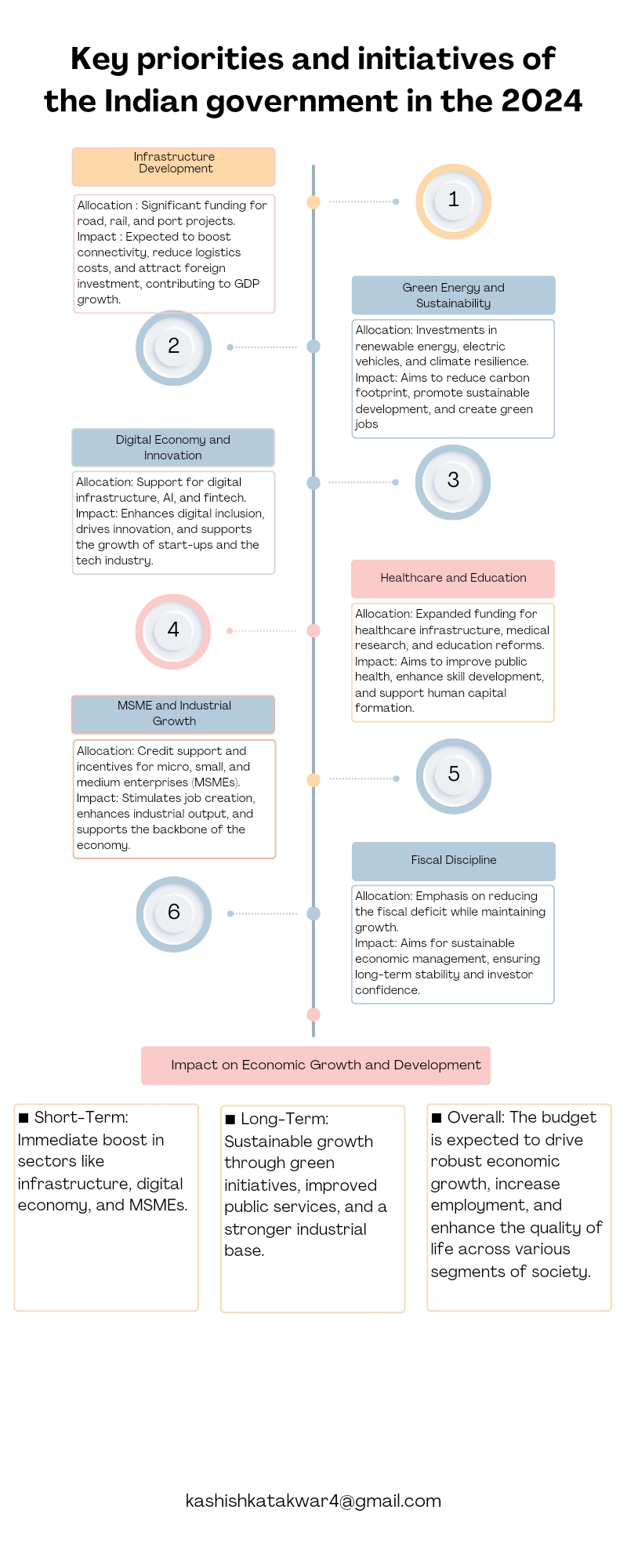
What are the key priorities and initiatives of the Indian government in the 2024 Union Budget, and how are they expected to impact the country's economic growth and development?
See lessForeign Investment in India
Foreign investment impacts the Indian economy by providing essential capital for growth, infrastructure, and technology transfer. This influx of capital helps spur economic development, create jobs, and enhance productivity through advanced technologies and management practices. It also strengthensRead more
Foreign investment impacts the Indian economy by providing essential capital for growth, infrastructure, and technology transfer. This influx of capital helps spur economic development, create jobs, and enhance productivity through advanced technologies and management practices. It also strengthens India’s balance of payments by increasing foreign exchange reserves and reducing dependence on domestic savings.
Moreover, foreign investment boosts investor confidence, supports economic stability, and enhances India’s global economic position. However, it also presents challenges. There is a risk of market dominance by foreign firms, which can affect local businesses and reduce competitive dynamics. Additionally, sudden withdrawal of foreign investments can create financial instability and economic vulnerabilities.
To maximize benefits and minimize risks, India needs to implement strategic policies that attract and manage foreign investment effectively. Balancing the positive effects of foreign capital with measures to protect and support domestic industries is crucial for sustainable economic growth.
See lessDiversity of India and its challenges
India's diversity is one of its greatest strengths, characterized by a rich tapestry of languages, religions, cultures, and ethnicities. However, this diversity also presents significant challenges, including linguistic barriers, caste discrimination, and socioeconomic disparities. Challenges LinguiRead more
India’s diversity is one of its greatest strengths, characterized by a rich tapestry of languages, religions, cultures, and ethnicities. However, this diversity also presents significant challenges, including linguistic barriers, caste discrimination, and socioeconomic disparities.
Challenges
Addressing the Challenges
The government has implemented various initiatives, such as the National Food Security Act and Beti Bachao Beti Padhao, to promote equality and uplift marginalized communities. Civil society organizations also play a crucial role in advocacy, education, and community support, fostering awareness and promoting social justice. Together, these efforts aim to harness India’s diversity as a unifying force rather than a source of division.
See lessGrowth of Militant Nationalism
The growth of militant nationalism in India was fueled by British colonial policies that exploited and repressed the population, socio-political conditions marked by economic distress and perceived inadequacies of moderate reform efforts, and the influence of revolutionary ideas from global movementRead more
The growth of militant nationalism in India was fueled by British colonial policies that exploited and repressed the population, socio-political conditions marked by economic distress and perceived inadequacies of moderate reform efforts, and the influence of revolutionary ideas from global movements. Economic exploitation, such as high taxation and deindustrialization, alongside political repression like the Rowlatt Act, created widespread discontent. This was compounded by the failure of moderate leaders to bring about significant change, leading to the rise of radical groups influenced by global revolutionary successes. Cultural and religious revivalism, the economic strain of World War I, and incidents like the Jallianwala Bagh massacre further intensified nationalist fervor, leading to the rise of militant organizations advocating for direct action and armed struggle against colonial rule.
See lessEffective Strategies and Technologies for Enhancing Children's Learning and Development in the Digital Age
In today's digital age, enhancing children's learning and development requires integrating technology effectively into educational practices. By leveraging various strategies and technologies, educators can create a dynamic and engaging learning environment. Interactive Learning Platforms IntRead more
In today’s digital age, enhancing children’s learning and development requires integrating technology effectively into educational practices. By leveraging various strategies and technologies, educators can create a dynamic and engaging learning environment.
Interactive Learning Platforms
Interactive learning platforms, such as Khan Academy and Duolingo, offer personalized learning experiences. These platforms adapt to individual learning paces, providing instant feedback and fostering self-directed learning.
Gamification
Gamification involves using game elements in educational contexts. Tools like Classcraft and Kahoot! make learning fun and engaging, motivating students through rewards and competition.
Virtual Reality (VR) and Augmented Reality (AR)
VR and AR technologies immerse students in interactive and experiential learning. Apps like Google Expeditions allow virtual field trips, making abstract concepts tangible and memorable.
Collaborative Tools
Collaborative tools like Google Classroom and Microsoft Teams facilitate group work and communication. These platforms support project-based learning and enhance teamwork skills.
Adaptive Learning Technologies
Adaptive learning technologies, such as DreamBox and Smart Sparrow, use data analytics to tailor educational content to students’ needs, promoting effective and personalized learning experiences.
Conclusion
By integrating these strategies and technologies, educators can significantly enhance children’s learning and development, preparing them for a future driven by digital innovation.
See lessParticipation of Women in Indian National Movement
The participation of women in the Indian National Movement was pivotal, though often underrepresented. Women actively contributed to the struggle for independence through various roles and actions. 1. Early Activism: Women like Begum Roquiah Sakhawat Hossain and Dr. A. N. Kazi were among the early aRead more
The participation of women in the Indian National Movement was pivotal, though often underrepresented. Women actively contributed to the struggle for independence through various roles and actions.
1. Early Activism: Women like Begum Roquiah Sakhawat Hossain and Dr. A. N. Kazi were among the early activists who advocated for women’s rights and social reform. They emphasized the need for women’s education and empowerment as foundational to national progress.
2. Gandhian Era: Mahatma Gandhi’s call for non-violent resistance saw significant female involvement. Leaders like Sarojini Naidu and Kasturba Gandhi mobilized women for protests, such as the Salt March. Naidu, known as the “Nightingale of India,” played a crucial role in the Civil Disobedience Movement, inspiring women to join mass movements.
3. Revolutionary Activities: Women like Bhikaji Cama and Chandramukhi Basu participated in revolutionary activities, including the Ghadar Movement. Bhikaji Cama, for instance, was involved in the 1907 International Socialist Congress in Stuttgart, advocating for Indian independence on an international stage.
4. Post-Independence: Post-independence, women continued to shape political landscapes, with figures like Indira Gandhi rising to prominence.
Women’s participation was crucial, demonstrating their integral role in India’s path to independence and the broader struggle for equality and justice.
See less