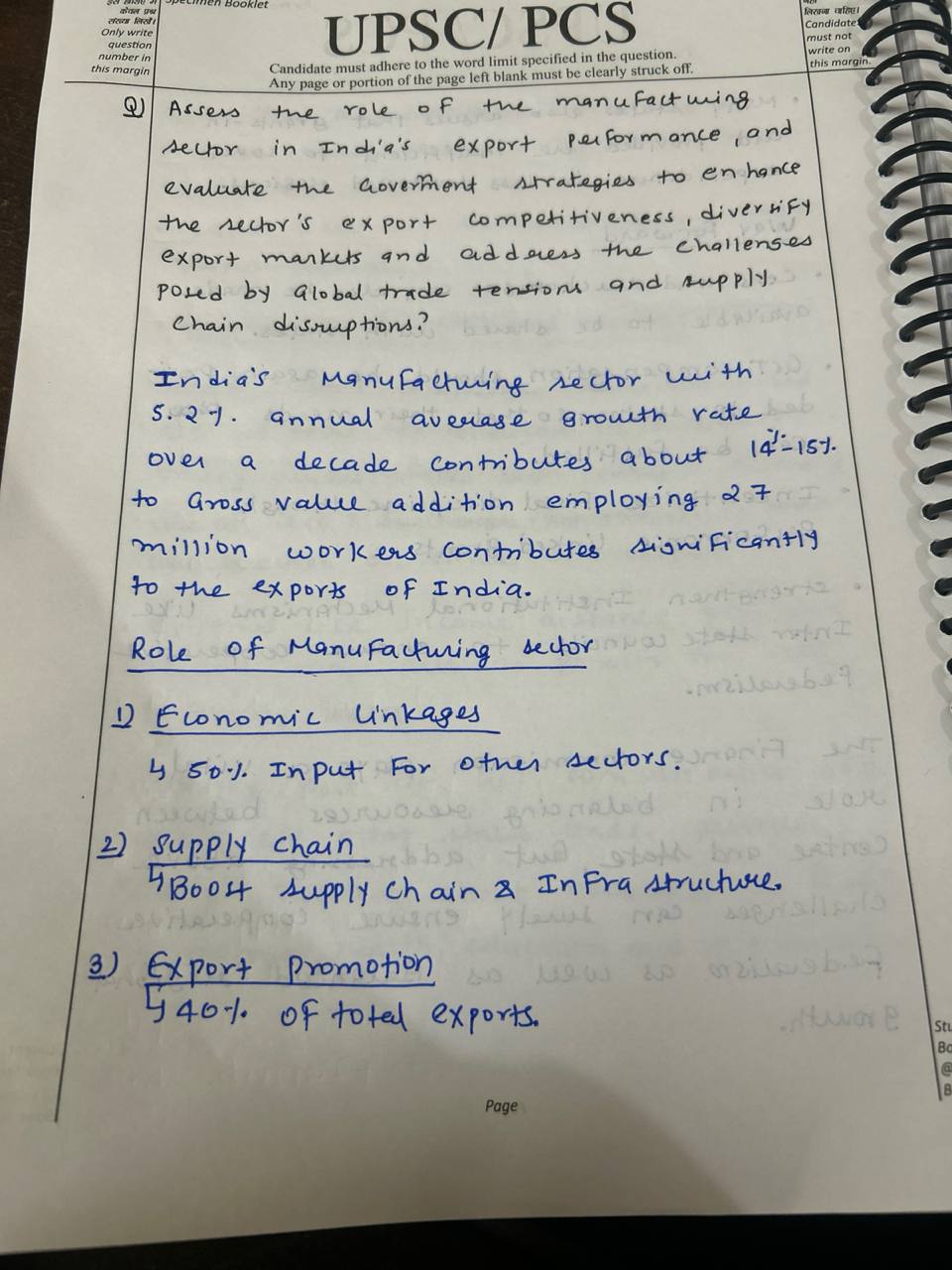
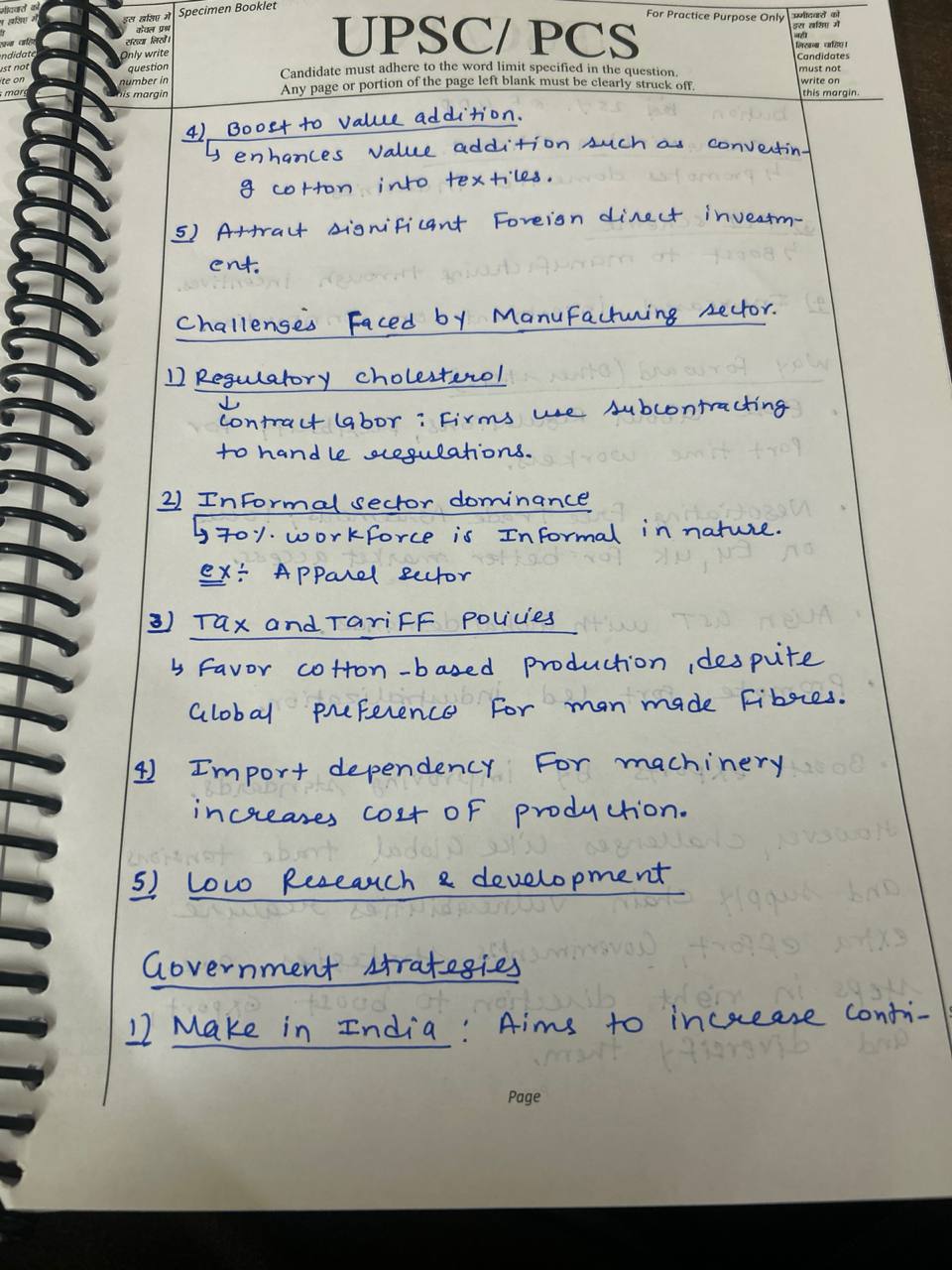
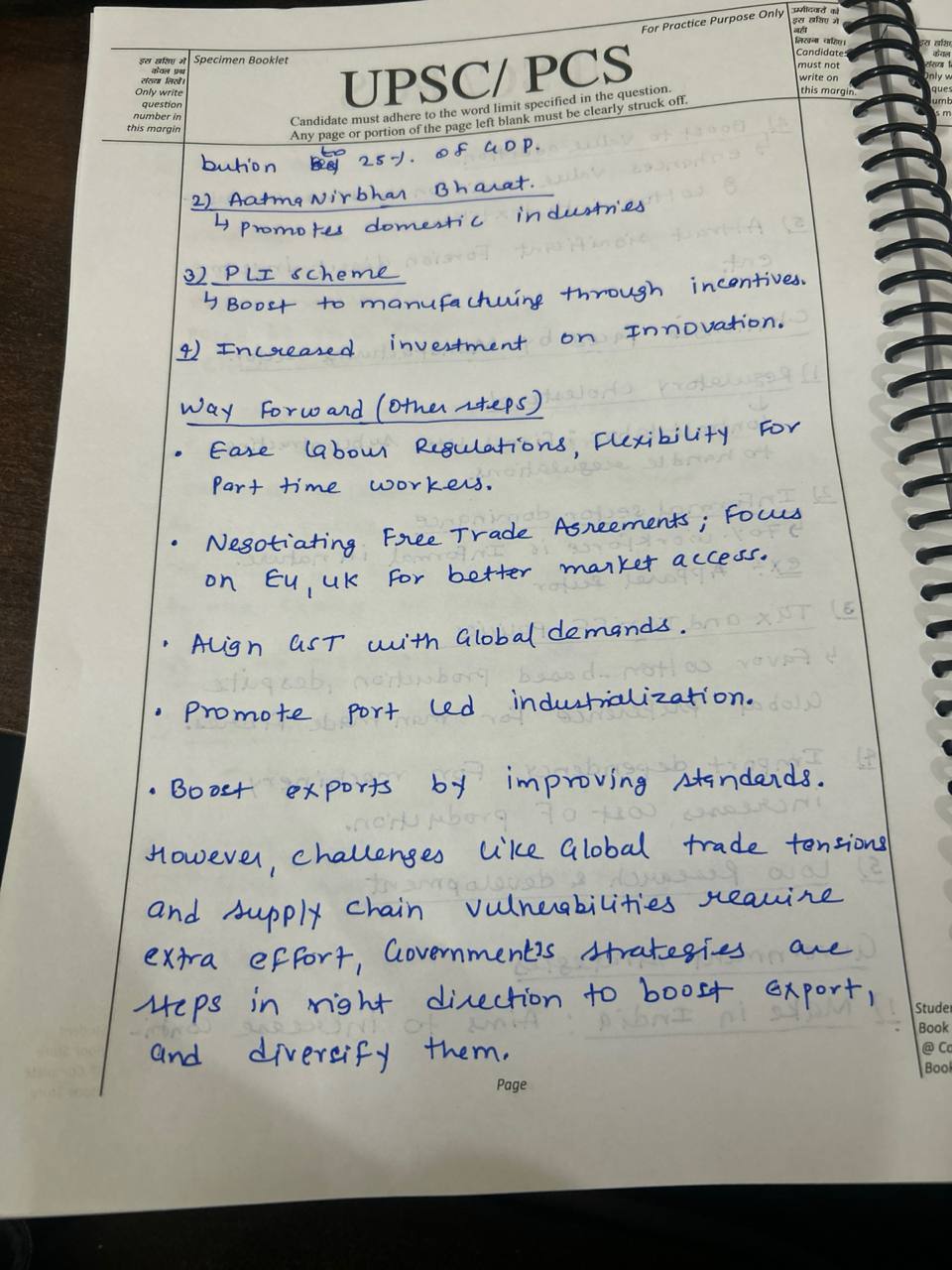
Analyze how the manufacturing sector contributes to India’s export performance and the government’s efforts to diversify export markets, increase the sector’s export competitiveness, and deal with supply chain disruptions and conflicts in the global trade arena.
Model Answer Introduction The manufacturing sector is vital for India’s economic landscape, contributing approximately 17% to the GDP in 2022. Micro, Small, and Medium Enterprises (MSMEs) account for about 40% of manufacturing output, playing a significant role in job creation, exports, and overallRead more
Model Answer
Introduction
The manufacturing sector is vital for India’s economic landscape, contributing approximately 17% to the GDP in 2022. Micro, Small, and Medium Enterprises (MSMEs) account for about 40% of manufacturing output, playing a significant role in job creation, exports, and overall economic growth. Recognizing this importance, the Indian government has implemented various policies aimed at bolstering this sector.
Importance of Increasing Manufacturing Sector Share
- Rural Development: Manufacturing is essential for rural upliftment. Initiatives such as Agro-based industries and Rural Self Employment Training Institutes (RSETIs) empower rural entrepreneurs, thereby enhancing economic conditions in these areas.
- Economic Resilience: A diverse manufacturing sector can provide stability during economic downturns. For example, small enterprises adapted during the COVID-19 pandemic to produce essential goods like masks and sanitizers, showcasing resilience.
- Employment Generation: According to the Ministry of MSMEs, this sector has created around 11 crore jobs in India. Small manufacturing units, tailoring shops, and handicrafts provide extensive employment opportunities.
- Innovation: MSMEs often serve as incubators for innovation. Companies like Flipkart and Zoho started as small enterprises and have revolutionized the e-commerce and software sectors.
- Exports: MSMEs contribute approximately 48% to India’s total exports, showcasing products like jewelry and spices, which are in high global demand.
Government Policies Supporting the Manufacturing Sector
- Make in India (2014): This initiative promotes India as a global manufacturing hub, exemplified by Samsung’s establishment of its largest mobile factory in Noida.
- MSME Samadhaan: A platform for MSMEs to address delayed payments, enhancing financial stability and operational continuity.
- Udyam Registration: Simplifies the registration process, encouraging new ventures to formalize and access government benefits.
- GST Implementation: Streamlined tax structures reduce the tax burden on MSMEs, promoting compliance and encouraging formalization.
- Startup India: This initiative fosters entrepreneurial growth by providing fiscal incentives and support, leading to notable success stories like Zomato.
- Cluster Development Program: Enhances competitiveness through the development of industry clusters, such as in Kanpur’s leather sector.
- Government e-Marketplace (GeM): Facilitates market access for MSMEs by connecting them with government buyers, thus expanding their reach.
- Digital MSME Scheme: Promotes digital literacy and technology adoption, helping businesses streamline operations and improve efficiency.
Conclusion
The current policies reflect a robust framework aimed at enhancing the manufacturing sector’s contribution to India’s GDP. By creating a supportive environment through effective implementation of these initiatives, the government can significantly accelerate the growth of MSMEs and manufacturing, ultimately driving economic development.
See less


See less