


With growing technology all over the world which has lead to globalisation , it came at the cost of climate change. In recent years it has became an expensive deal to manage biodiversity losses through sustainable practices. Reasons that lead to biodiversity loss due to globalization and environmenRead more
With growing technology all over the world which has lead to globalisation , it came at the cost of climate change. In recent years it has became an expensive deal to manage biodiversity losses through sustainable practices.
Reasons that lead to biodiversity loss due to globalization and environmental change
- Technology for globalization
With advent of new technologies from telegraph, telephones, emails to meassaging applications connectivity all around the world got increased which gave a boost to economy through trade.
In today’s generation social media and news channels are very much active as within seconds we can know about any corner of the world with help of satellites.
Globalization has evolved through out the years but in the hoard of profits and making money people ignored the harmful impact we are creating to the enviornment.
2. Environment losses
To increase connectivity and trade through technology, human started exploiting the natural resources for their benefit.
Clearing forests for building concreate jungles, Mining practices for oil or any precious metals, polluting environment, poaching are few examples which led to biodiversity losses in the world.
3. Urbanization- With enchancement of technology along the lines of globalization, more of the population are working in service sector leading to more urban settlements due to increase of companies and earning of good money is making villages empty which is also one of the major concern for depletion of biodiversity.
Method we need to focus to tackle biodiversity loss
- Sustainable practices- Shift on renewable resources and reducing consumption of non renewable resources. Carbon footprint evaluation can be done regularly for any company or goverment.
- Reducing pollution- Less use of plastics, vehicles can help to reduce green house gases in environment.
- Waste Management- Conservation of water and using water judiciously to maintain fresh water in Earth by avoiding dumping waste into water bodies or in roads.
These are some of the major steps that can be taken by an individual and countries to reduce biodiversity loss and conserve them.
Even though damage is done to our biodiversity in recent years, we can take some initiative at local, state, national and international level to save the remaining biodiversity to our best we can so as to reduce the climate change effects on Earth. Summits like Rio de janeio, Montreal protocol and organisations of United Nation Through IUCN are working towards saving the flora and fauna of the World. Sustainable practices and Awareness within people is a great weapon to save our biodiversity.
See less


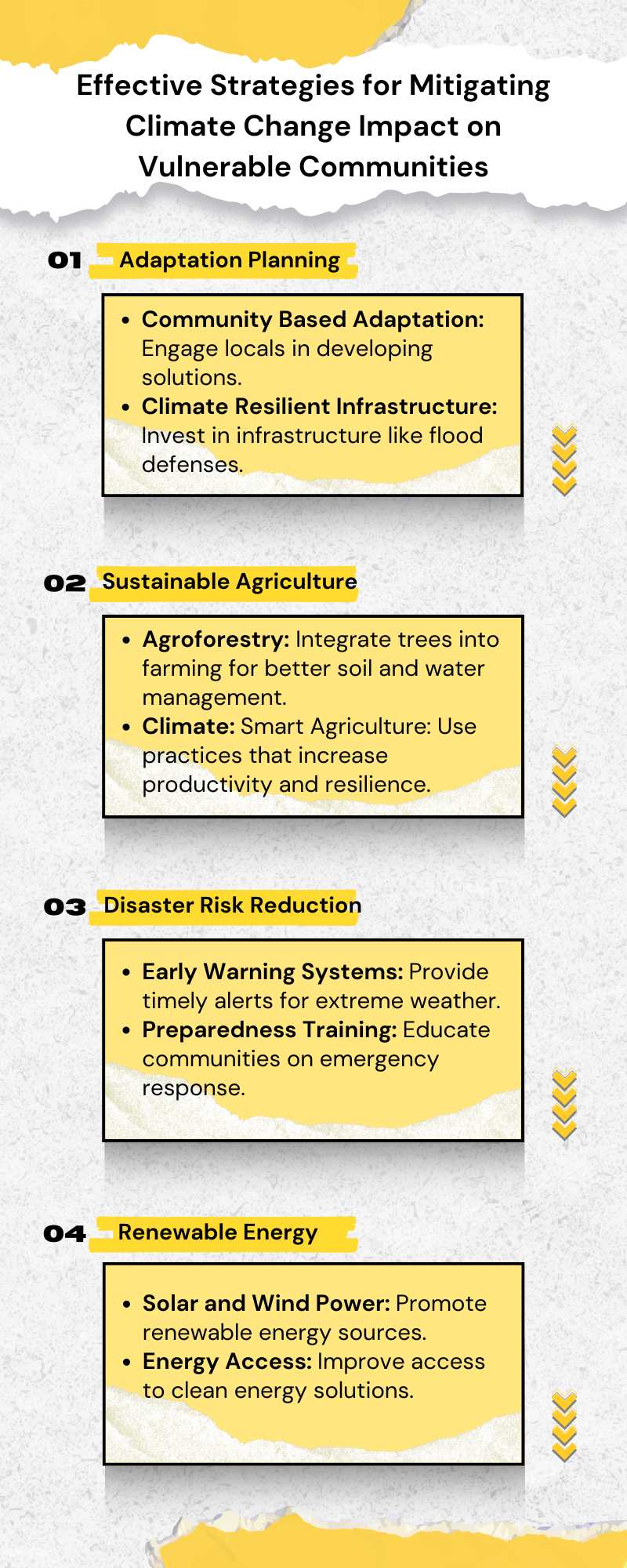
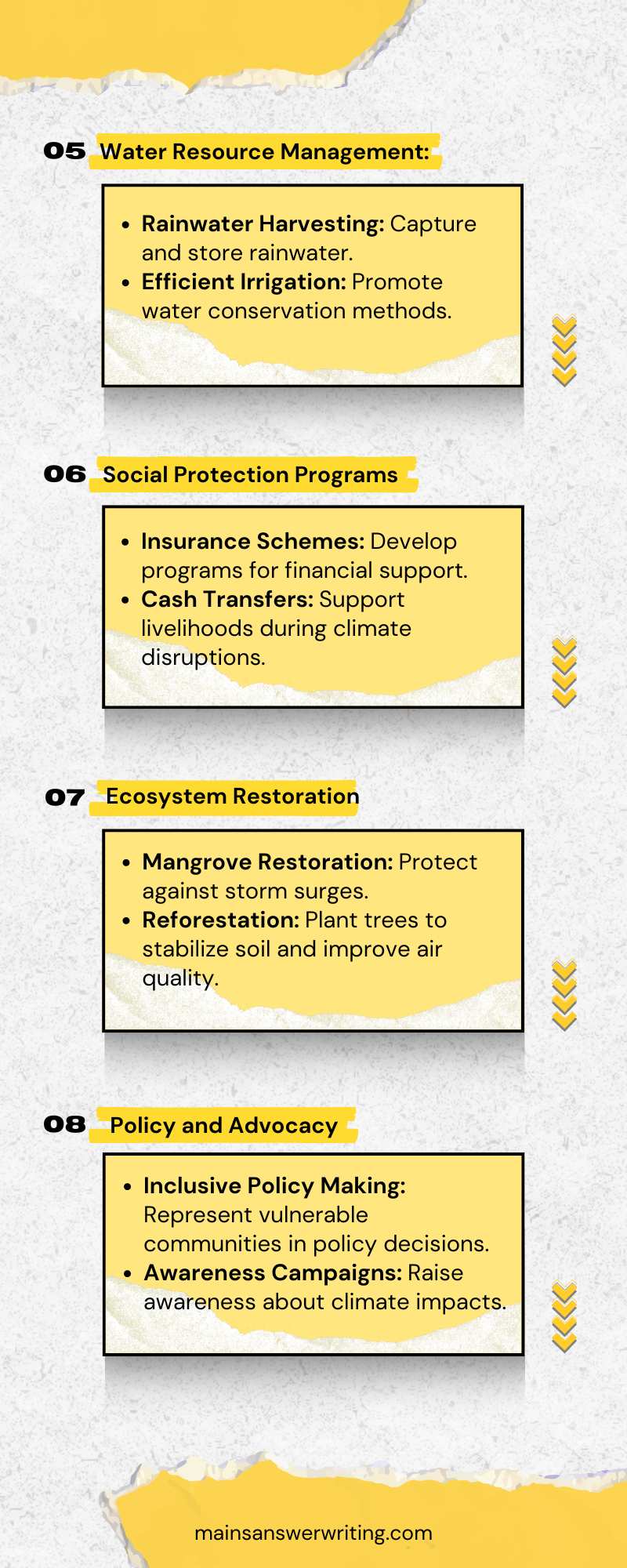


India faces significant challenges from the increasing frequency and intensity of extreme weather events, impacting its sustainable development goals. To mitigate and adapt to climate change, India can take the following measures: 1. Renewable Energy Transition: Expand solar, wind, and hydroelectricRead more
India faces significant challenges from the increasing frequency and intensity of extreme weather events, impacting its sustainable development goals. To mitigate and adapt to climate change, India can take the following measures:
1. Renewable Energy Transition: Expand solar, wind, and hydroelectric power to reduce greenhouse gas emissions.
2. Afforestation and Reforestation: Enhance carbon sinks by planting trees and restoring degraded forests.
3. Climate-Resilient Agriculture: Develop drought-resistant crop varieties and improve water management practices.
4. Infrastructure Resilience: Build flood defenses, improve drainage systems, and strengthen buildings to withstand extreme weather.
5. Early Warning Systems: Implement advanced meteorological services for timely alerts and disaster preparedness.
6. Sustainable Urban Planning: Design cities with green spaces, efficient public transport, and waste management systems.
7. Public Awareness and Education: Promote climate literacy and community engagement in climate action.
These measures can help India mitigate the impacts of climate change and adapt to its consequences, ensuring progress towards sustainable development.
See less