

Describe in brief the different landforms that are the result of glacier movement in terms of erosion and depositional processes. (Answer in 200 words)


Geomorphology is the study of the earth's shape and features like mountains, valleys and coastlines. It helps us to understand how the earth was formed and changed. Uses include predicting natural disasters, managing the environment, planning cities, studying climate change and finding natural resouRead more
Geomorphology is the study of the earth’s shape and features like mountains, valleys and coastlines. It helps us to understand how the earth was formed and changed. Uses include predicting natural disasters, managing the environment, planning cities, studying climate change and finding natural resources.
Significance of Geomorphology in understanding Natural Hazards –
- Identifies prone areas by analyzing landforms, terrain and geological processes, pinpointing zones susceptible to landslides, floods, erosion and other hazards through mapping and spatial analysis.
- Facilitates process analysis by studying the interactions between geological, hydrological and climatic factors, revealing underlying causes of natural hazards such as landslide triggers and flood patterns.
Significance of Geomorphology in understanding Disaster Management –
- Informs risk assessment in disaster management by analyzing terrain, landforms and geological processes to identify, quantify and prioritize potential hazards, enabling targeted mitigation and preparedness strategies.
- Aids emergency planning by identifying evacuation routes, safe zones and potential hazard hotspots, guiding strategic placement of emergency infrastructure and optimizing response efforts during disasters.
- Assesses environmental impacts by evaluating terrain changes, soil erosion and hydrological disruptions, informing mitigation strategies for sustainable disaster recovery.
- Enables monitoring and prediction through terrain analysis, landslide mapping and flood modeling, forecasting potential disasters and triggering early warnings.
Geomorphology helps us to understand the earth’s changing landscape, predict natural disasters, protect the environment and find resources. Its insights are crucial for building safer and more sustainable communities worldwide.
See less


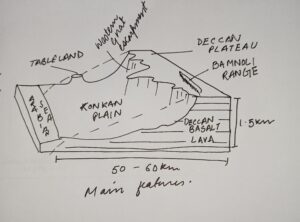 Volcanic eruptions, tectonic uplifts as well as long term erosions are some of the factors that have shaped Deccan Plateau presently with its elevated terrain, deep river valleys and fertile soils.

 Geologists group deserts into five categories:


Glaciers are powerful agents of erosion and deposition, shaping landscapes through their movement and the ice melt processes. Erosional landforms include: Glacial Valleys (U-shaped valleys): Carved out by the erosive action of glaciers, these valleys have steep sides and a broad, flat bottom, contraRead more
Glaciers are powerful agents of erosion and deposition, shaping landscapes through their movement and the ice melt processes. Erosional landforms include:
Depositional landforms include:
Glaciers continually reshape landscapes through a combination of erosional and depositional processes, leaving behind distinctive landforms that reflect their dynamic movement and influence on the Earth’s surface.
See less