

How can robots contribute to space exploration and the colonization of other planets?


Black holes and other extreme cosmic phenomena challenge our current understanding of physics in profound ways. Firstly, they contain gravitational singularities where our known laws break down, demanding a theory of quantum gravity. Their event horizons defy our conventional understanding of space,Read more
Black holes and other extreme cosmic phenomena challenge our current understanding of physics in profound ways. Firstly, they contain gravitational singularities where our known laws break down, demanding a theory of quantum gravity. Their event horizons defy our conventional understanding of space, time, and energy behavior under extreme gravity. The information paradox questions how information entering a black hole is preserved or lost. Hawking radiation suggests black holes emit particles, challenging classical thermodynamics and the interaction of quantum mechanics with gravity. Additionally, cosmic acceleration, attributed to dark energy, challenges fundamental forces and our conception of empty space. Dark matter’s presence, inferred from gravitational effects, challenges our understanding of the universe’s composition and particle physics beyond the Standard Model. Gamma-ray bursts and neutron stars challenge our knowledge of extreme magnetic fields, particle acceleration, and matter at densities far exceeding those on Earth. Addressing these challenges is crucial for advancing both our understanding of the universe and refining our foundational physical theories.
See less


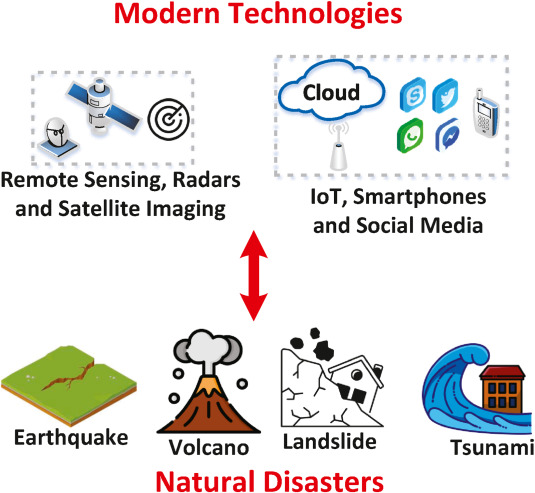 Advancements in satellite technology significantly enhance global climate monitoring and disaster response by providing detailed, timely, and accurate data. Here’s how:
![[Deleted User]](https://mainsanswerwriting.com/wp-content/plugins/WPQA/images/default-image.png "[Deleted User]")


They can explore space and colonize other planets by replacing human beings in dangerous, complex, or just plain tedious tasks. They can do their work in highly hostile environments—outer space, strong radiation, extreme temperatures—with no life-support systems. Especially rovers and landers, robotRead more
They can explore space and colonize other planets by replacing human beings in dangerous, complex, or just plain tedious tasks. They can do their work in highly hostile environments—outer space, strong radiation, extreme temperatures—with no life-support systems. Especially rovers and landers, robots are vitally important in making scientific observations, collecting and analyzing soil and rock samples, and transmitting extremely valuable data back to Earth.
They can also build habitats and establish infrastructure on planets different from Earth. So, autonomous robots could create shelters, set up the life support systems, and deploy solar panels before the human arrival, so the environment will be safer for astronauts. Moreover, robots are capable of maintaining equipment and repairing it without exposing human lives and making the mission more efficient.
Advanced robotics and AI will be capable of sophisticated exploration missions, involving deep space travel and permanent colonies. Robots can function as “pioneers” to open up human ways, or act like “companions” in supporting man with daily tasks and scientific experiments on another planet. The interaction between human and robotic capabilities makes successful space exploration and colonization possible.
See less