

How do the principles of federalism in the Indian Constitution balance power between the central and state governments, and what are the key challenges faced in maintaining this balance?


Yes, youth in India should seriously consider politics as a career. India's democratic framework offers ample opportunities for young, dynamic individuals to bring about meaningful change. By entering politics, young people can directly influence policies that shape the nation's future. Moreover, yoRead more
Yes, youth in India should seriously consider politics as a career. India’s democratic framework offers ample opportunities for young, dynamic individuals to bring about meaningful change. By entering politics, young people can directly influence policies that shape the nation’s future. Moreover, youth bring fresh perspectives, innovative ideas, and a deeper understanding of contemporary issues such as education, employment, and social justice.
However, pursuing a political career in India comes with challenges. The system can be competitive, bureaucratic, and sometimes resistant to change. Nevertheless, the potential to make a significant impact on society is immense. Young politicians can advocate for youth-centric policies, promote transparency, and address issues often overlooked by older generations.
Furthermore, India’s demographic dividend, with a significant youth population, means that the voices and concerns of young politicians resonate strongly. By engaging in politics early, youth can build a foundation for a long and impactful career, contributing to the country’s development and shaping its future trajectory.
In conclusion, while daunting, a career in politics for Indian youth offers the chance to lead, innovate, and drive positive change in a nation poised for growth and transformation. It’s an opportunity to shape not only personal careers but also the destiny of a vibrant and diverse democracy.
See less


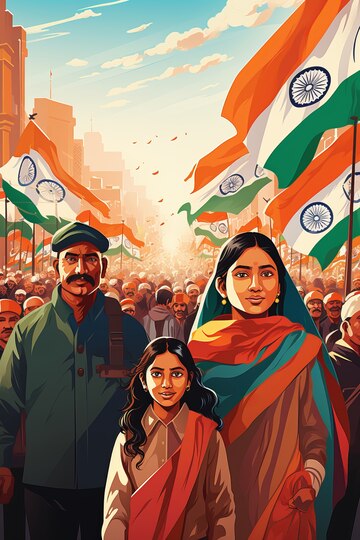
Federalism, in simple terms, refers to the division of powers and responsibilities between the different forms of government. In the context of India, the terms show little variation. Instead of a complete separation of powers and responsibilities, certain powers are vested in both the central and sRead more
Federalism, in simple terms, refers to the division of powers and responsibilities between the different forms of government. In the context of India, the terms show little variation. Instead of a complete separation of powers and responsibilities, certain powers are vested in both the central and state governments. Thus, we could say that Indian federalism is cooperative federalism. To understand this better, one must know that the Seventh Schedule of the Constitution guarantees the division of powers between state and centre. Although the constitution doesn’t directly refer to the federal governance structure, the Seventh Schedule divides powers between the Union and states through three lists: the Union List (centre subjects), the State List (state subjects), and the Concurrent List (the central and state governments) (subjects). Thus, Indian federalism is a unique blend of federalism and unitarianism, thus safely referred to as a quasifederal system. This may sound impressive, but it does come with challenges.
See less