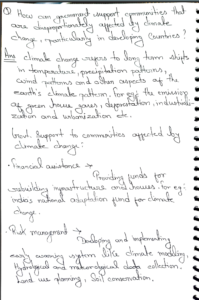
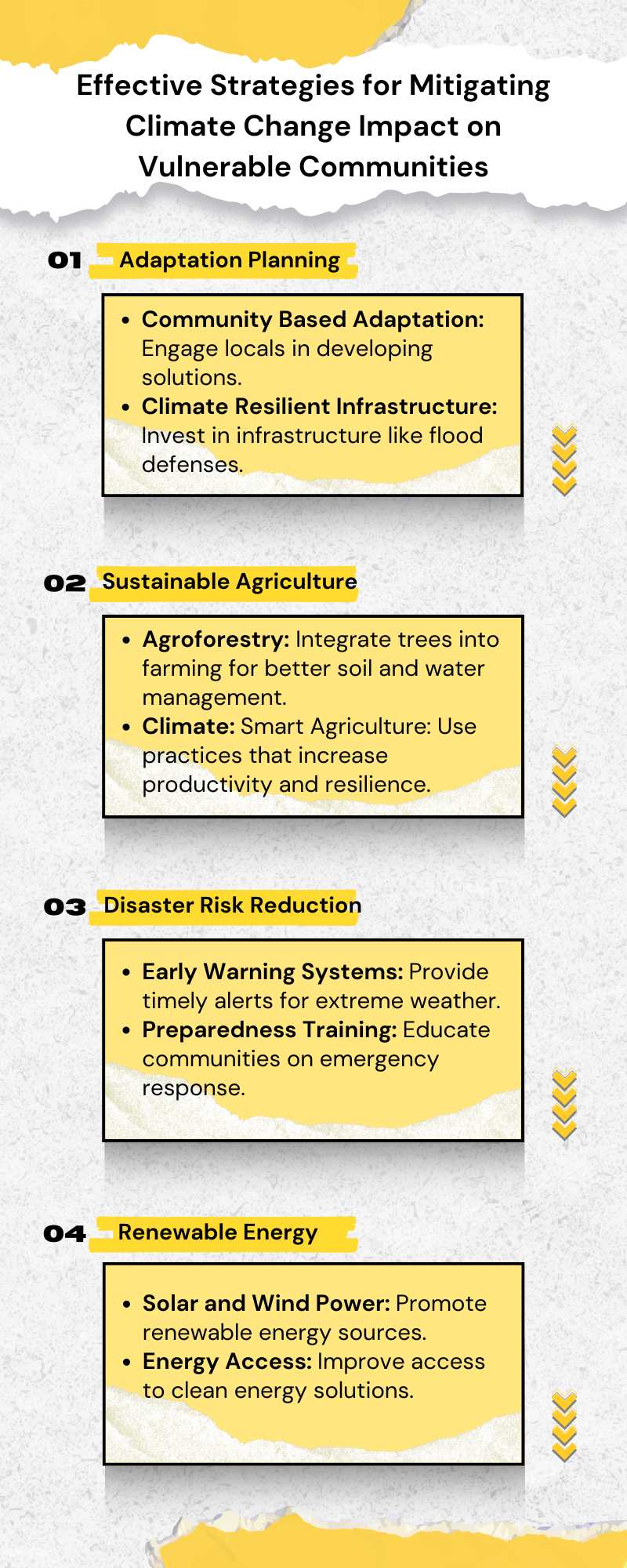
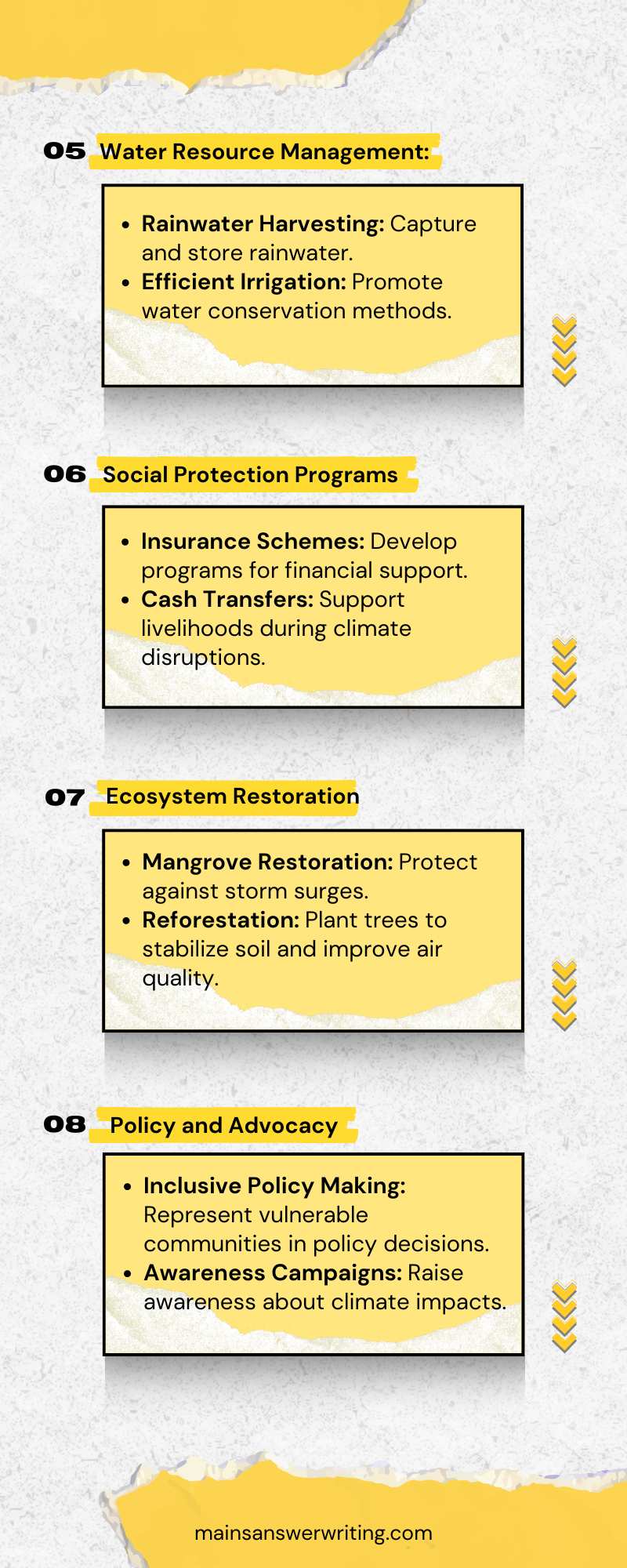
Traditional ecological knowledge (TEK) from indigenous communities plays a critical role in adapting to climate change due to its profound understanding of local ecosystems and environmental processes. This knowledge encompasses sustainable resource management practices that have been refined over gRead more
- Recent Questions
- Most Answered
- Answers
- No Answers
- Most Visited
- Most Voted
- Random
- Bump Question
- New Questions
- Sticky Questions
- Polls
- Followed Questions
- Favorite Questions
- Recent Questions With Time
- Most Answered With Time
- Answers With Time
- No Answers With Time
- Most Visited With Time
- Most Voted With Time
- Random With Time
- Bump Question With Time
- New Questions With Time
- Sticky Questions With Time
- Polls With Time
- Followed Questions With Time
- Favorite Questions With Time
Mains Answer Writing Latest Questions
What are the most effective strategies for mitigating climate change at the community level, and how can local governments, businesses, and individuals collaborate to implement these strategies?
How can emerging technologies, such as artificial intelligence and blockchain, be harnessed to develop more effective and transparent climate change mitigation strategies?
-
Climate change is significantly impacting the production of Alphonso mangoes, particularly in Maharashtra, India, where this premium variety is predominantly grown. Known for its exceptional taste and aroma, Alphonso mangoes require specific climatic conditions to thrive. However, changing weather pRead more
Climate change is significantly impacting the production of Alphonso mangoes, particularly in Maharashtra, India, where this premium variety is predominantly grown. Known for its exceptional taste and aroma, Alphonso mangoes require specific climatic conditions to thrive. However, changing weather patterns are disrupting these conditions, leading to reduced yields and quality.
Rising temperatures have altered the flowering patterns of Alphonso mango trees. Warmer winters delay or reduce flowering, leading to fewer fruits. Additionally, unseasonal rains during the flowering and fruiting stages can cause blossom drop and fruit rot, further diminishing the harvest. Increased humidity, a consequence of erratic rainfall, also promotes the growth of pests and diseases like powdery mildew and fruit flies, which directly harm the mangoes.
Moreover, the unpredictability of monsoon rains affects water availability, crucial for mango orchards. Prolonged droughts or insufficient rainfall can stress the trees, reducing their productivity. Conversely, excessive rainfall can lead to waterlogging, damaging the roots and affecting the fruit’s flavor and shelf life.
Farmers in Maharashtra are increasingly struggling with these challenges, resulting in lower yields and higher production costs. As climate change intensifies, the future of Alphonso mango cultivation in the region faces significant uncertainty, threatening both the livelihoods of farmers and the availability of this beloved fruit.
See less
-
[Deleted User]Added an answer on July 23, 2024 at 10:06 pmOver the next 20 years, climate change will likely impact the food we eat in several ways. Rising temperatures, changing rainfall patterns, and more extreme weather events could reduce crop yields, affecting the availability of staples like wheat, rice, and maize. Increased CO₂ levels might also lowRead more
Over the next 20 years, climate change will likely impact the food we eat in several ways. Rising temperatures, changing rainfall patterns, and more extreme weather events could reduce crop yields, affecting the availability of staples like wheat, rice, and maize. Increased CO₂ levels might also lower the nutritional quality of these crops, reducing essential nutrients.
Climate change can expand the range of pests and diseases, leading to higher crop losses and increased costs for managing these issues. Water shortages from altered precipitation and higher evaporation rates may impact irrigation, further affecting food production.
Food prices may rise due to reduced crop yields and higher production costs, making food less affordable, especially for low-income populations. Seafood availability could be affected as changing ocean conditions impact marine ecosystems and fish populations.
Overall, climate change could lead to increased food insecurity by disrupting production and supply chains. Adapting to these challenges will involve developing resilient crops, improving water management, and adopting sustainable farming practices to ensure a stable food supply.
See less
-
Historical climate events have significantly influenced human societies in various ways, and understanding these impacts can guide our current responses to climate change. Here are some key points: 1. Migration and Displacement Examples: The collapse of the Mayan civilization and the migration of ViRead more
See lessHistorical climate events have significantly influenced human societies in various ways, and understanding these impacts can guide our current responses to climate change. Here are some key points:
1. Migration and Displacement
- Examples: The collapse of the Mayan civilization and the migration of Viking populations were partly due to prolonged droughts and climate shifts.
- Implication: Current climate change may lead to increased migration and displacement, highlighting the need for policies that support affected populations.
2. Agricultural Practices
- Examples: The Little Ice Age affected crop yields in Europe, leading to food shortages and social unrest.
- Implication: Studying past agricultural adaptations can help modern societies develop resilient farming practices and food security strategies.
3. Economic Structures
- Examples: Societies reliant on specific climates, such as the ancient Egyptians with the Nile, faced economic challenges during climate fluctuations.
- Implication: Diversifying economies and reducing reliance on climate-sensitive resources can enhance resilience.
4. Social Conflicts
- Examples: Resource scarcity, driven by climate events, has historically led to conflicts, such as the Syrian civil war partly influenced by a severe drought.
- Implication: Understanding these links can inform conflict prevention strategies and promote cooperation over shared resources.
5. Technological Innovation
- Examples: Societies often innovate in response to climate challenges, such as the development of irrigation systems in arid regions.
- Implication: Encouraging research and development of sustainable technologies can help mitigate the effects of climate change.
6. Policy and Governance
- Examples: Responses to historical climate crises often shaped governance structures, as seen in the establishment of early disaster response frameworks.
- Implication: Current policy-making can benefit from adaptive governance approaches that emphasize flexibility and responsiveness to climate impacts.
Conclusion
By studying historical climate events and their effects on societies, we can better prepare for and respond to contemporary climate challenges. This knowledge underscores the importance of resilience, adaptability, and cooperation in tackling the ongoing climate crisis.
How is climate change being manifested subcontinental countries like India and South East Asia?
-
Climate change is emerging prominently in subcontinental countries such as India and Southeast Asia. Some of the most important expressions are as follows: -Heightened Heatwaves: More frequent and intense heatwaves are posing a significant problem. These are causing increased mortality, heat stressRead more
Climate change is emerging prominently in subcontinental countries such as India and Southeast Asia. Some of the most important expressions are as follows:
-Heightened Heatwaves: More frequent and intense heatwaves are posing a significant problem. These are causing increased mortality, heat stress illnesses, and reduced agricultural productivity.
This shifts the rainfall trend and leads to both droughts and extreme flooding elsewhere, disrupting agriculture, destroying infrastructure, and probably leading to water scarcity and heightened vulnerability to waterborne diseases.
This is associated with sea level rise as, along coastlines, sea levels have risen; this leads to increased coastal erosion, saltwater intrusion into sources of fresh, and communities have been displaced from the coastline.-Glacier Melt: Glacier melting in the Himalayas and other mountain ranges is impacting the availability of water for millions downstream. This has implications for both water scarcity in dry seasons and increased flood risk in wet seasons.
-Increasing Extreme Weather Events: More frequent and intense cyclones, typhoons, and other extreme weather events have caused widespread destruction to infrastructure, livelihoods, and ecosystems.
Changes in temperature and rainfall patterns have an impact on crop yields, leading to food insecurity and economic losses for farmers.
See less
The impacts are not evenly distributed and disproportionately affect vulnerable populations, such as low-income communities and marginalized groups.
-
Continuing urbanization while controlling climate change requires sustainable development strategies that balance growth with environmental stewardship. In India, several initiatives demonstrate how urbanization can be managed sustainably. Green Buildings: Incorporating energy-efficient designs andRead more
See lessContinuing urbanization while controlling climate change requires sustainable development strategies that balance growth with environmental stewardship. In India, several initiatives demonstrate how urbanization can be managed sustainably.
- Green Buildings:
- Incorporating energy-efficient designs and renewable energy sources in urban construction can reduce carbon footprints. The Indian Green Building Council (IGBC) promotes green building standards, and cities like Bengaluru and Hyderabad have numerous certified green buildings.
- Sustainable Transportation:
- Expanding public transportation networks and promoting electric vehicles (EVs) can reduce urban emissions. Delhi’s Metro system, one of the largest in the world, significantly cuts down vehicular pollution. Additionally, cities like Pune and Bengaluru are investing in EV infrastructure and bike-sharing programs.
- Urban Green Spaces:
- Creating and preserving urban green spaces helps mitigate the urban heat island effect and improves air quality. Mumbai’s urban forestry project, Miyawaki forests, rapidly creates dense, native forests in small urban spaces, enhancing biodiversity and carbon sequestration.
- Smart City Initiatives:
- The Smart Cities Mission in India focuses on sustainable urban development through smart technologies. Cities like Surat and Bhubaneswar use IoT-based systems for efficient water management, waste management, and energy conservation.
- Waste Management:
- Implementing effective waste management systems reduces landfill emissions and promotes recycling. Pune’s SWaCH cooperative involves waste pickers in recycling initiatives, reducing landfill use and creating sustainable livelihoods.
By adopting these sustainable practices, Indian cities can continue to grow while minimizing their environmental impact, contributing to climate change mitigation and creating resilient urban environments.
- Green Buildings:
Effective Strategies for Mitigating Climate Change at the Community Level Mitigating climate change at the community level requires a multi-faceted approach involving local governments, businesses, and individuals. Effective strategies focus on reducing carbon footprints, enhancing resilience, and fRead more
Effective Strategies for Mitigating Climate Change at the Community Level
Mitigating climate change at the community level requires a multi-faceted approach involving local governments, businesses, and individuals. Effective strategies focus on reducing carbon footprints, enhancing resilience, and fostering sustainable practices. This answer discusses these strategies and explores how different stakeholders can collaborate to implement them effectively, with recent examples to illustrate their impact.
1. Energy Efficiency and Renewable Energy Adoption
Energy Efficiency Improvements: Communities can reduce their carbon footprint by improving energy efficiency in homes, public buildings, and businesses. This includes adopting energy-efficient appliances, insulating buildings, and retrofitting infrastructure.
Recent Example: In Bangalore, the Bengaluru Smart Energy Efficient City initiative has focused on upgrading street lighting to LED and retrofitting public buildings with energy-efficient technologies, significantly reducing energy consumption.
Renewable Energy Integration: Promoting the use of renewable energy sources, such as solar panels and wind turbines, at the community level helps decrease reliance on fossil fuels.
Recent Example: The Solar Rooftop Programme in Delhi provides incentives for installing solar panels on residential and commercial buildings, contributing to increased renewable energy use and reduced greenhouse gas emissions.
Collaboration: Local governments can provide subsidies and incentives for renewable energy installations, businesses can invest in clean energy technologies, and individuals can adopt renewable energy solutions in their homes.
2. Sustainable Transportation and Mobility
Promotion of Public Transport and Non-Motorized Transport: Encouraging the use of public transportation, cycling, and walking reduces the carbon footprint associated with personal vehicles.
Recent Example: The Kochi Water Metro Project aims to enhance public transportation through water-based transit options, reducing reliance on road transport and lowering emissions.
Electric Vehicles (EVs): Supporting the adoption of electric vehicles through infrastructure development, such as charging stations, and providing incentives for EV purchases can further reduce emissions from the transportation sector.
Recent Example: The Delhi Electric Vehicle Policy offers subsidies and incentives for EV buyers and has expanded the city’s network of EV charging stations, promoting cleaner transportation options.
Collaboration: Local governments can develop public transport infrastructure and EV policies, businesses can invest in EV fleets and charging infrastructure, and individuals can choose public transport or EVs over traditional vehicles.
3. Waste Management and Circular Economy
Waste Reduction and Recycling: Implementing effective waste management practices, including waste segregation, recycling, and composting, helps minimize landfill use and reduce methane emissions.
Recent Example: The Swachh Bharat Mission (Urban) has introduced waste segregation and recycling programs in cities like Pune, where community participation has significantly improved waste management and reduced environmental impact.
Circular Economy Practices: Promoting a circular economy, where resources are reused and recycled, minimizes waste and reduces the demand for new raw materials.
Recent Example: The Nudge Foundation’s initiatives in Bengaluru focus on circular economy practices, including upcycling waste materials and promoting sustainable consumption habits among residents.
Collaboration: Local governments can establish recycling facilities and enforce waste management regulations, businesses can adopt circular economy principles and create sustainable products, and individuals can practice recycling and waste reduction.
4. Community-Based Adaptation and Resilience Building
Community Resilience Planning: Developing community-level resilience plans that address climate risks, such as flooding and extreme heat, helps communities prepare for and adapt to climate impacts.
Recent Example: The Resilient Cities Initiative in Chennai involves local communities in planning and implementing flood management measures, improving infrastructure resilience to climate-related risks.
Green Infrastructure and Urban Planning: Investing in green infrastructure, such as parks, green roofs, and urban forests, enhances environmental quality and provides natural solutions to climate adaptation.
Recent Example: The Mumbai Coastal Road Project incorporates green infrastructure elements, including coastal protection and green spaces, to improve resilience against sea-level rise and extreme weather events.
Collaboration: Local governments can develop resilience plans and green infrastructure projects, businesses can invest in sustainable urban development, and individuals can participate in community planning and environmental stewardship.
5. Education and Advocacy
Climate Education and Awareness: Raising awareness and educating community members about climate change, its impacts, and mitigation strategies fosters greater community engagement and action.
Recent Example: The Climate Reality Project India conducts workshops and outreach programs to educate communities about climate change and promote sustainable practices.
Community Engagement and Advocacy: Encouraging community involvement in climate action through advocacy groups and local initiatives helps build collective efforts towards sustainability.
Recent Example: The Citizen’s Climate Lobby in Hyderabad engages local communities in climate advocacy, influencing policies and promoting grassroots climate action.
Collaboration: Local governments can support climate education programs, businesses can fund community outreach initiatives, and individuals can participate in advocacy and educational activities.
Conclusion
Mitigating climate change at the community level involves a combination of energy efficiency, renewable energy adoption, sustainable transportation, waste management, and resilience building. Effective collaboration among local governments, businesses, and individuals is crucial for implementing these strategies. By working together, these stakeholders can drive meaningful progress toward a more sustainable and climate-resilient future. The recent examples provided illustrate successful applications of these strategies and highlight the potential for broader impact through coordinated efforts.
See less