


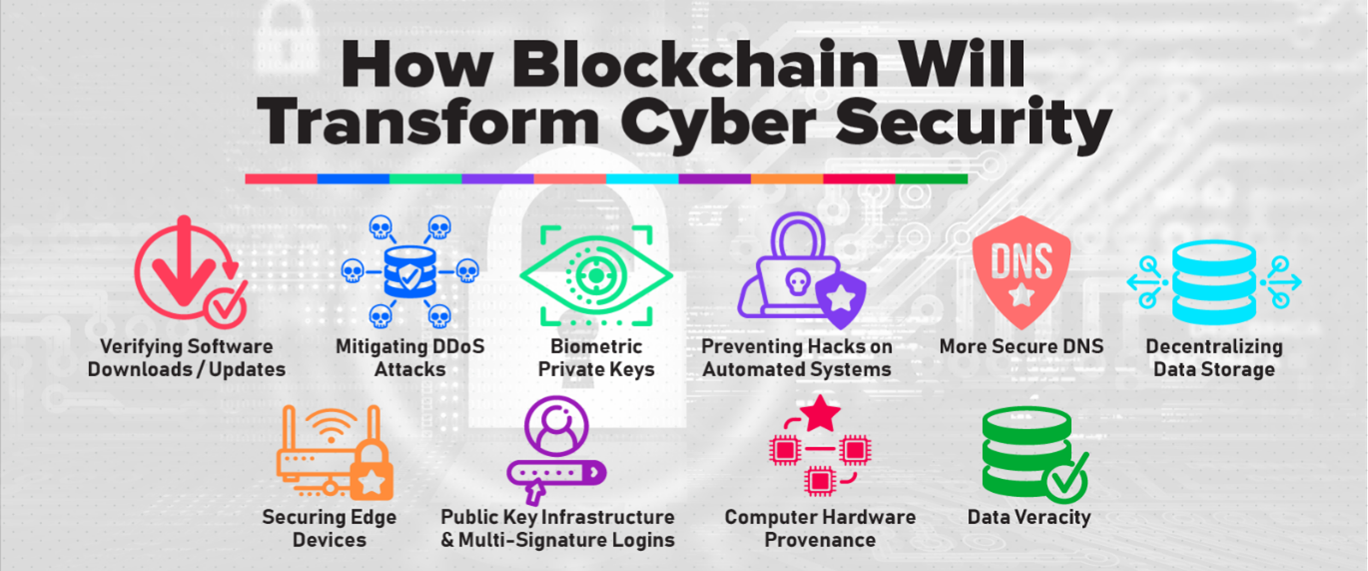
Blockchain technology's decentralized nature is revolutionizing cybersecurity in several key ways: 1. Distributed Ledger: Blockchain operates as a distributed ledger, meaning that data is stored across a network of computers (nodes) rather than a single central server. This makes it much moreRead more
Blockchain technology’s decentralized nature is revolutionizing cybersecurity in several key ways:
1. Distributed Ledger: Blockchain operates as a distributed ledger, meaning that data is stored across a network of computers (nodes) rather than a single central server. This makes it much more difficult for hackers to attack because there is no single point of failure. Compromising the network would require simultaneously attacking a majority of the nodes.
2. Immutability: Once data is recorded on a blockchain, it is extremely difficult to alter. This immutability helps prevent unauthorized changes and tampering. Each block is cryptographically linked to the previous one, creating a secure chain of information.
3. Transparency and Traceability: Transactions on a blockchain are transparent and can be traced back to their origin. This transparency deters fraudulent activities and enhances trust, as all participants can see the same information and verify it independently.
4. Decentralized Consensus: Blockchain uses consensus mechanisms (such as Proof of Work or Proof of Stake) to validate transactions. This means that no single entity controls the verification process, reducing the risk of corruption or manipulation.
5. Enhanced Security Protocols: Blockchain technology employs advanced cryptographic techniques to secure data. Public and private keys, along with digital signatures, ensure that only authorized users can access and execute transactions.
6. Smart Contracts: These are self-executing contracts with the terms directly written into code. They automatically enforce and execute agreements when predetermined conditions are met, reducing the need for intermediaries and enhancing security through automation.
By decentralizing data storage and verification, blockchain technology significantly enhances cybersecurity, making systems more resilient to attacks, reducing fraud, and increasing trust among users.
See less


India can leverage AI to boost economic growth and address social challenges by: 1. *Automating industries*: Enhance productivity and efficiency in sectors like manufacturing, finance, and healthcare. 2. *Agricultural optimization*: Use AI for precision farming, crop yield prediction, and resourceRead more
India can leverage AI to boost economic growth and address social challenges by:
1. *Automating industries*: Enhance productivity and efficiency in sectors like manufacturing, finance, and healthcare.
2. *Agricultural optimization*: Use AI for precision farming, crop yield prediction, and resource allocation.
3. *Education and skills development*: Implement AI-powered adaptive learning systems and skill training programs.
4. *Healthcare access*: Utilize AI for telemedicine, disease diagnosis, and personalized treatment plans.
5. *Infrastructure development*: Apply AI for smart city planning, traffic management, and public services optimization.
6. *Innovation and entrepreneurship*: Foster AI-driven startups and research collaborations.
7. *Social welfare*: Use AI for poverty prediction, resource allocation, and personalized social services.
8. *Environmental sustainability*: Leverage AI for climate modeling, resource conservation, and sustainable development.
To achieve this, India should:
1. Invest in AI research and development
2. Develop a skilled workforce
3. Encourage collaboration between academia, industry, and government
4. Address data privacy and ethical concerns
5. Implement inclusive and equitable AI adoption strategies
By harnessing AI, India can drive economic growth, improve social outcomes, and enhance the overall quality of life for its citizens.
See less