

Sri Lanka’s continuous economic crisis has effects that stretch beyond the country’s boundaries. Talk about it specifically in terms of India. Mention the actions India has made to help Sri Lanka get over this situation as well. (250 words)


Answer: India's energy diplomacy for ensuring energy security in the South-Asian region ranges from cross- border electricity trade to supplying petroleum products and setting up liquefied natural gas terminals. Cross-border energy trade is a key aspect of India's 'neighbourhood first' policy, withRead more
Answer: India’s energy diplomacy for ensuring energy security in the South-Asian region ranges from cross- border electricity trade to supplying petroleum products and setting up liquefied natural gas terminals. Cross-border energy trade is a key aspect of India’s ‘neighbourhood first’ policy, with plans to build energy links to check China’s growing influence. Need for energy cooperation in South Asia:
- To match the energy demand and resource endowments among the South Asian countries:
- For instance, India, Pakistan and Bangladesh account for the major share of natural gas and coal resources in the region. However, these countries also have huge resource demand due to large populations.
- Bhutan and Nepal, on the other hand, have hydropower potential in excess of their demand for electricity over the foreseeable future and offer the best prospects for intra-regional electricity export.
- Enable access to clean energy: A large section of the population, particularly in rural areas, lacks access to electricity and relies on the traditional use of biomass for cooking.
- Leverage economies of scale in energy procurement: Regional energy transfer will increase countries’ access to energy resources (from outside the region) and leverage economies of scale thereby.
Existing gaps in South Asia’s energy cooperation:
- Resources constraints: While coal is abundant in India, Bangladesh and Pakistan, it is not considered a fuel of the future due to its pollutant effects and negative impacts on society through mining-induced displacement of vulnerable communities. On the other hand, while gas is comparatively a cleaner hydrocarbon, supplies are depleting in Pakistan and Bangladesh.
- Issues with mobilization of financial resources: Financial resources are needed to develop the necessary energy infrastructure. One of the major reasons for this is the state-centred approach towards energy security that is primarily based on government-to-government interactions and the use of public sector enterprises.
- Lack of diversification of fuel basket: There is an overarching dominance of a single fuel in the energy mix across all SAARC nations. India, for instance, is heavily dependent on coal, Bangladesh and Pakistan on gas, and Bhutan and Nepal are predominantly hydro-based energy generators, which leaves countries vulnerable to disruptions caused by market and technological failure.
- Limited focus on renewable energy: Despite abundant renewable sources available across the region, they have not been efficiently tapped. Afghanistan, for instance, has large renewable resources, which, if exploited fully, could help reduce supply gaps.
- Slow progress on regional and multilateral projects: Despite recent progress in negotiations, no construction has yet taken place and doubts have been raised about the completion of the projects in this regard.
- Overarching political differences: At present SAARC, SASEC AND BIMSTEC are the three established institutional mechanisms dealing with regional energy cooperation in all or some of the South Asian countries. However, cooperation among member countries has not been as successful as expected due to political differences.
South Asian nations need to see the comparative advantages they hold in various energy sectors, and must come together to benefit each other via trade links. India must take a lead by facilitating financing, developing harmonized technical regulations, deepening professional networks, and enhancing regional business opportunities. In this direction, a high-level group, namely the South Asia Group for Energy (SAGE), has been set up for promoting, initiating and facilitating effective policy dialogue and capacity building on bilateral, sub-regional and regional basis for energy and related issues among South Asian countries.
See less


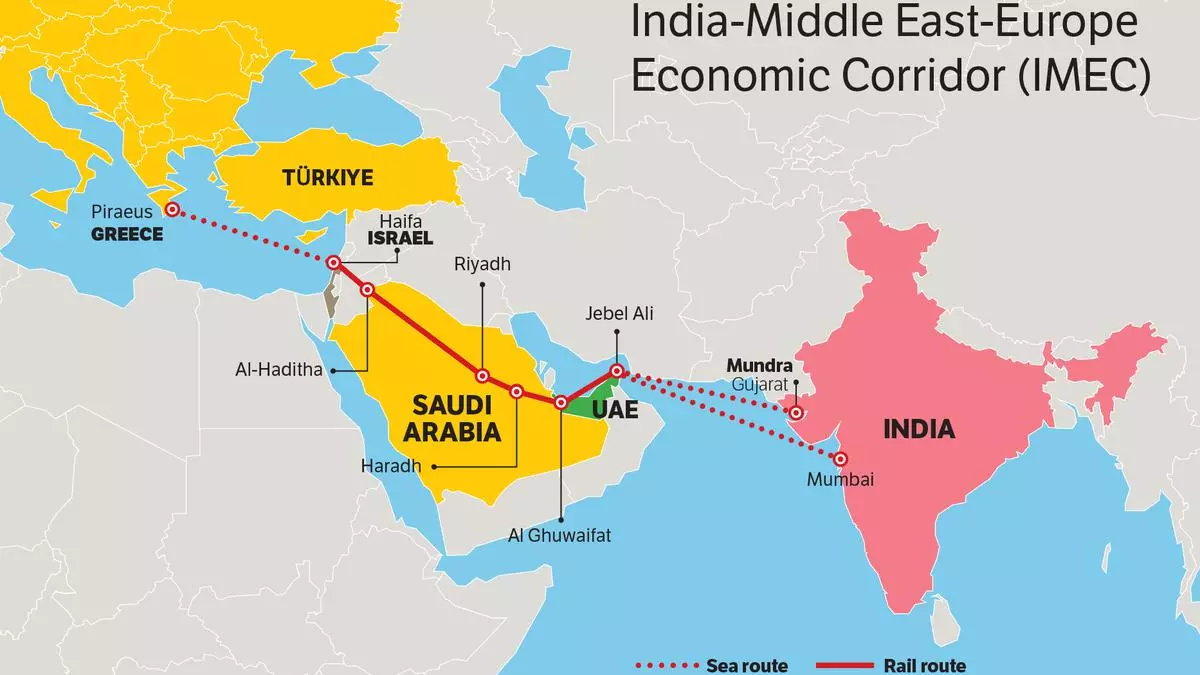 India’s relationship with Europe has become a key component of its international strategy. As India seeks closer ties with European countries, it faces the challenge of dealing with the continent’s diverse and sometimes contradictory landscape. This engagement is not solely about economic gains or political alliances; it involves understanding and addressing the unique complexities that define Europe. Let’s delve into the different aspects of this relationship in a more detailed and straightforward manner.


Answer: Sri Lanka is facing its worst economic crisis since the country's independence from British colonial rule in 1948. The country has amassed $51 billion in foreign debt, inflation has soared past 17%, and its debt-to-GDP ratio has escalated from 86.9 percent in 2019 to 100.6 percent in 2020, aRead more
Answer: Sri Lanka is facing its worst economic crisis since the country’s independence from British colonial rule in 1948. The country has amassed $51 billion in foreign debt, inflation has soared past 17%, and its debt-to-GDP ratio has escalated from 86.9 percent in 2019 to 100.6 percent in 2020, and 105.6 percent in 2021. The reason for the present scenario can be summed up in six key economic challenges: the state of the domestic economy, Balance of Payments (BOP) crises, successive IMF loans, unwarranted agricultural reforms contributing to FOREX scarcity and soaring inflation, downfall of the tourism sector, and the country’s historical fetishism for sovereign debts. The economic crisis has turned in to a political chaos, which has repercussions on India as well. These include the following:
In this context, a speedy recovery of Sri Lanka is in India’s interest. India has taken the following steps to help Sri Lanka during the economic crisis:
With other crises unfolding in India’s neighbourhood, for instance in Nepal and Pakistan, diplomatic efforts need to be stepped up to contain any second order effects on India.
See less