

Roadmap for Answer Writing 1. Introduction Define defence diplomacy and briefly mention India’s growing role in this domain. Use a recent example to set the tone, e.g., mention a high-profile military exercise or defence pact. 2. Body Key Aspects of India’s Defence Diplomacy: Military Exercises: Highlight joint ...


Model Answer Introduction: India-China BPTA, 1993 The India-China Border Peace and Tranquility Agreement (BPTA), signed in 1993, aimed to ensure peace and stability along the Line of Actual Control (LAC), the de facto border between India and China. The agreement sought to reduce the risk of unplannRead more
Model Answer
Introduction: India-China BPTA, 1993
The India-China Border Peace and Tranquility Agreement (BPTA), signed in 1993, aimed to ensure peace and stability along the Line of Actual Control (LAC), the de facto border between India and China. The agreement sought to reduce the risk of unplanned confrontations and provide a framework for managing border tensions.
Role in Reducing Border Tensions
Establishment of Framework
The BPTA laid out fundamental principles for maintaining peace along the LAC. It emphasized no use of force or threats, mutual non-aggression, and keeping military forces at a minimum level. This framework helped in reducing the likelihood of direct military confrontations between the two nations.
Confidence-Building Measures (CBMs)
The BPTA served as a foundation for various Confidence-Building Measures (CBMs). Notable among them was the Confidence-Building Measures Agreement (CBMA) of 1996, which prohibited large-scale military exercises and mandated prior notification of brigade-level troop inductions and de-inductions. These measures were crucial in ensuring transparency and trust-building between the two nations.
Military-to-Military Contacts and Standard Operating Procedures
BPTA facilitated military-to-military contacts between India and China. This paved the way for mechanisms such as the Working Mechanism for Coordination and Cooperation on India-China Border Affairs (2012), which aimed at resolving border incidents promptly and peacefully. The Protocol on Modalities for Implementation of CBMs in the Military Field (2005) further detailed steps to avoid escalation during border situations.
Disengagement Platforms
To aid in disengagement during tensions, specific points along the LAC—such as Spanggur (Western sector), Nathu La (Sikkim sector), and Bum La (Eastern sector)—were designated as Border Personnel Meeting (BPM) points, allowing personnel from both sides to engage in dialogue and resolve issues peacefully.
Conclusion
While the BPTA has contributed significantly to reducing border tensions, challenges like different perceptions of the LAC and incidents such as the 2020 Galwan Valley clash persist. However, through continued dialogue and diplomatic efforts, these disputes can be managed effectively.
See less


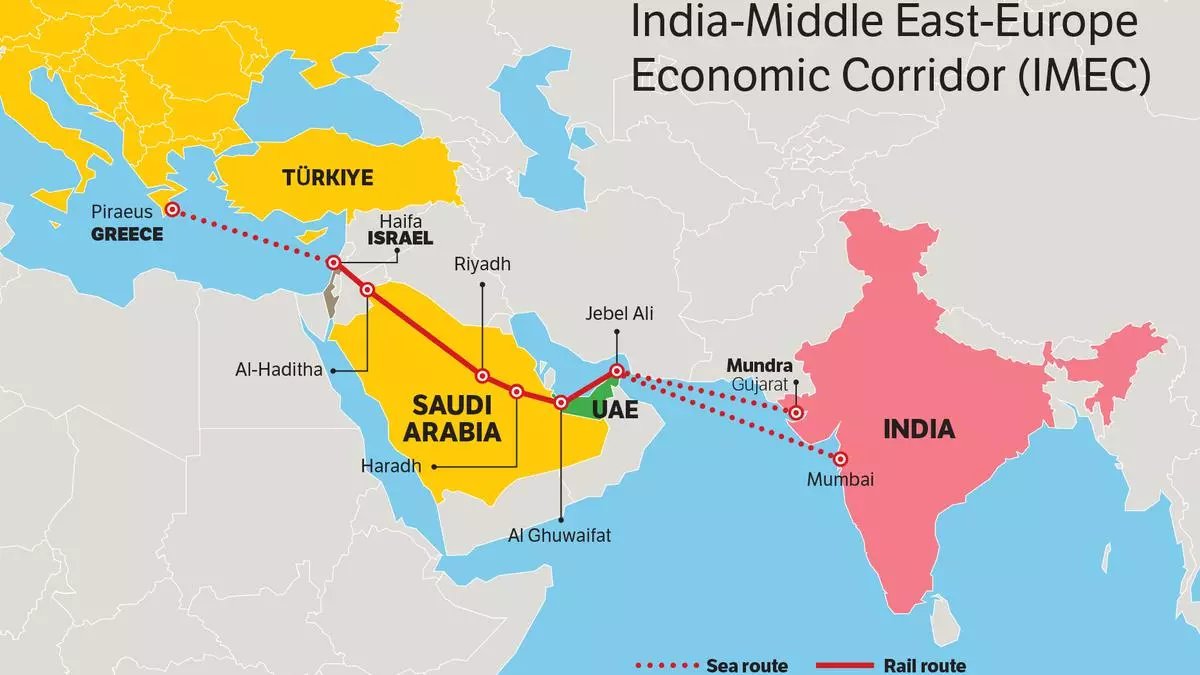 India’s relationship with Europe has become a key component of its international strategy. As India seeks closer ties with European countries, it faces the challenge of dealing with the continent’s diverse and sometimes contradictory landscape. This engagement is not solely about economic gains or political alliances; it involves understanding and addressing the unique complexities that define Europe. Let’s delve into the different aspects of this relationship in a more detailed and straightforward manner.


Indias Increasingly Assertive Defence Diplomacy: — The Seriousness Of Regional Impact Introduction India has developed as an important player in world and regional politics in the recent past and it is primarily on account of its strategic focus on defence diplomacy. It is essentially a strategy toRead more
Indias Increasingly Assertive Defence Diplomacy: — The Seriousness Of Regional Impact
Introduction
India has developed as an important player in world and regional politics in the recent past and it is primarily on account of its strategic focus on defence diplomacy. It is essentially a strategy to gain influence in the region using military capabilities, joint exercises, defence agreements and arms sales as tools of engagement to increase ties. India’s defence diplomacy is not only bordering on the realm of the possible, but it is actively surpassing it, reinforcing India’s position as a major player asian region with strategic partnerships that bolster India’s interests. In this article, the author consensually explores the structure of different facets of the expanding Indian defence diplomacy and the contemporaneous effects in and around the South Asian and the Indo-Pacific expanse.
Historical Context
Traditionally strong military ties: India’s military ties have been traditionally strong with likes of Russia and the Soviet Union. But since the end of the Cold War, India has attempted to diversify its defence partnerships with a wider range of countries. The mothers of children involved in treaties did not stay home, nor were they passive in treaties; they often led their children.
Strategic Partnerships
United States
The defence relationship with the United States has expanded substantially with India since the India-U. S. Defence Technology and Trade Initiative (DTTI) in 2012 and Communications Compatibility and Security Agreement (COMCASA) in 2018. Such deals have paved the way for joint transfer of sophisticated military technology and have led to increased operational coordination. Such joint exercises, like “ MALABAR”— which has expanded to include Australia and Japan — only deepen the strategic partnership and strengthen India’s interoperability with U.S. forces.
Russia
Russia, however, remains an indispensable defence partner for India despite the pivot to Western alliance. Defence relations such as the S-400 missile defence system purchase and joint weapons development like the BrahMos missile make it clear that this relationship is one which endures. Support from Russia in defense technology and training is critical for India’s military modernization.
France
With its 1998 nuclear explosions, France became a strategic partner of India — and never more than in the Indo-Pacific region. Bilateral defence cooperation has received a major boost with induction of the Rafale fighter jets and signing of the Logistic Support Agreement (LSA) in 2016. Joint naval exercises like “VARUNA” which not only boosts maritime security capabilities but also mutual trust between the two countries.
Israel
Since the 1990s, India’s defence partnership with Israel has expanded dramatically. Israel is now among India’s leading defence suppliers, delivering sophisticated missile systems, drones and surveillance technology. This partnership played a key role in building capabilities for counter-terrorism in India and has also supported India’s defence technological advancement efforts.
ASEAN and Countries of the Indo-Pacific
Through the “Act East” policy, India has engaged with ASEAN and other Indo-Pacific nations in a very active manner. Joint exercises like “SIMBEX” with Singapore and “KAKADU” with Australia, Australia, have become fixtures. These exercises serve to strengthen military readiness and also generate goodwill and strengthen lines of tactical coordination. India’s arms supply to Vietnam and Indonesia has also facilitated their defence-building capabilities, and consolidated India’s foothold in that region.
Timelines – Defence Agreements and Frameworks
India has also sealed various defence agreements and frameworks to anchor its regional footprint. For instance, the India-Japan Acquisition and Cross-Servicing Agreement (ACSA) and the India-Australia Mutual Logistics Support Agreement (MLSA). Such pacts enable the sharing of logistics and resources between the Indian and partner forces, thus becoming a force-multiplier.
Military Exercises
Military exercises are at the heart of India’s defence diplomacy. They range from boosting interoperability, building trust and demonstrating military capabilities. Exercises like “YUDH ABHYAS” with the United States, “INDRA” with Russia and “SHAKTI” with France aim to instill training in the full spectrum of operations and conduct for the military and foster greater bilateral military engagement.
Humanitarian assistance and disaster relief (HADR)
All this, combined with India’s ability to provide humanitarian assistance and disaster relief (HADR), added to New Delhi’s regional heft. As signified by operations like Mission Vajra Pravaah in Nepal, and Indian Navy deployment for HADR in Maldives and Sri Lanka, India’s commitment to regional stability and security exemplified through initiatives like is being increasingly translated into reality. India has thus earned goodwill and respect in its neighbourhood.
Weapons sales and transfer of defence technology
India has become an increasingly significant supplier of defence equipment and technology to other countries in the region. Third, arms sales to countries like Myanmar, Vietnam, and the Philippines have brought economic benefits to the table, while serving to strengthen India’s strategic partnerships. Technology transfers and training programs also have strengthened relations and further solidified India’s standing in the region.
Challenges and Constraints
India has made strides in defence diplomacy, but is faced with challenges. For example, maneuvering a balanced course between Russia and the United States is not easy. On top of that, China is steadily increasing its military presence in the region, mainly in the Indian Ocean, as well. India also needs to overcome internal constraints, whether it is more military modernisation or indigenous defence capability development.
Conclusion
India’s defence diplomacy, which has notably increased its regional influence, is a strategic imperative. Through forceful partnerships, joint exercises, and delivery of humanitarian aid, India has qualified itself in the South Asian and Indo-Pacific regions as a partner that adds to regional security. But maintaining such power will demand ongoing investment in weaponry and a careful stance towards the politics of the region. With these challenges in mind, India’s defence diplomacy will continue to play a crucial role in addressing them while furthering its strategic interests, shaping the regional security architecture.
See less