
Home/International Relations/Page 20
International Relations
Share
Lost your password? Please enter your email address. You will receive a link and will create a new password via email.
Please briefly explain why you feel this question should be reported.
Please briefly explain why you feel this answer should be reported.
Please briefly explain why you feel this user should be reported.
Evaluate the significance of the Indian diaspora's economic contributions to India's development, particularly in the areas of investment, remittances, and entrepreneurship. Discuss the challenges faced by the diaspora in effectively channeling their resources and the policy measures taken by the government to address them.
The Indian diaspora, scattered across the globe, plays a significant role in contributing to India's development through various avenues such as investment, remittances, and entrepreneurship. This contribution not only bolsters India's economy but also enhances its global connections and influence.Read more
The Indian diaspora, scattered across the globe, plays a significant role in contributing to India’s development through various avenues such as investment, remittances, and entrepreneurship. This contribution not only bolsters India’s economy but also enhances its global connections and influence.
Economic Contributions of the Indian Diaspora:
Remittances:
Financial Inflows: Remittances from the Indian diaspora constitute a substantial portion of India’s foreign exchange earnings. These funds are often directed towards supporting families back home, contributing to household income, and financing education and healthcare expenses.
Economic Stability: Remittances provide stability to India’s balance of payments and help mitigate external economic shocks by providing a steady inflow of foreign currency.
Investment:
Foreign Direct Investment (FDI): The Indian diaspora invests in various sectors of the Indian economy, including real estate, infrastructure, manufacturing, and services. Their investments contribute to economic growth, job creation, and infrastructure development.
Venture Capital and Start-ups: Diaspora members are increasingly involved in funding start-ups and innovative ventures in India, fostering entrepreneurship and technological innovation.
Entrepreneurship:
Business Initiatives: Many members of the Indian diaspora are successful entrepreneurs abroad, leveraging their skills, networks, and capital to establish businesses in India. These ventures create employment opportunities, transfer knowledge and technology, and stimulate economic growth in their respective regions.
Challenges Faced by the Diaspora:
Regulatory and Administrative Hurdles:
Investment Regulations: Complex regulatory frameworks and bureaucratic procedures can deter diaspora members from investing in India. Streamlining regulations and improving transparency can encourage more investments.
Taxation and Legal Framework: Taxation policies, including the lack of clarity on tax liabilities, can pose challenges for diaspora investments and remittances.
Financial Infrastructure:
Remittance Costs: High transaction costs associated with remittances reduce the amount of money reaching recipients in India. Efforts to reduce these costs through technological innovations and improved financial infrastructure are essential.
Access to Financial Services: Limited access to banking and financial services in rural areas can hinder the effective utilization of remittances for development purposes.
Government Policy Measures:
Pravasi Bharatiya Divas (PBD):
The Government of India organizes PBD to engage with the Indian diaspora, understand their concerns, and explore opportunities for collaboration in various sectors.
Diaspora Bonds and Schemes:
Initiatives like the Resurgent India Bonds and Bharat Bond ETFs have been launched to mobilize diaspora investments in India’s infrastructure and development projects.
Ease of Doing Business:
The government has implemented reforms to improve the ease of doing business, simplify regulatory procedures, and enhance transparency, thereby facilitating diaspora investments and entrepreneurship.
Financial Inclusion:
Efforts are underway to promote financial inclusion and digital payments, which can reduce remittance costs and improve access to financial services for recipients in India.
See lessConclusion:
The Indian diaspora’s economic contributions through remittances, investments, and entrepreneurship play a crucial role in India’s development trajectory. Despite facing challenges related to regulatory frameworks and financial infrastructure, the diaspora continues to leverage its resources and networks to support India’s economic growth and social development. Government policies aimed at addressing these challenges and harnessing the potential of the diaspora are essential for maximizing their impact on India’s economic prosperity in the coming years.
Evaluate the significance of the India-Australia-Indonesia trilateral dialogue in promoting stability and maritime cooperation in the Indo-Pacific region. Discuss the evolving nature of this partnership and its potential to contribute to a free, open, and inclusive regional order.
The India-Australia-Indonesia trilateral dialogue holds significant importance in promoting stability and maritime cooperation in the Indo-Pacific region, contributing to a free, open, and inclusive regional order. This trilateral partnership has evolved over recent years, driven by shared interestsRead more
The India-Australia-Indonesia trilateral dialogue holds significant importance in promoting stability and maritime cooperation in the Indo-Pacific region, contributing to a free, open, and inclusive regional order. This trilateral partnership has evolved over recent years, driven by shared interests in regional security, economic prosperity, and upholding international norms and rules.
Significance of the Trilateral Dialogue:
Maritime Cooperation and Security:
Navigational Freedom: The trilateral dialogue emphasizes the importance of ensuring freedom of navigation and overflight in the Indo-Pacific, which is crucial for regional stability and economic prosperity.
Maritime Security: Cooperation in maritime security enhances the ability of the three countries to address non-traditional security challenges such as piracy, illegal fishing, and maritime pollution.
Strategic Alignment:
Quad Framework: The India-Australia-Indonesia trilateral dialogue complements initiatives like the Quadrilateral Security Dialogue (Quad), which includes the United States and Japan. Together, these frameworks aim to promote a rules-based order, respect for international law, and peaceful resolution of disputes in the Indo-Pacific.
Regional Stability: By promoting dialogue and cooperation, the trilateral partnership contributes to regional stability and reduces the likelihood of conflict escalation.
Economic Collaboration:
Trade and Investment: Economic cooperation among India, Australia, and Indonesia can enhance regional economic integration and connectivity, fostering growth and development across the Indo-Pacific region.
Infrastructure Development: Collaboration on infrastructure projects, particularly those related to connectivity and sustainable development, can improve regional connectivity and promote economic resilience.
Evolving Nature and Potential Impact:
Expanding Scope: The trilateral dialogue has expanded beyond traditional security concerns to include economic and developmental issues. This broader agenda reflects the interconnected nature of challenges in the Indo-Pacific and the need for comprehensive solutions.
Soft Power and Diplomacy: India, Australia, and Indonesia each bring unique strengths to the partnership, including cultural ties, diplomatic outreach, and soft power initiatives. Leveraging these strengths enhances the trilateral dialogue’s effectiveness in promoting regional cooperation and dialogue.
Challenges and Opportunities: While the trilateral partnership holds promise, challenges such as differing strategic priorities, bureaucratic hurdles, and geopolitical complexities need to be navigated. Overcoming these challenges can unlock opportunities for deeper collaboration and shared prosperity.
Contribution to a Free, Open, and Inclusive Regional Order:
The India-Australia-Indonesia trilateral dialogue contributes to a vision of the Indo-Pacific as a region that is free, open, inclusive, and based on rules and norms. By promoting dialogue, cooperation, and respect for international law, the trilateral partnership helps build trust and confidence among countries in the region. This trust is essential for addressing common challenges, managing differences peacefully, and fostering sustainable development.
In conclusion, the trilateral dialogue among India, Australia, and Indonesia plays a crucial role in promoting stability, maritime cooperation, and a rules-based order in the Indo-Pacific region. As the partnership evolves, its potential to contribute to economic integration, connectivity, and regional resilience grows, reinforcing the strategic importance of trilateral cooperation in shaping the future of the Indo-Pacific.
See lessExamine the role of the India-Russia Annual Summit in maintaining the strong and enduring strategic partnership between the two countries, despite the evolving global geopolitical landscape. Discuss the key areas of cooperation, such as defense, energy, and regional security, and the potential impact of the Russia-Ukraine conflict on this relationship.
The India-Russia Annual Summit plays a crucial role in maintaining the strong and enduring strategic partnership between the two countries, which has persisted despite shifts in the global geopolitical landscape. This partnership, which dates back decades, is characterized by multifaceted cooperatioRead more
The India-Russia Annual Summit plays a crucial role in maintaining the strong and enduring strategic partnership between the two countries, which has persisted despite shifts in the global geopolitical landscape. This partnership, which dates back decades, is characterized by multifaceted cooperation across various sectors, including defense, energy, and regional security.
Key Areas of Cooperation:
Defense Collaboration:
Arms Sales: Russia has been a longstanding supplier of defense equipment to India, including aircraft, tanks, missiles, and naval systems. The defense partnership also includes joint military exercises and cooperation in defense technology development.
Indigenization: India has increasingly focused on indigenizing defense production with Russian collaboration, aiming to reduce dependence on imports and enhance self-reliance in defense manufacturing.
Energy Cooperation:
Nuclear Energy: Russia is involved in India’s nuclear energy sector, including the construction of nuclear power plants. Cooperation in nuclear energy contributes to India’s energy security and diversification of energy sources.
Oil and Gas: Russia is a significant partner in India’s oil and gas sector, with investments and collaborations aimed at ensuring stable energy supplies.
Regional Security and Diplomacy:
Strategic Alignment: India and Russia share perspectives on various regional and global issues, often collaborating in multilateral forums such as BRICS, SCO, and the UN. This alignment supports mutual interests in regional stability and counter-terrorism efforts.
Afghanistan: Both countries have cooperated on Afghanistan-related issues, aiming for stability and peace in the region.
Impact of the Russia-Ukraine Conflict:
The Russia-Ukraine conflict has potential implications for the India-Russia strategic partnership:
Defense Relations: The conflict may impact defense cooperation, especially if it affects Russian defense supplies to India or complicates joint defense projects. India has traditionally balanced its defense acquisitions between Russia and other countries, but disruptions could pose challenges.
Energy Sector: India relies on Russia for a portion of its energy needs, including oil and gas. Any disruptions in Russian energy supplies due to sanctions or geopolitical instability could affect India’s energy security strategy.
Global Diplomatic Landscape: India navigates its relations with Russia amidst global sanctions and geopolitical alignments related to the conflict. India’s stance on international forums and its strategic autonomy could come under scrutiny.
Maintaining the Strategic Partnership:
Despite these challenges, the India-Russia Annual Summit remains pivotal in reaffirming and strengthening bilateral ties. The historical trust, mutual respect, and shared interests in defense, energy, and regional security continue to underpin the partnership. Both countries recognize the importance of diversifying and deepening cooperation in new areas such as technology, pharmaceuticals, and space exploration.
In conclusion, the India-Russia Annual Summit serves as a cornerstone of the strategic partnership, providing a platform for high-level dialogue and cooperation amidst evolving global dynamics. While challenges like the Russia-Ukraine conflict may pose occasional hurdles, both countries are committed to maintaining and expanding their multifaceted relationship based on mutual benefits and strategic imperatives.
See lessAnalyze the significance of the India-Israel Strategic Partnership in the areas of defense, security, technology, and innovation. Discuss the evolving nature of this partnership and its impact on India's relationships in the Middle East and globally.
The India-Israel Strategic Partnership holds considerable significance across several key areas, including defense, security, technology, and innovation. This relationship has evolved significantly over the years, impacting not only bilateral ties but also India's broader relationships in the MiddleRead more
The India-Israel Strategic Partnership holds considerable significance across several key areas, including defense, security, technology, and innovation. This relationship has evolved significantly over the years, impacting not only bilateral ties but also India’s broader relationships in the Middle East and globally.
Defense and Security Cooperation:
Military Cooperation: India and Israel have developed robust defense ties, characterized by arms sales, joint military exercises, and collaboration in defense technology development. Israel is a major supplier of defense equipment to India, including advanced missile systems, drones, and surveillance technology.
Counter-terrorism: Both countries face common threats from terrorism. They collaborate closely on counter-terrorism efforts, intelligence sharing, and strategies to combat extremism, benefiting from each other’s expertise and technology in this domain.
Technology and Innovation Partnership:
Technology Transfer: Israel is globally recognized for its innovation and technological prowess, particularly in sectors like agriculture, water management, cybersecurity, and healthcare. India leverages Israeli expertise through technology transfer and joint research and development projects.
Innovation Ecosystem: The partnership fosters exchanges between Indian and Israeli startups and entrepreneurs, promoting innovation and entrepreneurship in both countries. This collaboration enhances technological capabilities and promotes economic growth through innovation-driven industries.
Evolving Nature and Impact:
Diplomatic Relations: The strategic partnership with Israel has not hindered India’s relationships in the Middle East. India has successfully maintained balanced ties with countries in the region, including traditional allies like Palestine and newer partners in the Gulf Cooperation Council (GCC).
Global Standing: The India-Israel partnership enhances India’s global stature as a strategic player capable of balancing multiple alliances and leveraging diverse partnerships for its economic and security interests.
Regional Dynamics: While traditionally viewed as a pro-Palestine supporter, India’s engagement with Israel demonstrates its pragmatic approach in balancing regional dynamics. This approach has contributed to India’s ability to pursue independent foreign policies while advancing its national interests.
Conclusion:
See lessThe India-Israel Strategic Partnership is pivotal in enhancing defense capabilities, fostering technological innovation, and strengthening security cooperation between the two nations. This relationship has evolved to encompass a wide range of sectors beyond defense, including agriculture, water management, and cybersecurity. Importantly, while bolstering ties with Israel, India has adeptly managed its relationships in the Middle East and globally, showcasing its diplomatic finesse and strategic acumen. As India continues to navigate regional complexities, the partnership with Israel remains a cornerstone of its foreign policy strategy in the Middle East and beyond.
Assess the importance of the India-United Arab Emirates Comprehensive Strategic Partnership in the context of India's growing engagement with the Gulf Cooperation Council (GCC) countries. Discuss the key focus areas of the partnership, such as trade, investment, energy, and regional security, and its implications for India's regional influence.
The India-United Arab Emirates (UAE) Comprehensive Strategic Partnership is highly significant in the broader context of India's increasing engagement with the Gulf Cooperation Council (GCC) countries. This partnership not only enhances bilateral relations but also strengthens India's position in thRead more
The India-United Arab Emirates (UAE) Comprehensive Strategic Partnership is highly significant in the broader context of India’s increasing engagement with the Gulf Cooperation Council (GCC) countries. This partnership not only enhances bilateral relations but also strengthens India’s position in the Gulf region, which holds critical importance due to economic, strategic, and geopolitical reasons.
Importance of the Partnership:
Economic Ties:
Trade: The UAE is India’s third-largest trading partner, and the economic relationship is robust, with bilateral trade reaching billions of dollars annually. Strengthening trade ties underpins economic growth and diversification for both countries.
Investment: The UAE is a major investor in India, particularly in sectors like infrastructure, real estate, and energy. This partnership facilitates increased investment flows, fostering economic development and job creation in India.
Energy Security:
The UAE is a significant source of crude oil and natural gas for India. Energy cooperation ensures stable and reliable energy supplies, crucial for India’s growing energy demands and economic growth.
Strategic Collaboration:
Security and Defense: Both countries collaborate on security issues, counter-terrorism efforts, and defense cooperation. This partnership enhances regional security and stability, addressing common security challenges.
Maritime Security: Given their strategic locations, India and the UAE cooperate on maritime security, ensuring the safety of sea lanes crucial for trade and energy transportation.
Regional Influence:
The India-UAE partnership extends beyond bilateral relations to regional and global issues. Both countries collaborate on multilateral platforms like the United Nations and have shared interests in promoting peace, stability, and economic development in the region.
See lessStrengthening ties with the UAE enhances India’s influence within the GCC and the broader Middle East region, allowing India to play a more proactive role in regional affairs.
Implications for India’s Regional Influence:
Diplomatic Relations: The Comprehensive Strategic Partnership elevates diplomatic ties, providing a framework for regular high-level engagements and cooperation on a wide range of issues.
Economic Diplomacy: Enhanced economic cooperation through trade and investment strengthens India’s economic footprint in the Gulf region, contributing to its status as a key economic partner.
Strategic Alignment: Alignment on strategic and security issues deepens mutual trust and understanding, enabling coordinated responses to regional challenges.
In conclusion, the India-UAE Comprehensive Strategic Partnership serves as a cornerstone of India’s broader strategy in engaging with GCC countries. It not only bolsters economic ties and energy security but also enhances strategic collaboration and regional influence. By fostering a multifaceted relationship encompassing trade, investment, energy, and security, this partnership reinforces India’s position as a significant player in the Gulf and contributes to stability and prosperity in the region.
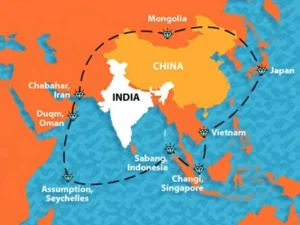
What is China's Necklace of Diamonds Strategy against India?
Hello, soham dunakhe. I think you meant 'India's Necklace of Diamonds Strategy against China', and not the other way round. No problem, it's a common mistake. Capturing major strategic ports from smaller, financially poor countries (also known as Debt Trap Policy) has been a tactic used since time iRead more
Hello, soham dunakhe. I think you meant ‘India’s Necklace of Diamonds Strategy against China’, and not the other way round. No problem, it’s a common mistake.
Capturing major strategic ports from smaller, financially poor countries (also known as Debt Trap Policy) has been a tactic used since time immemorial by countries to grow their influence in vast areas. China has acquired major ports, mainly in the Indian Ocean region, in different countries to build commercial and military bases. The reason being that a majority of their trade passes through these areas, for example: The Indian Ocean, Starit of Mallaca, Strait of Hormuz etc. Another important but latent reason is the use of these ports during a time of conflict. China looks at these ports as future military naval bases and as per speculations has already started building bases at Gwadar Port in Pakistan. China’s ‘String of Pearls’ not only is a threat to the maritime security and presence of India but is also going to affect trade between India and other South East Asian countries.
To tackle this, India has formed a counter strategy of ‘Necklace of Diamonds‘. Through this India looks forward to counter every single base that China has acquired by further acquiring bases in close proximity to China’s bases. India has strategically acquired bases with friendly countries that are essential to counter China’s bases. A list of Indian bases acquired to counter China’s bases is given below:
See lessIn respect of India-Sri Lanka relations, discuss how domestic factors influence foreign policy.
Domestic factors significantly influence the foreign policy between India and Sri Lanka. Political stability, economic conditions, and public opinion in each country shape their diplomatic interactions. For instance, political changes in Sri Lanka, such as shifts in government, can lead to variationRead more
Domestic factors significantly influence the foreign policy between India and Sri Lanka. Political stability, economic conditions, and public opinion in each country shape their diplomatic interactions.
For instance, political changes in Sri Lanka, such as shifts in government, can lead to variations in its foreign policy approach towards India. Similarly, India’s domestic priorities, like economic growth and security concerns, affect how it engages with Sri Lanka.
During Sri Lanka’s 2022 economic crisis:
India’s role was pivotal. Sri Lanka faced severe financial difficulties, including a lack of foreign currency reserves, leading to shortages of essential goods like food, fuel, and medicine. India stepped in to provide substantial assistance to help stabilize the situation. This included credit lines for purchasing essential goods, financial aid, and humanitarian support. India extended over $4 billion in assistance, including a $1 billion credit line for importing essentials and another $500 million for fuel imports.
India’s support was driven by both strategic interests and a desire to help a neighboring country in distress. This aid helped alleviate some immediate economic pressures in Sri Lanka and demonstrated India’s commitment to maintaining strong bilateral ties. The domestic imperative for India to support regional stability and humanitarian assistance strongly influenced its foreign policy during the crisis.
See lessAssess the significance of the Quadrilateral Security Dialogue (Quad) in the context of the evolving strategic landscape in the Indo-Pacific region. Discuss the key focus areas of the Quad, such as maritime security, critical and emerging technologies, and climate change, and evaluate its potential to contribute to a free, open, and inclusive regional order.
The Quad's Significance in the Evolving Indo-Pacific The Quadrilateral Security Dialogue (Quad) plays a growing role in the Indo-Pacific's strategic landscape, marked by China's rising assertiveness. Here's an assessment of its significance: Countering China's Influence: While not a formal militaryRead more
The Quad’s Significance in the Evolving Indo-Pacific
The Quadrilateral Security Dialogue (Quad) plays a growing role in the Indo-Pacific’s strategic landscape, marked by China’s rising assertiveness. Here’s an assessment of its significance:
Countering China’s Influence: While not a formal military alliance, the Quad is seen as a strategic counterbalance to China’s growing economic and military power. Its combined naval strength ensures freedom of navigation in the contested South China Sea, vital for global trade.
Focus Areas and Potential:
Maritime Security: Joint naval exercises and information sharing enhance regional security and deter aggressive actions.
Critical and Emerging Technologies: Collaboration in areas like artificial intelligence, quantum computing, and 5G infrastructure builds a secure and competitive technological ecosystem, independent of China’s dominance.
Climate Change: Cooperation on clean energy development, disaster management, and sustainable development tackles a shared regional threat.
Contribution to a Free and Open Order:
Rules-based Order: The Quad promotes adherence to international law and peaceful settlement of disputes, fostering a stable regional environment.
See lessFreedom of Navigation and Trade: The focus on maritime security ensures open sea lanes, crucial for global trade and economic prosperity.
Inclusive Development: Collaboration on infrastructure, healthcare, and humanitarian assistance benefits the entire Indo-Pacific region, not just Quad members.
Challenges and Uncertainties:
Level of Commitment: The Quad is still a young grouping with evolving goals. The actual level of military and economic cooperation remains to be seen.
Internal Disagreements: Quad members have varying strategic priorities. Balancing their individual interests with shared goals will be crucial.
China’s Response: China views the Quad with suspicion, potentially leading to regional tensions and a “bloc mentality.”
Conclusion:
The Quad has the potential to be a significant player in shaping the Indo-Pacific’s future. Its focus on shared security, technology, and climate change aligns with a free and open regional order. However, overcoming potential internal divisions and navigating China’s response will be key to its long-term success.
Analyze the significance of the India-UAE-Israel trilateral partnership, particularly in the areas of trade, investment, and technology. Discuss the potential for this grouping to contribute to regional stability and India's strategic positioning in the Middle East.
Significance of the India-UAE-Israel Trilateral Partnership The India-UAE-Israel trilateral partnership holds significant potential in several areas: Trade and Investment: Boosting Trade: The combined strengths of the three nations can create a powerful economic engine. The UAE serves as a trade andRead more
Significance of the India-UAE-Israel Trilateral Partnership
The India-UAE-Israel trilateral partnership holds significant potential in several areas:
Trade and Investment:
Boosting Trade: The combined strengths of the three nations can create a powerful economic engine. The UAE serves as a trade and logistics hub, Israel excels in innovation, and India boasts a large and skilled workforce. This partnership can unlock new trade routes, reduce tariffs, and facilitate increased trade volumes. Estimates suggest trade between the three could reach $110 billion by 2030.
Investment Opportunities: Increased collaboration can attract significant foreign direct investment (FDI) across sectors like infrastructure, renewable energy, agriculture, and technology. The UAE’s wealth and India’s vast market offer lucrative opportunities for Israeli firms.
Technology and Innovation:
Joint Research and Development (R&D): Combining Israeli expertise in areas like cyber security, water management, and agriculture with India’s large pool of scientists and engineers can lead to groundbreaking innovations. Joint R&D projects can address regional challenges like food security and water scarcity.
Knowledge Sharing and Startup Collaboration: The partnership can foster knowledge sharing in areas like artificial intelligence, big data, and blockchain. Collaboration between Indian and Israeli startups can create a hub for innovation and entrepreneurship.
Regional Stability and India’s Strategic Positioning:
Counter-Terrorism Cooperation: Collaboration on intelligence sharing and counter-terrorism strategies can benefit all three nations facing similar threats.
See lessPromoting Regional Dialogue: The partnership can encourage dialogue between Israel and its Arab neighbors, potentially fostering regional stability. India’s neutral stance could play a crucial role in this regard.
Enhanced Security Cooperation: India’s growing ties with both UAE and Israel could strengthen its influence in the Middle East, allowing it to play a more active role in regional security issues.
Challenges and Considerations
Balancing Relations with Other Middle Eastern Countries: India’s close ties with Israel might strain its relations with some Arab countries, particularly those not recognizing Israel. It will need to navigate this carefully.
Internal Political Dynamics: Domestic political considerations in each country can slow down progress and implementation of collaborative projects.
Focus on Shared Goals: The success of the partnership relies on a clear focus on mutually beneficial economic and technological goals, keeping political sensitivities at bay.
Conclusion
The India-UAE-Israel trilateral partnership holds immense promise for economic growth, technological advancement, and regional security. By harnessing their unique strengths, the three nations can create a win-win situation for all. However, managing delicate regional politics and maintaining a focus on shared goals will be crucial for its success.
Discuss the significance of the India-France-UAE trilateral partnership in the context of India's growing engagement with the Gulf Cooperation Council (GCC) countries. Analyze the potential areas of cooperation, including energy, investment, and regional security.
The India-France-UAE trilateral partnership holds significant strategic importance, particularly within the broader framework of India's expanding engagement with the Gulf Cooperation Council (GCC) countries. This trilateral grouping brings together three key regional players with complementary inteRead more
The India-France-UAE trilateral partnership holds significant strategic importance, particularly within the broader framework of India’s expanding engagement with the Gulf Cooperation Council (GCC) countries. This trilateral grouping brings together three key regional players with complementary interests and capabilities, contributing to regional stability, economic development, and strategic collaboration in several crucial areas.
Significance of the Trilateral Partnership:
Strategic Alignment:
Regional Stability: The trilateral partnership aims to enhance stability in the Gulf region, which is vital for global energy security and economic stability. By fostering dialogue and cooperation among India, France, and the UAE, the partnership can contribute to conflict resolution and de-escalation efforts in the region.
Counterterrorism and Security: Cooperation in counterterrorism measures, intelligence sharing, and defense collaboration helps combat transnational threats, ensuring the security of maritime routes and critical infrastructure.
Economic Cooperation:
Energy Security: The UAE is a significant energy supplier, and cooperation in the energy sector—particularly in oil and gas exploration, renewable energy, and energy security—benefits all parties. India, as a major energy importer, seeks to diversify its energy sources and enhance energy security through strategic partnerships.
Investment and Trade: Facilitating investment flows and enhancing trade relations between India, France, and the UAE stimulates economic growth and creates new opportunities in sectors such as infrastructure, technology, manufacturing, and services.
Geopolitical Influence:
Diplomatic Collaboration: The trilateral partnership amplifies the diplomatic influence of India, France, and the UAE in regional and international forums. It allows for coordinated efforts on global issues, including climate change, maritime governance, and multilateral diplomacy.
Cultural Exchange and People-to-People Ties: Strengthening cultural ties through educational exchanges, tourism, and cultural diplomacy fosters greater understanding and mutual respect among the people of India, France, and the UAE.
Potential Areas of Cooperation:
Energy and Infrastructure:
Joint ventures in energy exploration and development, including renewable energy projects and sustainable infrastructure initiatives, promote energy security and support sustainable development goals.
Investment and Trade:
Facilitating bilateral and trilateral investment flows through frameworks like joint ventures, public-private partnerships, and infrastructure projects enhances economic integration and boosts job creation in all three countries.
Regional Security:
Cooperation in maritime security, defense technology, and military exercises strengthens the security architecture in the Gulf region, contributing to peace and stability.
Technology and Innovation:
Collaboration in technology transfer, research and development, and innovation hubs accelerates technological advancements and fosters economic diversification.
See lessIn conclusion, the India-France-UAE trilateral partnership is poised to play a crucial role in advancing mutual interests and addressing shared challenges in the Gulf region and beyond. By leveraging their respective strengths in energy, investment, regional security, and diplomatic influence, the trilateral can promote a stable and inclusive regional order while enhancing economic prosperity and strategic cooperation. Continued dialogue and strategic coordination among India, France, and the UAE will be key to realizing the full potential of this partnership and addressing emerging opportunities in a rapidly evolving geopolitical landscape.