


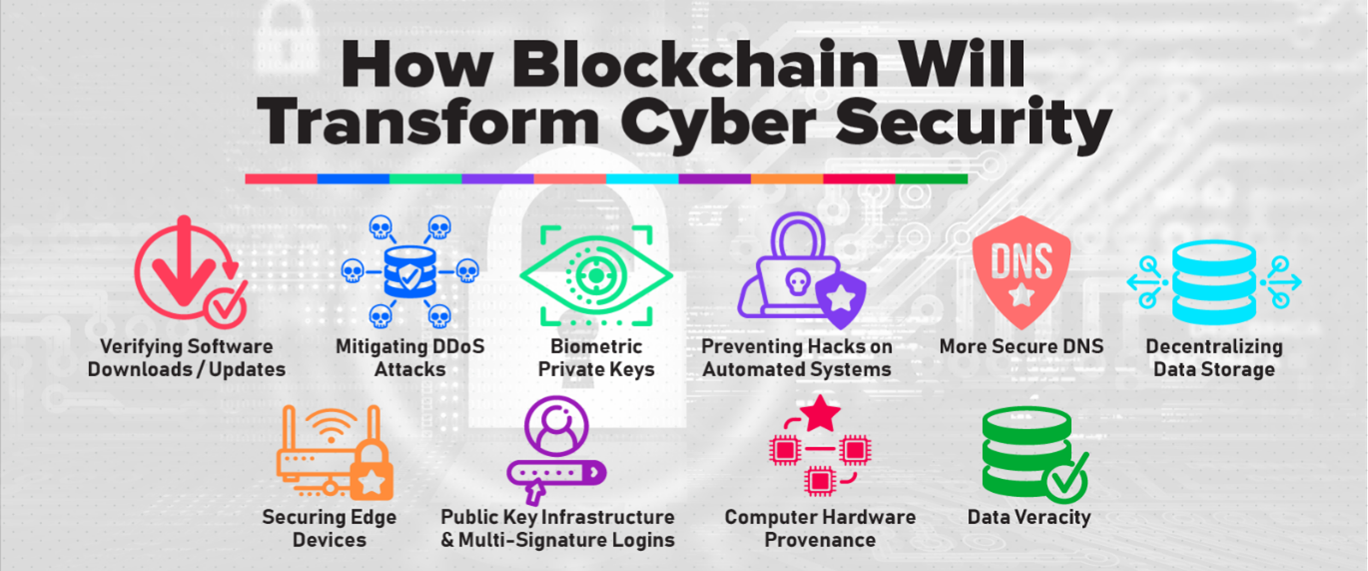
Blockchain technology's decentralized nature is revolutionizing cybersecurity in several key ways: 1. Distributed Ledger: Blockchain operates as a distributed ledger, meaning that data is stored across a network of computers (nodes) rather than a single central server. This makes it much moreRead more
Blockchain technology’s decentralized nature is revolutionizing cybersecurity in several key ways:
1. Distributed Ledger: Blockchain operates as a distributed ledger, meaning that data is stored across a network of computers (nodes) rather than a single central server. This makes it much more difficult for hackers to attack because there is no single point of failure. Compromising the network would require simultaneously attacking a majority of the nodes.
2. Immutability: Once data is recorded on a blockchain, it is extremely difficult to alter. This immutability helps prevent unauthorized changes and tampering. Each block is cryptographically linked to the previous one, creating a secure chain of information.
3. Transparency and Traceability: Transactions on a blockchain are transparent and can be traced back to their origin. This transparency deters fraudulent activities and enhances trust, as all participants can see the same information and verify it independently.
4. Decentralized Consensus: Blockchain uses consensus mechanisms (such as Proof of Work or Proof of Stake) to validate transactions. This means that no single entity controls the verification process, reducing the risk of corruption or manipulation.
5. Enhanced Security Protocols: Blockchain technology employs advanced cryptographic techniques to secure data. Public and private keys, along with digital signatures, ensure that only authorized users can access and execute transactions.
6. Smart Contracts: These are self-executing contracts with the terms directly written into code. They automatically enforce and execute agreements when predetermined conditions are met, reducing the need for intermediaries and enhancing security through automation.
By decentralizing data storage and verification, blockchain technology significantly enhances cybersecurity, making systems more resilient to attacks, reducing fraud, and increasing trust among users.
See less


Countries can effectively address the growing threat of cyber warfare and ensure the security of their digital infrastructure by implementing a multi-faceted approach: 1. National Cybersecurity Strategies: Develop comprehensive national cybersecurity strategies that outline policies, objectivRead more
Countries can effectively address the growing threat of cyber warfare and ensure the security of their digital infrastructure by implementing a multi-faceted approach:
1. National Cybersecurity Strategies:
Develop comprehensive national cybersecurity strategies that outline policies, objectives, and measures to protect critical infrastructure. This should include regular updates to adapt to evolving threats.
2. Cyber Defense and Response Teams:
Establish and maintain specialized cyber defense units and Computer Emergency Response Teams (CERTs) to monitor, detect, and respond to cyber threats in real-time.
3. Public-Private Partnerships:
Foster collaboration between government agencies, private sector companies, and academic institutions to share threat intelligence, best practices, and resources. This enhances the overall cybersecurity posture.
4. International Cooperation:
Engage in international cooperation and information-sharing agreements with other nations and global organizations. Cyber threats are often cross-border, and coordinated efforts are crucial for effective defense.
5. Education and Awareness:
Promote cybersecurity education and awareness programs to train a skilled workforce and educate citizens about safe online practices. This reduces the risk of human error, which is often a significant factor in cyber incidents.
6. Legislation and Regulation:
Implement robust cybersecurity laws and regulations that mandate security standards, data protection, and incident reporting. Enforce these regulations to ensure compliance across all sectors.
7. Investment in Research and Development:
Invest in research and development of advanced cybersecurity technologies, including artificial intelligence, machine learning, and blockchain, to stay ahead of emerging threats.
8. Incident Response Planning:
Develop and regularly update incident response plans that outline the procedures to follow in the event of a cyber attack. Conduct regular drills and simulations to ensure preparedness.
9. Cyber Hygiene Practices:
Encourage and enforce basic cyber hygiene practices such as regular software updates, strong password policies, multi-factor authentication, and network segmentation.
10. Threat Intelligence Sharing:
Create platforms and mechanisms for sharing threat intelligence within and between sectors. This allows for timely identification and mitigation of threats.
11. Resilience Building:
Focus on building resilient infrastructure that can withstand and quickly recover from cyber attacks. This includes redundant systems, backup protocols, and disaster recovery plans.
By implementing these measures, countries can create a robust cybersecurity framework that protects their digital infrastructure and mitigates the risks associated with cyber warfare in an interconnected world.
See less