

Talk about the difficulties in achieving successful interagency coordination, as well as the role played by the Indian Computer Emergency Response Team (CERT-In), the National Cyber Security Coordinator, and other government agencies in coordinating the national cyber security response.
Mains Answer Writing Latest Questions

RAVI KantBegginer
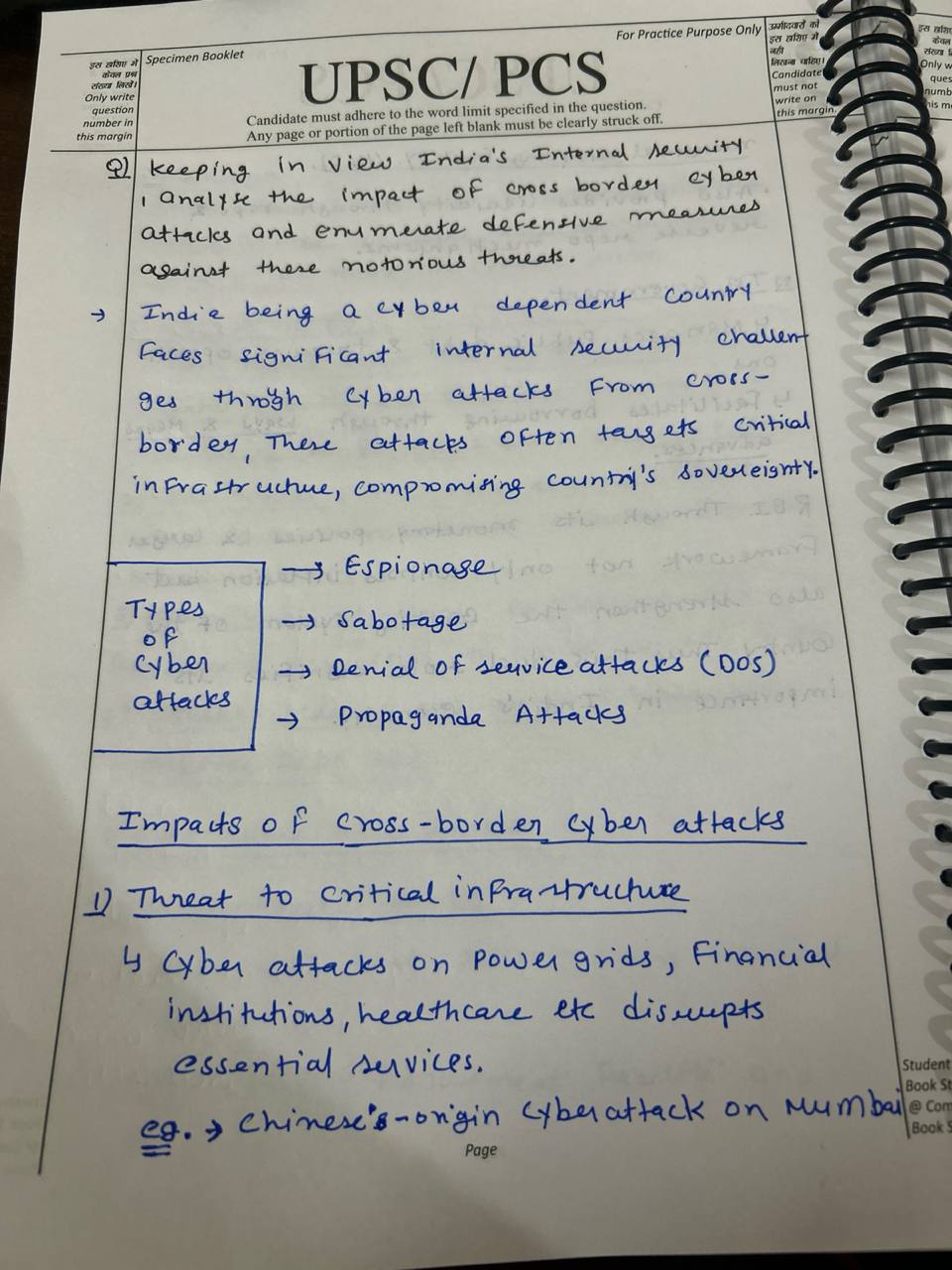
Keeping in view India’s internal security , analyse the impact of cross – border cyber attacks and enumerate defensive measures against these notorious threats .




Explores strategies such as employee training, email filtering, and multi-factor authentication to prevent and mitigate phishing attacks.
-
Organizations can effectively safeguard their data from phishing attacks with the use of upcoming technologies. There are numerous measures available to enhance awareness within the organization. A comprehensive strategy can be implemented, incorporating employee training, email filtering, and multiRead more
Organizations can effectively safeguard their data from phishing attacks with the use of upcoming technologies. There are numerous measures available to enhance awareness within the organization. A comprehensive strategy can be implemented, incorporating employee training, email filtering, and multi-factor authentication.
- Employee training
The most effective defense is to Start the employee awareness program training to make sure they are fully informed on what to do in case of a phishing attack.
- Regulate workshops and training sessions to showcase different phishing techniques like spear phishing and whaling, using real-life examples to illustrate.
- Ensure that all employees know the procedures for reporting any suspicious activities or phishing attempts to the appropriate department.
- Email Filtering
Email filtering helps in detecting the spam emails from the inbox to reduce the risk of phishing attack.
- Utilize cutting-edge phishing detection algorithms that assess email content, attachments, and URLs for recognized phishing signals.
- Keep track of identified malicious email senders and reputable sources to improve the precision of filtering.
- Multi-factor authentication
This system utilizes multiple layers of authentication to verify the identity of the authorized user, ensuring high security measures are in place.
- Implement MFA for accessing corporate networks, cloud applications, email systems, and other sensitive resources.
- Modify the authentication level as needed depending on risk factors like user behavior or location. Continuously evaluate and revise these tactics in response to new threats and the organization’s requirements.


What are the most effective strategies for detecting and preventing phishing attacks within an organization?
-
Detecting and preventing phishing attacks within an organization requires a combination of technological solutions and employee awareness. Here are the most effective strategies: 1. **Security Awareness Training:** Regularly train employees to recognize phishing emails, suspicious links, and socialRead more
Detecting and preventing phishing attacks within an organization requires a combination of technological solutions and employee awareness. Here are the most effective strategies:
1. **Security Awareness Training:** Regularly train employees to recognize phishing emails, suspicious links, and social engineering tactics. Simulated phishing tests can help reinforce this knowledge.
2. **Email Filtering:** Implement advanced email filtering solutions that detect and block phishing emails before they reach employees’ inboxes. These tools can analyze email content, attachments, and URLs for malicious intent.
3. **Multi-Factor Authentication (MFA):** Require MFA for accessing sensitive systems and accounts. Even if an attacker obtains login credentials, MFA adds an extra layer of security that can prevent unauthorized access.
4. **Endpoint Protection:** Deploy endpoint protection software that can detect and block malicious activities on employee devices. This includes antivirus, anti-malware, and intrusion detection systems.
5. **Threat Intelligence:** Use threat intelligence services to stay updated on the latest phishing tactics and threats targeting your industry. This allows for proactive measures to be taken against emerging threats.
6. **Incident Response Plan:** Develop and regularly update an incident response plan that includes steps for responding to a phishing attack. Quick action can limit the damage if an attack occurs.
By combining these strategies, organizations can effectively detect and prevent phishing attacks, safeguarding their sensitive information and maintaining security.
See less


aditi malviyaBegginer
-
India's digital infrastructure has made significant strides but faces challenges in tackling cyber attacks like ransomware. While efforts have been made to strengthen cybersecurity, gaps remain in awareness and preparedness. Currently, India's cybersecurity framework includes initiatives such as theRead more
India’s digital infrastructure has made significant strides but faces challenges in tackling cyber attacks like ransomware. While efforts have been made to strengthen cybersecurity, gaps remain in awareness and preparedness.
Currently, India’s cybersecurity framework includes initiatives such as the National Cyber Security Policy, which aims to protect information infrastructure and build capabilities. However, more can be done. New steps could include:
- Enhanced Training and Awareness: Educating users from school onwards about cyber hygiene, safe online practices, and recognizing phishing attempts can build a resilient digital society.
- Investment in Technology: Increasing investment in cybersecurity technologies such as advanced threat detection systems, encryption tools, and secure cloud solutions can bolster defenses against ransomware attacks.
- Public-Private Partnerships: Collaborations between government agencies, educational institutions, and private companies can facilitate information sharing and joint efforts in responding to cyber threats.
- Legal Framework Strengthening: Updating laws to address cybercrime effectively, ensuring stringent penalties for offenders, and promoting international cooperation for extradition of cybercriminals.
By prioritizing these steps, India can strengthen its digital infrastructure against cyber threats, ensuring a safer online environment for all citizens and organizations.
See less


How can Artificial Intelligence (AI) be leveraged to enhance cyber security and effectively prevent advanced threats, such as zero-day attacks, ransomware, and spear phishing, which are becoming increasingly sophisticated and frequent in today’s digital landscape?
-
AI (Artificial Intelligence) can significantly enhance cybersecurity by leveraging its capabilities in several key areas: 1. Threat Detection and Intelligence: AI can analyze vast amounts of data in real-time to detect patterns and anomalies that indicate potential cyber threats. Machine learRead more
AI (Artificial Intelligence) can significantly enhance cybersecurity by leveraging its capabilities in several key areas:
1. Threat Detection and Intelligence:
AI can analyze vast amounts of data in real-time to detect patterns and anomalies that indicate potential cyber threats. Machine learning algorithms can learn from historical data and continuously improve their ability to identify new and evolving threats.
2. Behavioral Analysis:
AI can monitor user and entity behavior to establish baselines and detect deviations that could indicate malicious activity. This approach helps in identifying insider threats and detecting anomalies that traditional rule-based systems might miss.
3. Automated Response and Remediation:
AI-powered systems can automate responses to cyber threats based on predefined rules and learned behavior patterns. This includes isolating compromised systems, blocking suspicious IP addresses, or even responding with preemptive measures before an attack fully executes.
4. Vulnerability Management:
AI can assist in identifying and prioritizing vulnerabilities within an organization’s systems and networks. By analyzing data from various sources, AI can predict which vulnerabilities are most likely to be exploited and recommend mitigation strategies.
5. Enhanced Authentication and Access Control:
AI can improve authentication processes by analyzing user behavior, device data, and other contextual information to determine the likelihood of a login attempt being legitimate or malicious. This helps in reducing the risk of unauthorized access.
6. Threat Hunting:
AI can assist cybersecurity analysts in proactively searching for threats within an organization’s networks and systems. By correlating vast amounts of data and generating hypotheses, AI can guide analysts to investigate potential threats more efficiently.
7. Predictive Capabilities:
AI can forecast potential cyber threats based on historical data, current trends, and known vulnerabilities. This proactive approach allows organizations to implement preemptive measures to mitigate risks before they materialize into attacks.
Challenges:
While AI offers significant advantages in cybersecurity, there are challenges to consider:
– Adversarial AI: Attackers may use AI to develop more sophisticated and targeted attacks.
– Data Privacy: AI systems require access to large datasets, raising concerns about privacy and data protection.
– Complexity: Implementing and managing AI-powered cybersecurity systems requires specialized skills and resources.
– Bias: AI algorithms can inherit biases from training data, potentially leading to inaccurate threat assessments.
In summary, AI has the potential to revolutionize cybersecurity by enhancing threat detection, automating responses, improving vulnerability management, and bolstering authentication processes. However, these benefits must be balanced with addressing challenges such as adversarial AI and maintaining data privacy to ensure effective and ethical use of AI in cybersecurity practices.
See less


N Husna KouserBegginer
Explain decentralized nature of Blockchain technology in the revolution of cybersecurity?
-
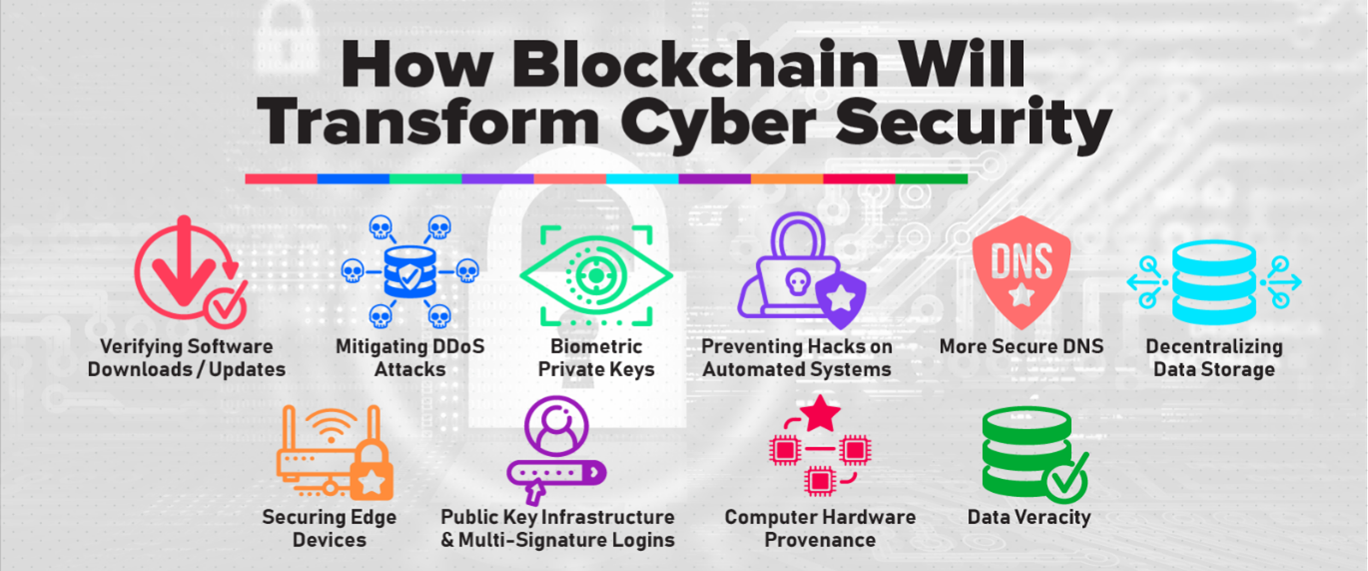
Blockchain technology's decentralized nature is revolutionizing cybersecurity in several key ways: 1. Distributed Ledger: Blockchain operates as a distributed ledger, meaning that data is stored across a network of computers (nodes) rather than a single central server. This makes it much moreRead more
Blockchain technology’s decentralized nature is revolutionizing cybersecurity in several key ways:
1. Distributed Ledger: Blockchain operates as a distributed ledger, meaning that data is stored across a network of computers (nodes) rather than a single central server. This makes it much more difficult for hackers to attack because there is no single point of failure. Compromising the network would require simultaneously attacking a majority of the nodes.
2. Immutability: Once data is recorded on a blockchain, it is extremely difficult to alter. This immutability helps prevent unauthorized changes and tampering. Each block is cryptographically linked to the previous one, creating a secure chain of information.
3. Transparency and Traceability: Transactions on a blockchain are transparent and can be traced back to their origin. This transparency deters fraudulent activities and enhances trust, as all participants can see the same information and verify it independently.
4. Decentralized Consensus: Blockchain uses consensus mechanisms (such as Proof of Work or Proof of Stake) to validate transactions. This means that no single entity controls the verification process, reducing the risk of corruption or manipulation.
5. Enhanced Security Protocols: Blockchain technology employs advanced cryptographic techniques to secure data. Public and private keys, along with digital signatures, ensure that only authorized users can access and execute transactions.
6. Smart Contracts: These are self-executing contracts with the terms directly written into code. They automatically enforce and execute agreements when predetermined conditions are met, reducing the need for intermediaries and enhancing security through automation.
By decentralizing data storage and verification, blockchain technology significantly enhances cybersecurity, making systems more resilient to attacks, reducing fraud, and increasing trust among users.
See less


RidhimaBegginer
What are the steps to secure a server?
-
Securing a server in cybersecurity involves several crucial steps: Regular Updates: Keep the operating system, software, and applications up-to-date with the latest patches to protect against vulnerabilities. Strong Authentication: Implement strong, unique passwords and consider multi-factor authentRead more


Samruddhi PatilLearner
-
Defense mechanisms against APTs are becoming very complex as most modern advancements involve proactive and predictive types of defense mechanisms. Most forms of APTs work as multistage attacks, covert reconnaissance, as well as data exfiltration attacks, mainly oriented to evade traditional detectiRead more
Defense mechanisms against APTs are becoming very complex as most modern advancements involve proactive and predictive types of defense mechanisms. Most forms of APTs work as multistage attacks, covert reconnaissance, as well as data exfiltration attacks, mainly oriented to evade traditional detection tools. This is the reason newer defense approaches are designed based on the use of machine learning, AI, and behavioral analytics for real-time threat detection. The above are some of the vital developments and findings about machine learning.
1. Machine Learning and AI-based Threat Detection – Behavioral Analysis and Anomaly Detection: In contrast to the Signature-based, an ML model will identify anomalous pattern or behavior as to how normal networking and user activity is perceived. Any anomaly be that a strange login location, non-conventional time, data access time, among others, will be identified and it could well mean an APT.
These approaches work very well because at such minimal deviations might be noticed and this can actually be picked both with supervision and unsupervised as these use methodologies including cluster or anomaly detection methods.
Predictive Analytics and Threat Intelligence: Models trained against large datasets of observed previously APT campaign datasets shall identify precursors or Indicators of Compromise, IoCs, well ahead of the full-fledged attack. This capability helps to proactively lock the vulnerable assets for security teams.
– NLP in Phishing Detection: Various APTs have their entry using spear-phishing attacks. The models for NLP-based identification depend upon the language pattern analysis of the email message or text in messenger that can determine the potential malware content and screen the suspicious emails in real-time.2. TIP integration
TIPs will aggregate data from OSINT, dark web sources, and known IoCs. Bring AI models into EDR systems to make detections even more effective by correlating the threat signals with real-world attack data to make them more accurate and reduce the response time.3. Endpoint Detection and Response with Artificial Intelligence
Modern EDR uses machine learning to observe endpoints in real time. Meaning, it’s identifying all the activities of elevation privileges, lateral movement in the network, etc. Applying an AI-powered EDR will make the response automated-this system might isolate it to other systems, and it might prevent malware from moving forward by blocking a particular malicious process.4. User and Entity Behavior Analytics (UEBA)
See less
They use machine learning algorithms for the analysis of communications and interactions of users and devices in a network and, simultaneously, detect behavior when it is anomalous enough that could signal, further, credential theft or insider threats. As UEBA systems can catch very stealthy malicious activity that may remain unnoticed by other traditional security tools, they improve as they get more data which they collect in real time.

The National Cyber Security Coordinator (NCSC) and the Indian Computer Emergency Response Team (CERT-In) play crucial roles in coordinating the national cyber security response in India, though they face challenges in ensuring effective inter-agency cooperation. National Cyber Security Coordinator (Read more
The National Cyber Security Coordinator (NCSC) and the Indian Computer Emergency Response Team (CERT-In) play crucial roles in coordinating the national cyber security response in India, though they face challenges in ensuring effective inter-agency cooperation.
National Cyber Security Coordinator (NCSC):
The NCSC is the apex authority responsible for coordinating cyber security efforts across various government agencies, the private sector, and international partners. Its key responsibilities include:
Indian Computer Emergency Response Team (CERT-In):
CERT-In is the nodal agency under the Ministry of Electronics and Information Technology (MeitY) responsible for cyber security incident response and coordination. Its main functions include:
Challenges in Ensuring Effective Inter-Agency Cooperation:
Despite the crucial roles played by the NCSC and CERT-In, they face several challenges in ensuring effective inter-agency cooperation, which can hinder the national cyber security response. These challenges include:
To address these challenges, the government has taken steps to enhance coordination and cooperation, such as the establishment of the National Cyber Coordination Centre (NCCC) and the strengthening of CERT-In’s capabilities. However, continued efforts are required to improve information sharing, streamline roles and responsibilities, and develop a more integrated and collaborative approach to national cyber security.
See less