Lost your password? Please enter your email address. You will receive a link and will create a new password via email.
Please briefly explain why you feel this question should be reported.
Please briefly explain why you feel this answer should be reported.
Please briefly explain why you feel this user should be reported.


What are the key factors influencing the adoption of AI-driven tools in small and medium-sized enterprises (SMEs), and how can these businesses overcome common barriers to implementation?
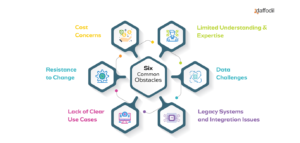
Adopting AI-driven tools in small and medium-sized enterprises (SMEs) is influenced by several key factors: Cost: Initial investment and ongoing costs can be high. SMEs can seek affordable AI solutions or leverage cloud-based AI services that offer pay-as-you-go models. Expertise: Limited in-house eRead more
Adopting AI-driven tools in small and medium-sized enterprises (SMEs) is influenced by several key factors:
- Cost: Initial investment and ongoing costs can be high. SMEs can seek affordable AI solutions or leverage cloud-based AI services that offer pay-as-you-go models.
- Expertise: Limited in-house expertise can hinder AI adoption. SMEs can overcome this by partnering with AI vendors, hiring consultants, or investing in employee training programs.
- Data Availability: AI requires quality data. SMEs should focus on collecting and organizing relevant data and consider using pre-trained models that require less data.
- Perceived Value: Understanding the benefits of AI is crucial. Demonstrating clear ROI through pilot projects can help in gaining management buy-in.
- Change Management: Resistance to change can be a barrier. SMEs should foster a culture of innovation and communicate the benefits of AI to all stakeholders to ease the transition.
- Regulatory Concerns: Compliance with data privacy regulations is essential. SMEs can ensure compliance by adopting AI solutions that prioritize data security and privacy.
See lessWhat are the easiest ways for people to protect their personal data online without needing advanced technical skills?
Easiest Ways to Protect Your Personal Data Online Use Strong Passwords: What it means: A strong password is long and includes a mix of letters, numbers, and special characters. Why it helps: It makes it harder for others to guess or hack into your accounts. Example: Instead of using "password123," uRead more
Easiest Ways to Protect Your Personal Data Online
- Use Strong Passwords:
- What it means: A strong password is long and includes a mix of letters, numbers, and special characters.
- Why it helps: It makes it harder for others to guess or hack into your accounts.
- Example: Instead of using “password123,” use something like “Mys3cur3P@ssw0rd!”
- Enable Two-Factor Authentication (2FA):
- What it means: Two-factor authentication adds an extra step to log in, usually sending a code to your phone or email.
- Why it helps: Even if someone knows your password, they can’t log in without the code.
- Example: When you log into your email, you enter your password and then a code sent to your phone.
- Be Careful with Public Wi-Fi:
- What it means: Public Wi-Fi in places like cafes or libraries isn’t always secure.
- Why it helps: Hackers can sometimes see what you’re doing on public Wi-Fi.
- Example: If you need to use public Wi-Fi, avoid accessing sensitive information like bank accounts.
- Update Your Software:
- What it means: Regularly update your computer, phone, and apps.
- Why it helps: Updates often fix security issues that hackers could exploit.
- Example: When your phone says there’s a new update, install it as soon as possible.
- Think Before You Click:
- What it means: Be cautious about clicking on links or downloading attachments in emails or messages, especially from unknown sources.
- Why it helps: These can be tricks to install malware or steal your information.
- Example: If you get an unexpected email from your bank asking for personal information, it’s better to call the bank directly to check.
- Use Privacy Settings on Social Media:
- What it means: Adjust settings on your social media accounts to control who can see your information.
- Why it helps: It limits who can view your personal details and photos.
- Example: On Facebook, you can set your profile to be visible only to friends.
- Install Antivirus Software:
- What it means: Antivirus software helps protect your devices from viruses and other threats.
- Why it helps: It can detect and remove harmful software before it causes problems.
- Example: Programs like Norton or McAfee scan your computer for threats and alert you if they find anything.
- Backup Your Data:
- What it means: Regularly save copies of important files to another location, like an external hard drive or cloud storage.
- Why it helps: If your data is lost or stolen, you can still access your important information.
- Example: You can use services like Google Drive or Dropbox to back up your files automatically.

See lessChemistry
How is Ammonia Prepared in the Laboratory? Ammonia is a gas that can be prepared in the laboratory using simple materials and procedures. One common method involves heating ammonium chloride (NH₄Cl) with calcium hydroxide (Ca(OH)₂). Here's a step-by-step guide: Materials Needed: Ammonium chloride (NRead more
How is Ammonia Prepared in the Laboratory?
Ammonia is a gas that can be prepared in the laboratory using simple materials and procedures. One common method involves heating ammonium chloride (NH₄Cl) with calcium hydroxide (Ca(OH)₂). Here’s a step-by-step guide:
Materials Needed:
Steps to Prepare Ammonia:
Safety Precautions:
- Always conduct this experiment in a well-ventilated area or under a fume hood to avoid inhaling the gas.
- Handle the chemicals with care and use safety goggles and gloves.

See lessChemistry
How is Ammonia Prepared in the Laboratory? Ammonia is a gas that can be prepared in the laboratory using simple materials and procedures. One common method involves heating ammonium chloride (NH₄Cl) with calcium hydroxide (Ca(OH)₂). Here's a step-by-step guide: Materials Needed: Ammonium chloride (NRead more
How is Ammonia Prepared in the Laboratory?
Ammonia is a gas that can be prepared in the laboratory using simple materials and procedures. One common method involves heating ammonium chloride (NH₄Cl) with calcium hydroxide (Ca(OH)₂). Here’s a step-by-step guide:
Materials Needed:
Steps to Prepare Ammonia:
2NH4Cl+Ca(OH)2→2NH3+CaCl2+2H2O
Safety Precautions:
- Always conduct this experiment in a well-ventilated area or under a fume hood to avoid inhaling the gas.
- Handle the chemicals with care and use safety goggles and gloves.

See less