


Reproductive and sexual health and rights (SRHR) continue to be essential for achieving the Sustainable Development Goals (SDGs). Talk about the obstacles to India’s SRHR fulfillment in this context. Mention the actions that can be done in this respect as ...
Mains Answer Writing Latest Questions

Sita mataBegginer
Everyone knows fortitude-filled leaders, and they are the ones you call in times of need. (Answer in 150 words)

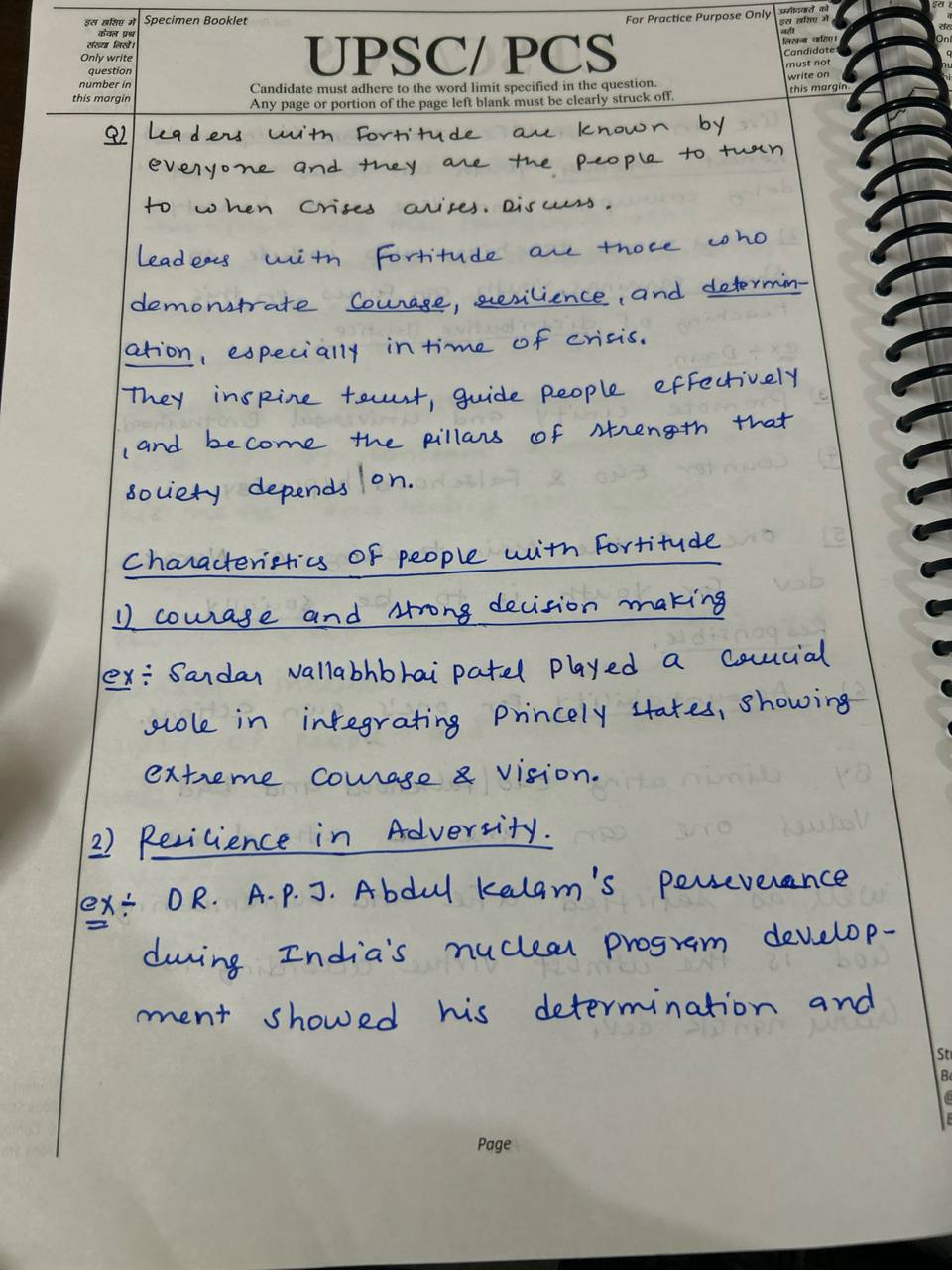
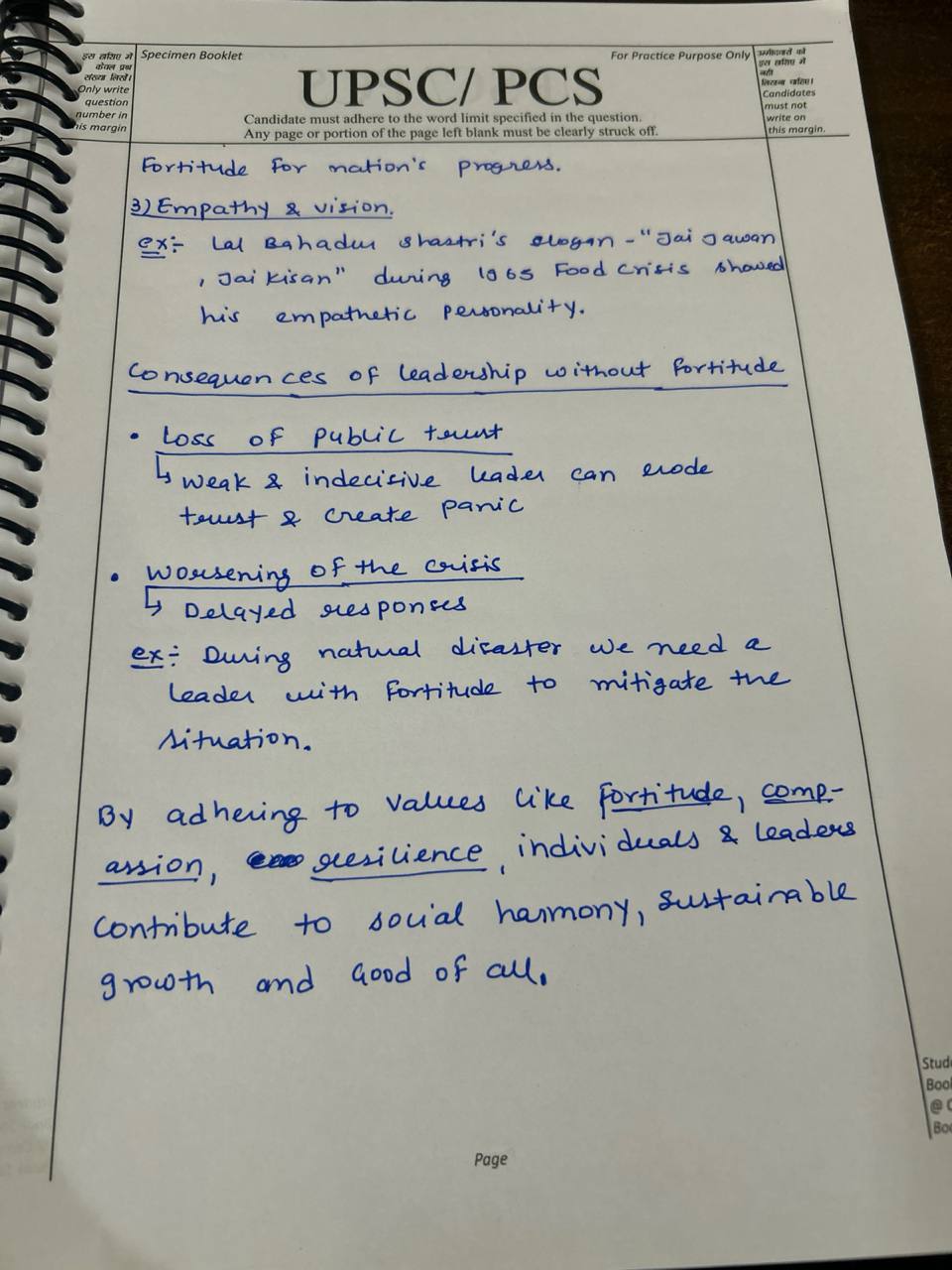

Krishana LalBegginer
“A well-developed emotional intelligence has a dark side as a weapon for manipulating others by robbing them of their ability for reason,” in addition to being an essential tool for achieving goals. (150 words)
-
Emotional intelligence is the ability of understanding, recognize, manage, and influence emotions in oneself and others. Emotional intelligence helps a individual in achieving and fulfilling his or her personal and professional goals as it foster empathy in one's self and it also helps in collaboratRead more
Emotional intelligence is the ability of understanding, recognize, manage, and influence emotions in oneself and others. Emotional intelligence helps a individual in achieving and fulfilling his or her personal and professional goals as it foster empathy in one’s self and it also helps in collaboration and it establishes a effective communication among the co workers, Emotional intelligence also a dark side when it’s missed used, High EI can be exploited as a manipulative tool, enabling individuals to influence others’ emotions and decisions to serve their own interests.
The dark side of emotional intelligence is that when a person master the skill of emotional intelligence he or she can manipulate the emotions and decisions of others and those persons won’t be aware that they have been manipulated by someone. Skilled manipulators can exploit emotional cues to create trust, invoke guilt, or provoke fear, guiding others’ actions and beliefs. These Emotional manipulation can lead to various unethical outcomes, such as such as coercion in personal relationships, deceptive business practices, or even political propaganda. The victim, often unaware of the manipulation, may act against their own best interests, leading to harmful consequences.
Thus, in the conclusion we can say that emotional intelligence is a great tool for achieving our personal and professional goals but we must be aware of it’s potential for misuse is essential to ensure that EI is employed to foster genuine understanding and collaboration rather than to manipulate and control others.
See less


Malti deviLearner
List the main soil types and attributes found in India. It also describes how soil is distributed geographically throughout India. (Answer in 200 words)
-
As known India is a land of diversity in terms of culture , varied topography , different climatic conditions along with its rich culture and historical backdrop. The land is spread with a variety of soils in various parts of India ranging from alluvial soil , red soil , black soil, desert soil, anRead more
As known India is a land of diversity in terms of culture , varied topography , different climatic conditions along with its rich culture and historical backdrop. The land is spread with a variety of soils in various parts of India ranging from alluvial soil , red soil , black soil, desert soil, and many more such .
Every soil is having its significant characteristics shaped by various natural processes such as that of weathering, erosion.
Coming to the layout of various types of soil found in India along with its individual characteristics :
- ALLUVIAL SOIL – This kind of soil is seen in the Indo-gangetic plain area along with that of the costal areas, this soil is known to be very fertile and this soil is spread around most of the areas like in PUNJAB, WEST BENGAL ,HARYANA ,UTTAR PRADESH and in the coastal areas of GUJRAT, TAMIL NADU ORRISA .
Chracteristics :
- Fertile.
- It is of fine grained texture
- it is rich in minerals such as potash, lime ,and the phosphoric acid .
- good for the growth of soils such as rice, wheat , sugarcane
Black soil –
this soil is also known to be as the regur soil or popularly as the cotton soil found primarily at the deccan plateau region . This is very good soil for cotton cultivation .Found in areas such as in Madhya Pradesh , Gujrat
Chracteristics :
- It is of black colour as it is having iron in it.
- these kind of soil usually becomes sticky when it becomes wet and it develops cracks when it dries up in summer .
- Rich in calcium, iron, potash.
RED SOIL –
As the name says it is red in colour found mostly in the southern .eastern along the central regions of India . The soils found in areas like in Karnataka, Chattisgarh, Jharkhand, Andhra Pradesh and in the chota nagpur plateau . This red colour is due to that of iron oxide. Good for the production of crops like groundnut, millets, tobacoo, etc.
LATERITE SOIL : This kind of soil is mostly found in the regions which receive that of heavy rainfall along with that of high temperature. This is found in the tropical areas in the areas like Kerela, Karnataka, West Bengal, Tamil Nadu etc .
this soil contains that of Iron and Magnesium mostly within it although poor in the minerals like nitrogen , potasium etc .
This kind of soil is good for the production of crops like that of coffee, rubber, cotton cashew nuts etc .
MOUINTAIN SOIL :
This soil is also known to be as the forest soil as the name suggests found mostly in the regions such as the mountaninous regions of India mostly in the Himalayan region along with the eastern and western ghats of India . This soil is formed due to the wheathring of rocks due to high altitude.
This soil ranges from the sandy to loamy textures . Found mostly in JAMMU AND KASHMIR , Skkim, Himachal Pradesh along the hilly trains of Karnataka, Tamil Nadu etc .
This kind of soil good for cultivation of crops like that of the tea, coffee, spices, fruits that of apples , plums, etc .
This is the varied types of soil with their characteristics and the spacial distribution of soil in India.
See less


Rohini SinghBegginer
Do you share the belief that digital transformation is not enough to address the systemic issues that are deeply ingrained in India’s school system? (Answer in 250 words)
-
Yes, I totally agree with the fact that the issues that are deeply ingrained in the school education system in India cannot be solved by digital transformation alone. If we dive into India's school education system at the grass-root level, many discrepancies can be witnessed. It is not an egalitariaRead more
Yes, I totally agree with the fact that the issues that are deeply ingrained in the school education system in India cannot be solved by digital transformation alone. If we dive into India’s school education system at the grass-root level, many discrepancies can be witnessed. It is not an egalitarian world and being a developing country, India has a large number of remote, rural and slum areas which have not yet experienced development well and hence, the children or people of such underprivileged areas still lack access to education. In such remote areas where even basic development is not implemented, for instance, pucca roads, electricity, proper dam system etc., digital transformation is a myth. Digital transformation can only influence the privileged classrooms or the online education system. Moreover, although digitalization of education might be a sign of development, yet it may come with its own shortcomings. The underprivileged children, like any body, do have the right to education since they, too, are the future of the country. But due to deprivation of access to basic developmental trends and technology, they remain untouched by any type of education, be it formal, informal or digital education. Hence, I believe that these issues should be taken into consideration and measures and policies should be taken so that if digital transformation is done, it should reach anyone and everyone all over the country.
See less


What is the theory of continental drift? Talk about the supporting data.(Answer in 200 words)
-
Continental drift theory, given by Alfred Wegner in 1912, suggests that all the continents are formed from a single continental mass 'namely PANGAEA' surrounded by mega ocean 'namely PANTHALASSA'. He argued that around 200 million years ago PANGAEA broke into various continents. Evidences in supportRead more
- Continental drift theory, given by Alfred Wegner in 1912, suggests that all the continents are formed from a single continental mass ‘namely PANGAEA’ surrounded by mega ocean ‘namely PANTHALASSA’.
- He argued that around 200 million years ago PANGAEA broke into various continents.
Evidences in support of the continental drift theory:-
The Jig-Saw-Fit (matching of continents):-
The shorelines of South America and Africa facing each other have remarkable and unmistakable match.
The rocks of same age across the oceans:-
radiometric dating methods have correlated the rock formation in different continents.
eg- marine deposits along the coastline of south america and africa are of the Jurassic age.
Tillite:
The glacial tillite found in Gondwana system of sediments has its resemblance to six different landmasses of the Southern Hemisphere.
Placer Deposits:
The placer deposits of gold in the Ghana coast do not have source rock in the region.
Distribution of Fossils:
identical species of plants and animals adapted to living on land or in freshwater are found on either side of the marine barriers.
END:-
The Continental Drift Theory had some limitations they are mentioned below:
- Wegener was unable to clarify why the drift started.
- the forces described by wegner that propelled the movement of continents were, too weak to move continents.


Prakher SinghBegginer
What were the contributing elements to the 1917 Russian Revolution? Talk about the effects of it. (Answer in 200 words)
-
The Russian Revolution of 1917 was a pivotal event in world history that led to the collapse of the Russian Empire and the rise of the Soviet Union. Several factors contributed to this revolution: Factors Leading to the Russian Revolution of 1917 Political Inefficiency and Autocracy: The autocraticRead more
The Russian Revolution of 1917 was a pivotal event in world history that led to the collapse of the Russian Empire and the rise of the Soviet Union. Several factors contributed to this revolution:
Factors Leading to the Russian Revolution of 1917
- Political Inefficiency and Autocracy:
- The autocratic rule of Tsar Nicholas II, who was perceived as disconnected from the needs and sufferings of the Russian people.
- The lack of political reforms and the suppression of political dissent.
- Economic Hardship:
- Russia’s predominantly agrarian economy lagged behind the industrial economies of Western Europe.
- Peasants faced severe poverty, land shortages, and high taxes, leading to widespread discontent.
- Military Defeats and World War I:
- The Russo-Japanese War (1904-1905) and World War I exposed the weaknesses of the Russian military.
- Heavy military losses, high casualties, and poor conditions for soldiers caused morale to plummet.
- Social Inequality:
- The stark divide between the wealthy elite and the impoverished working class and peasantry.
- Industrial workers faced harsh conditions, low wages, and long hours.
- Rise of Revolutionary Movements:
- Revolutionary ideologies, including Marxism, gained popularity among the disillusioned population.
- The Bolsheviks, led by Vladimir Lenin, were particularly effective in organizing and mobilizing workers and soldiers.
- Failures of the Provisional Government:
- After the abdication of Tsar Nicholas II in February 1917, the Provisional Government failed to address key issues such as land reform, ending the war, and improving economic conditions.
- The continued participation in World War I was especially unpopular.
Consequences of the Russian Revolution
- End of the Romanov Dynasty:
- The abdication of Tsar Nicholas II ended over 300 years of Romanov rule in Russia.
- Civil War:
- The revolution led to a brutal civil war (1917-1922) between the Red Army (Bolsheviks) and the White Army (anti-Bolsheviks), resulting in millions of deaths and widespread destruction.
- Establishment of the Soviet Union:
- The Bolsheviks, after winning the civil war, established the Soviet Union in 1922, creating the world’s first socialist state.
- This new regime nationalized industry, redistributed land, and implemented state-controlled economic policies.
- Impact on World Politics:
- The revolution inspired communist movements worldwide and led to the establishment of communist regimes in several other countries over the next few decades.
- It also intensified the ideological conflict between capitalism and communism, setting the stage for the Cold War.
- Economic and Social Changes:
- The Soviet government implemented extensive land reforms, redistributed wealth, and attempted to rapidly industrialize the economy through central planning.
- The collectivization of agriculture and forced industrialization had significant human costs, including famines and forced labor camps.
- Cultural and Educational Reforms:
- The new regime promoted literacy, education, and women’s rights.
- Efforts were made to eliminate illiteracy and improve access to education and healthcare for the broader population.
The Russian Revolution fundamentally transformed Russian society and had a lasting impact on global history, shaping the political landscape of the 20th century and beyond.
See less - Political Inefficiency and Autocracy:

Sexual and reproductive health and rights (SRHR) are crucial for achieving the Sustainable Development Goals (SDGs). In India, the fulfillment of SRHR faces several impediments. Nearly half of all pregnancies in India are unintended, and 67% of abortions are unsafe, resulting in the death of 8 womenRead more
Sexual and reproductive health and rights (SRHR) are crucial for achieving the Sustainable Development Goals (SDGs). In India, the fulfillment of SRHR faces several impediments. Nearly half of all pregnancies in India are unintended, and 67% of abortions are unsafe, resulting in the death of 8 women daily due to unsafe abortions [1]. The lack of political will and insufficient resources exacerbate these issues, coupled with persistent discrimination against women and girls [3].
To improve SRHR in India, expanding and strengthening contraceptive services is essential. This includes increasing access to modern contraceptives and comprehensive sex education [2]. Additionally, advocating for political commitment and governance to bolster health systems will significantly advance SRHR programs [4]. Implementing these measures can help India overcome its SRHR challenges, ensuring better health outcomes for all its citizens.
See less