

Consider how developments in communication and transportation technologies contributed to the growth of imperial power.


Model Anwer The statement highlights a significant and controversial argument regarding the relationship between Britain’s Industrial Revolution and the exploitation of India during British colonial rule. This can be analyzed by looking at key factors that show how the deindustrialization of India cRead more
Model Anwer
The statement highlights a significant and controversial argument regarding the relationship between Britain’s Industrial Revolution and the exploitation of India during British colonial rule. This can be analyzed by looking at key factors that show how the deindustrialization of India contributed to Britain’s industrial growth.
1. Destruction of Local Industries
Under British colonial rule, India’s traditional industries, such as handloom weaving, were systematically destroyed. British policies favored the import of cheap British-made goods, which undermined Indian craftsmanship. The Indian handloom industry faced severe competition from factory-made cloth, leading to its collapse. As noted by Dadabhai Naoroji in Poverty and Un-British Rule in India, British policies actively discouraged the export of Indian products while promoting British manufactured goods【Source: Dadabhai Naoroji’s Poverty and Un-British Rule in India】.
2. India as a Source of Raw Materials
India was a crucial supplier of raw materials for Britain’s growing industries. The export of raw cotton from India to Britain rose dramatically from 2.5 to 22 million pounds between 1760 and 1787【Source: Historical economic data on British colonial trade】. India provided essential raw materials like cotton and minerals, which were critical for fueling Britain’s industrial machines.
3. Exploitation of Indian Labor and Resources
India’s human and material resources were exploited for Britain’s benefit. India provided a market for British goods while British civil servants and industrialists profited from low wages and forced labor【Source: Economic records from British colonial rule】. The imposition of heavy taxes, approximately £18,000,000 annually between 1765 and 1815, extracted substantial capital from India, funding Britain’s industrial development【Source: RP Dutt’s analysis on colonial finance】.
4. Railway Expansion for Economic Control
The expansion of the railway network in India between 1854 and 1947 was another tool of exploitation. Railways facilitated the transportation of raw materials from India’s interior to ports for export to Britain. It also helped transport cheap labor to serve British industries【Source: Indian colonial infrastructure reports】.
Conclusion
The deindustrialization of India played a central role in the success of Britain’s Industrial Revolution. British policies systematically dismantled India’s domestic industries, while exploiting its raw materials, labor, and resources. These actions provided critical support to Britain’s industrial growth, showing how colonialism was interlinked with industrial progress.
See less


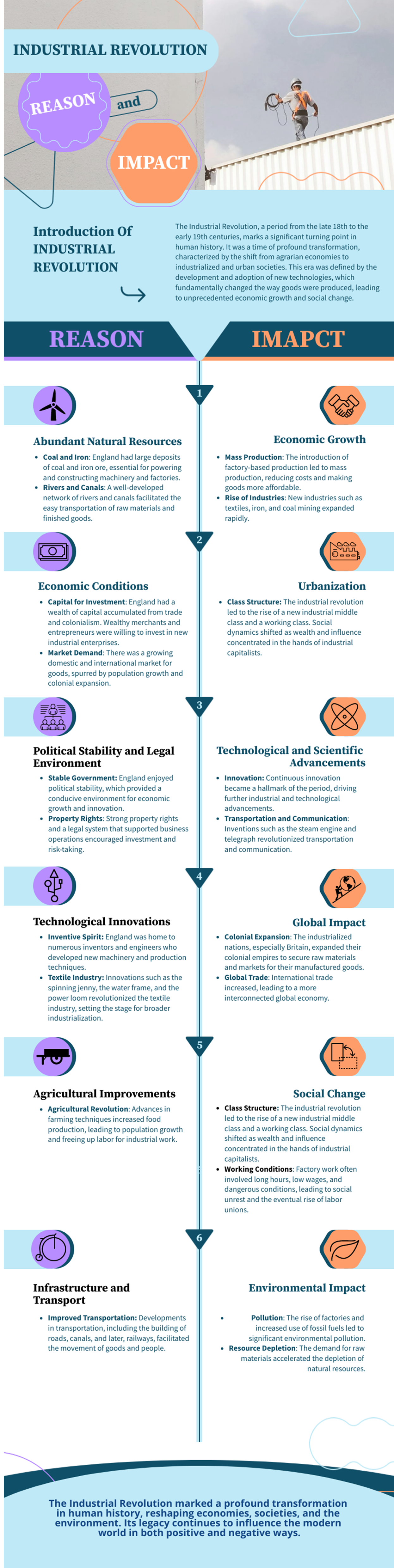


Technological advancements in transportation and communication played a significant role in facilitating the expansion of imperial control by: Transportation: Steamships: Introduced in the 19th century, steamships enabled faster and more reliable transportation of goods, people, and military personnRead more
Technological advancements in transportation and communication played a significant role in facilitating the expansion of imperial control by:
Transportation:
Communication:
These technological advancements enabled empires to:
- Maintain control over vast territories: By facilitating rapid transportation and communication, empires could maintain control over distant territories and respond quickly to crises.
- Establish colonies: Technological advancements enabled empires to establish colonies in distant regions, facilitating the extraction of resources and the spread of imperial influence.
- Suppress resistance: By rapidly communicating orders and responding to crises, empires could suppress resistance movements and maintain control over colonized populations.
- Facilitate trade and commerce: Technological advancements enabled empires to facilitate trade and commerce between colonies and metropolitan centers, generating revenue and further solidifying imperial control.
See less