

As AI-powered tools become increasingly prevalent in software development, can they eventually surpass human creativity in writing code? Or will human intuition and innovation always be essential in programming? Let’s explore the possibilities!


Virtualization is a technology that creates virtual instances of physical hardware resources, such as servers, storage devices, and networks. It allows multiple virtual machines (VMs) to run on a single physical machine, each with its own operating system and applications. This is achieved through aRead more
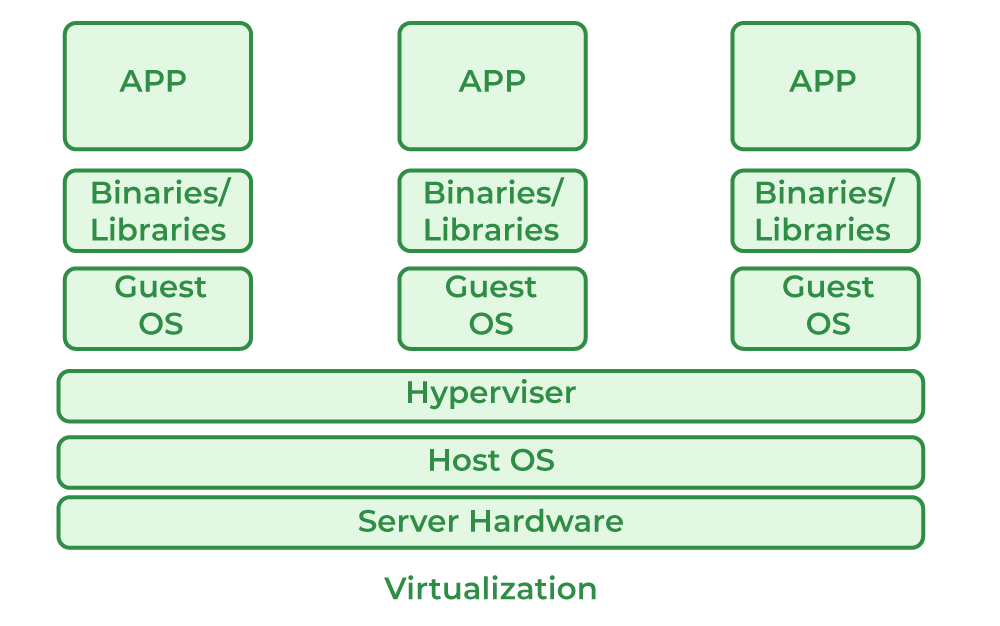
Virtualization is a technology that creates virtual instances of physical hardware resources, such as servers, storage devices, and networks. It allows multiple virtual machines (VMs) to run on a single physical machine, each with its own operating system and applications. This is achieved through a software layer called a hypervisor, which manages and allocates resources to each VM.
- Key Concepts:
- Hypervisor: Software that enables multiple VMs to run on a single physical machine. Types include Type 1 (bare-metal) and Type 2 (hosted).
- Virtual Machines (VMs): Independent instances that run their own operating systems and applications, sharing the underlying physical hardware.
- Benefits in Cloud Computing:
Top 3 Benefits:
- Resource Efficiency: Virtualization maximizes the use of physical hardware by allowing multiple VMs to run on a single server, reducing the need for additional hardware.
- Cost Savings: Reduced hardware requirements lead to lower capital and operational expenses, including energy consumption and maintenance costs.
- Scalability: Virtualization allows for easy scaling of resources. New VMs can be quickly created to handle increased demand, and redundant VMs can be removed when demand decreases.
Other Benefits:
Isolation and Security, Enhanced Disaster Recovery, Business Continuity and Flexibility etc.
Virtualization is a cornerstone of cloud computing, enabling efficient, flexible, and cost-effective resource management.
See less


No. AI can't replace human creativity and intuition in software development, despite its ability to enhance efficiency and optimize processes. AI excels at automating repetitive tasks, analyzing vast datasets, and generating code based on patterns and algorithms. It can significantly speed up develoRead more
No. AI can’t replace human creativity and intuition in software development, despite its ability to enhance efficiency and optimize processes. AI excels at automating repetitive tasks, analyzing vast datasets, and generating code based on patterns and algorithms. It can significantly speed up development cycles and improve accuracy in routine tasks like debugging and optimization.