


A Data Warehouse is crucial for any business as it provides a centralized repository for storing, managing, and analyzing large volumes of data from various sources. This centralization allows businesses to consolidate data from different departments, systems, and applications, ensuring consistencyRead more
A Data Warehouse is crucial for any business as it provides a centralized repository for storing, managing, and analyzing large volumes of data from various sources. This centralization allows businesses to consolidate data from different departments, systems, and applications, ensuring consistency and reliability. By having a single source of truth, businesses can make informed decisions based on comprehensive and accurate data. Data warehouses support historical data analysis, enabling businesses to identify trends, patterns, and insights that drive strategic planning and operational improvements.
Key benefits of data warehouses include:
- Centralized Data Storage: Aggregates data from multiple sources, providing a unified view of the organization’s information.
- Improved Data Quality: Ensures data consistency, accuracy, and reliability through data cleaning and validation processes.
- Enhanced Decision-Making: Facilitates data-driven decisions by providing quick access to historical and real-time data for analysis.
- Scalability: Can handle large volumes of data, allowing businesses to grow and adapt their data storage needs over time.
- Performance Optimization: Designed for fast query performance, enabling efficient data retrieval and analysis.
For example, a retail company might use a data warehouse to consolidate sales data from various stores, online platforms, and customer databases. This allows the company to analyze overall sales performance, identify trends, and forecast demand more accurately. By leveraging the data warehouse, the company can optimize inventory management, tailor marketing strategies, and improve customer service, ultimately driving business growth and profitability.
In conclusion, a data warehouse is essential for businesses to manage and utilize their data effectively. It provides a robust infrastructure for data consolidation, quality assurance, and efficient analysis, leading to better decision-making and strategic planning. The ability to access and analyze comprehensive data empowers businesses to stay competitive and responsive in a data-driven world.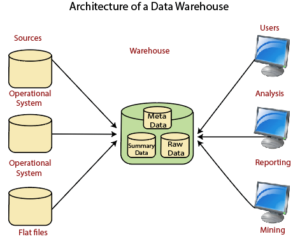


Data warehouses and data marts both store information for analysis, but they differ in their scope, purpose, and construction: Data Warehouse: Centralized System: A data warehouse acts as a central repository for an organization's entire historical data, integrating information from various operatioRead more
Data warehouses and data marts both store information for analysis, but they differ in their scope, purpose, and construction:
Data Warehouse:
Data Mart:
In simpler terms:
Additional points:
- Data warehouses typically involve more complex data transformation and cleaning processes compared to data marts.
- Data warehouses might use slightly denormalized structures for better query performance, while data marts often leverage star or snowflake schemas for faster analysis within a department.
See less