

What strategies can be employed to address the challenges of internet connectivity and technology access in rural areas, ensuring that online learning is effective for children?


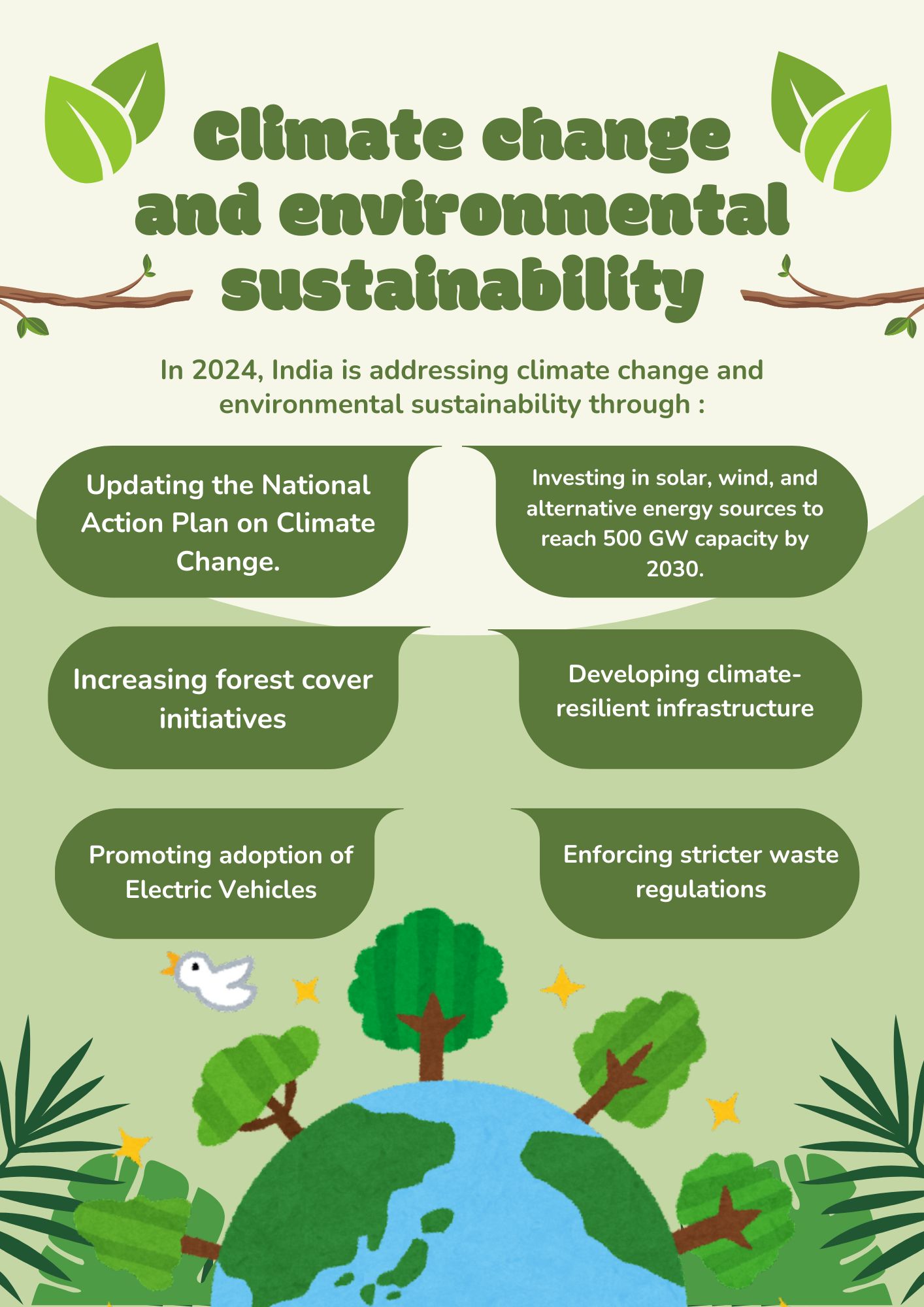
In 2024, India is actively addressing climate change and environmental sustainability through various policies and actions. Here are six significant measures being taken: 1. National Action Plan on Climate Change (NAPCC) Enhancement: India has updated its NAPCC to include more ambitious targets forRead more
In 2024, India is actively addressing climate change and environmental sustainability through various policies and actions. Here are six significant measures being taken:
1. National Action Plan on Climate Change (NAPCC) Enhancement: India has updated its NAPCC to include more ambitious targets for renewable energy, energy efficiency, and climate resilience. This includes expanding the scope of the existing missions and introducing new missions focused on sustainable agriculture and green transport.
2. Renewable Energy Expansion: India continues to invest heavily in renewable energy, with a target to achieve 500 GW of renewable energy capacity by 2030. Significant investments are being made in solar and wind power projects, along with initiatives to promote the use of biofuels and hydrogen as alternative energy sources.
3. Afforestation and Reforestation Programs: Initiatives like the Green India Mission and state-level programs aim to increase forest cover and restore degraded ecosystems. These efforts contribute to carbon sequestration, biodiversity conservation, and the enhancement of ecosystem services.
4. Promotion of Electric Vehicles (EVs): To reduce carbon emissions from the transportation sector, India is promoting the adoption of electric vehicles through subsidies, tax incentives, and the development of EV charging infrastructure. Policies aim to make EVs more affordable and accessible to the general population.
5. Waste Management and Plastic Ban: India is enforcing stricter regulations on waste management, including solid waste and electronic waste. Additionally, the government has implemented a nationwide ban on single-use plastics, encouraging the use of sustainable alternatives and promoting recycling.
6. Climate-Resilient Infrastructure: Investments are being made in developing infrastructure that can withstand the impacts of climate change, such as extreme weather events and rising sea levels. This includes building climate-resilient urban infrastructure, improving water management systems, and enhancing disaster preparedness and response mechanisms.
See less


Addressing internet connectivity and technology access in rural areas to ensure effective online learning for children requires a multifaceted approach. Key strategies include: 1. Infrastructure Development: Governments and private sectors can invest in building robust internet infrastructure, incluRead more
Addressing internet connectivity and technology access in rural areas to ensure effective online learning for children requires a multifaceted approach.
Key strategies include:
1. Infrastructure Development: Governments and private sectors can invest in building robust internet infrastructure, including broadband networks and mobile towers, to provide reliable internet access in rural areas. Public-private partnerships can expedite this process.
2. Affordable Connectivity: Implementing subsidized internet plans and providing financial assistance can make connectivity more affordable for low-income families. Community Wi-Fi hotspots in central locations like schools, libraries, and community centers can also provide free access.
3. Technology Provision: Distributing affordable or donated devices, such as laptops, tablets, and smartphones, to students ensures they have the necessary tools for online learning. Schools and NGOs can play a significant role in this distribution.
4. Digital Literacy Programs: Training teachers, parents, and students in digital literacy ensures they can effectively use online learning platforms and resources. Workshops and ongoing support can bridge the gap in technology skills.
5. Localized Content: Developing and providing educational content tailored to the local context and languages ensures that learning materials are relevant and accessible to all students.
6. Supportive Policies: Governments can implement policies that support digital education, such as tax incentives for tech companies investing in rural areas and grants for schools to upgrade their technological resources.
These strategies, when combined, can significantly improve internet connectivity and technology access, making online learning more effective and inclusive for children in rural areas.
See less