
Home/British Policies in India/Administrative Policies/Page 7
Administrative Policies
Share
Lost your password? Please enter your email address. You will receive a link and will create a new password via email.
Please briefly explain why you feel this question should be reported.
Please briefly explain why you feel this answer should be reported.
Please briefly explain why you feel this user should be reported.
Discuss the significance of the Government of India Acts in shaping constitutional development in colonial India.
The Government of India Acts were pivotal in shaping constitutional development during colonial rule. Each Act introduced various reforms, gradually transforming the governance structure. Here’s an overview of their significance: 1. Government of India Act 1919 Dyarchy Introduction: This Act introduRead more
The Government of India Acts were pivotal in shaping constitutional development during colonial rule. Each Act introduced various reforms, gradually transforming the governance structure. Here’s an overview of their significance:
1. Government of India Act 1919
2. Government of India Act 1935
3. Significance in Constitutional Development
4. Critiques and Limitations
Conclusion
The Government of India Acts were significant milestones in the constitutional development of colonial India. They reflected the evolving relationship between the British government and Indian aspirations for self-rule, laying the groundwork for future democratic governance and the eventual emergence of an independent India.
See lessAnalyze the impact of the Indian Civil Services on governance and local administration during British rule.
The Indian Civil Services (ICS) played a crucial role in governance and local administration during British rule in India. Here are some key impacts: Centralization of Power Bureaucratic Control: The ICS established a centralized bureaucratic structure, allowing the British to maintain control overRead more
The Indian Civil Services (ICS) played a crucial role in governance and local administration during British rule in India. Here are some key impacts:
Centralization of Power
Administrative Efficiency
Impact on Local Administration
Social and Economic Consequences
Legacy
Conclusion
The Indian Civil Services significantly shaped governance and local administration under British rule, providing both order and efficiency but also contributing to social discontent and the erosion of local authority. Its complex legacy continues to influence administrative practices in modern India.
See lessHow did the Permanent Settlement of 1793 affect land ownership and agrarian relations in India?
The Permanent Settlement of 1793, implemented by the British in Bengal, significantly altered land ownership and agrarian relations in India. Here are the key effects: Land Ownership Creation of Zamindars: The system established zamindars (landlords) as the intermediaries between the British governmRead more
The Permanent Settlement of 1793, implemented by the British in Bengal, significantly altered land ownership and agrarian relations in India. Here are the key effects:
Land Ownership
Agrarian Relations
Conclusion
Overall, the Permanent Settlement of 1793 entrenched a system that favored landlords over peasants, exacerbated social inequalities, and transformed the agrarian landscape in colonial India, laying the groundwork for ongoing struggles related to land and agrarian rights.
See lessHow do global economic interdependencies and exchange rate fluctuations affect the effectiveness of national monetary policies, especially in small open economies?
Monetary policy are steps taken by central bank of a country to achieve various objectives such as stable economic growth, controlling money supply etc. However the increasing interdependence of country on each other and the uncertainties of global market has reduced the effectiveness of monetary poRead more
Monetary policy are steps taken by central bank of a country to achieve various objectives such as stable economic growth, controlling money supply etc. However the increasing interdependence of country on each other and the uncertainties of global market has reduced the effectiveness of monetary policy, especially in small open economies.
MONETARY POLICY AND GLOBAL INTERDEPENDENCE
Thus the challenges brought in by globalization can not alone be tackled by monetary policy. The policy is to be backed by other strategies such as
Thus rendering the monetary policy effective in controlling inflation and achieving desired economic growth.
See lessPolicy Implementation and Evaluation
The National Rural Employment Guarantee Act (NREGA), now known as the Mahatma Gandhi National Rural Employment Guarantee Act (MGNREGA), was introduced in India to address rural unemployment and poverty. It guarantees at least 100 days of wage employment per year to rural households whose adult membeRead more
The National Rural Employment Guarantee Act (NREGA), now known as the Mahatma Gandhi National Rural Employment Guarantee Act (MGNREGA), was introduced in India to address rural unemployment and poverty. It guarantees at least 100 days of wage employment per year to rural households whose adult members are willing to work. Here’s how effective it has been:
Effectiveness in Addressing Rural Unemployment:
Challenges and Areas for Improvement:
Overall, MGNREGA has been effective in providing employment and supporting rural livelihoods, but improving its implementation and expanding its scope could enhance its impact on rural poverty and unemployment.
See lessThe political and administrative reorganization of states and territories has been a continuous ongoing process since the mid-nineteenth century. Discuss with examples. ( 250 words ) [UPSC 2022]
The political and administrative reorganization of states and territories in India has been a continuous process, reflecting changes in governance, socio-political needs, and regional aspirations. This reorganization began in the mid-nineteenth century and has evolved through several phases: **1. BrRead more
The political and administrative reorganization of states and territories in India has been a continuous process, reflecting changes in governance, socio-political needs, and regional aspirations. This reorganization began in the mid-nineteenth century and has evolved through several phases:
**1. British Era Reorganizations (Mid-19th Century):
**2. Post-Independence Reorganization (1947-1956):
**3. Further Reorganizations (1960s-1980s):
**4. Recent Developments (1990s-Present):
Examples:
These reorganizations reflect India’s dynamic political landscape, aiming to balance administrative efficiency, regional identity, and socio-economic development.
See lessPolitical economy
The relationship between politics and economics in India is deeply intertwined, influencing and shaping each other in significant ways. This linkage is evident in various aspects of governance, policy-making, and development. Here’s a detailed analysis of how politics and economics are interconnecteRead more
The relationship between politics and economics in India is deeply intertwined, influencing and shaping each other in significant ways. This linkage is evident in various aspects of governance, policy-making, and development. Here’s a detailed analysis of how politics and economics are interconnected in India, supported by recent examples:
1. Political Influence on Economic Policy
Policy Formulation and Implementation
Economic Reforms and Political Decisions: Political priorities often shape economic policies. For instance, the economic reforms of the 1990s were driven by the political need to address the balance of payments crisis and revive economic growth.
Recent Example: The Goods and Services Tax (GST) implementation in 2017, a significant economic reform, was influenced by political decisions aimed at simplifying the tax system and improving compliance.
Budgetary Allocations
Political Priorities in Budgeting: Government budgets reflect political priorities, with allocations often driven by electoral considerations and political promises.
Recent Example: The Union Budget 2024, with increased allocations for social welfare schemes and infrastructure projects, demonstrates how political agendas impact budgetary decisions.
Election Strategies
Economic Policies as Electoral Tools: Economic policies are frequently used as tools for electoral gains, with governments implementing welfare programs and subsidies to garner voter support.
Recent Example: The Pradhan Mantri Kisan Samman Nidhi (PM-KISAN) scheme, which provides financial support to farmers, was introduced ahead of the 2019 general elections to appeal to the rural electorate.
2. Economic Impact on Political Stability
Economic Performance and Political Popularity
Economic Growth and Electoral Success: The performance of the economy can significantly impact political stability and electoral outcomes. Economic growth often translates into political support, while economic downturns can lead to political discontent.
Recent Example: The economic slowdown during the COVID-19 pandemic and its impact on unemployment and business closures affected the political narrative and public perception of the government’s handling of economic issues.
Public Sentiment and Political Legitimacy
Economic Conditions and Governance: Economic conditions influence public sentiment and the legitimacy of political leaders. Governments face pressure to address economic challenges to maintain political stability.
Recent Example: The farmer protests against the farm laws in 2020-2021 highlighted how economic issues and dissatisfaction with agricultural policies can lead to significant political unrest.
3. Economic Policies Shaping Political Landscape
Regulatory Changes and Political Agendas
Economic Reforms and Political Ideology: Economic reforms often align with the political ideology of the ruling party, shaping the economic landscape according to their vision.
Recent Example: The National Monetization Pipeline (NMP), aimed at privatizing state-owned assets, reflects the current government’s focus on market-driven economic policies and liberalization.
Infrastructure Development and Political Gains
Infrastructure Projects as Political Capital: Major infrastructure projects are frequently used to build political capital and demonstrate governance achievements.
Recent Example: The Delhi-Mumbai Expressway and Ganga rejuvenation projects are promoted as significant achievements of the current government, aimed at improving connectivity and environmental conditions while gaining political favor.
4. Interaction Between Politics and Economics in Policy Challenges
Policy Implementation and Administrative Capacity
Challenges in Execution: The effectiveness of economic policies often depends on political will and administrative capacity. Political factors can either facilitate or hinder policy implementation.
Recent Example: The implementation challenges of the National Education Policy (NEP) 2020 reflect how political decisions and administrative capacities affect the execution of educational reforms.
Corruption and Economic Mismanagement
Impact on Economic Health: Corruption and political interference can lead to economic mismanagement and inefficiencies, affecting overall economic health.
Recent Example: The Scam in the Rafale fighter jet deal raised concerns about corruption and its impact on defense procurement and overall governance.
Social Welfare Policies and Political Strategy
Linking Economic Policies with Social Welfare: Social welfare policies are designed to address economic inequalities and are often used by political parties to gain support from disadvantaged groups.
Recent Example: The Ayushman Bharat scheme, aimed at providing health insurance to low-income families, illustrates how economic policies are linked with social welfare objectives and political strategies.
5. Long-term Implications and Future Prospects
Economic Growth and Political Dynamics
Sustainable Development and Political Stability: Achieving sustainable economic growth is crucial for long-term political stability. Governments need to balance economic reforms with social equity to maintain political support.
Recent Example: The focus on sustainable development goals (SDGs) and climate action in India’s policies reflects the need to align economic growth with long-term political and social objectives.
Globalization and Domestic Politics
Global Economic Integration: India’s integration into the global economy influences domestic politics, as global economic trends and international trade agreements impact national policy decisions.
See lessRecent Example: The India-U.S. trade agreements and participation in global economic forums highlight how international economic dynamics shape domestic political decisions and economic strategies.
In summary, the relationship between politics and economics in India is deeply interconnected. Political decisions influence economic policies, while economic performance affects political stability and legitimacy. This linkage manifests in policy formulation, electoral strategies, and governance challenges, highlighting the complex interplay between political and economic factors in shaping India’s development trajectory.
What are the key priorities and initiatives of the Indian government in the 2024 Union Budget, and how are they expected to impact the country's economic growth and development?
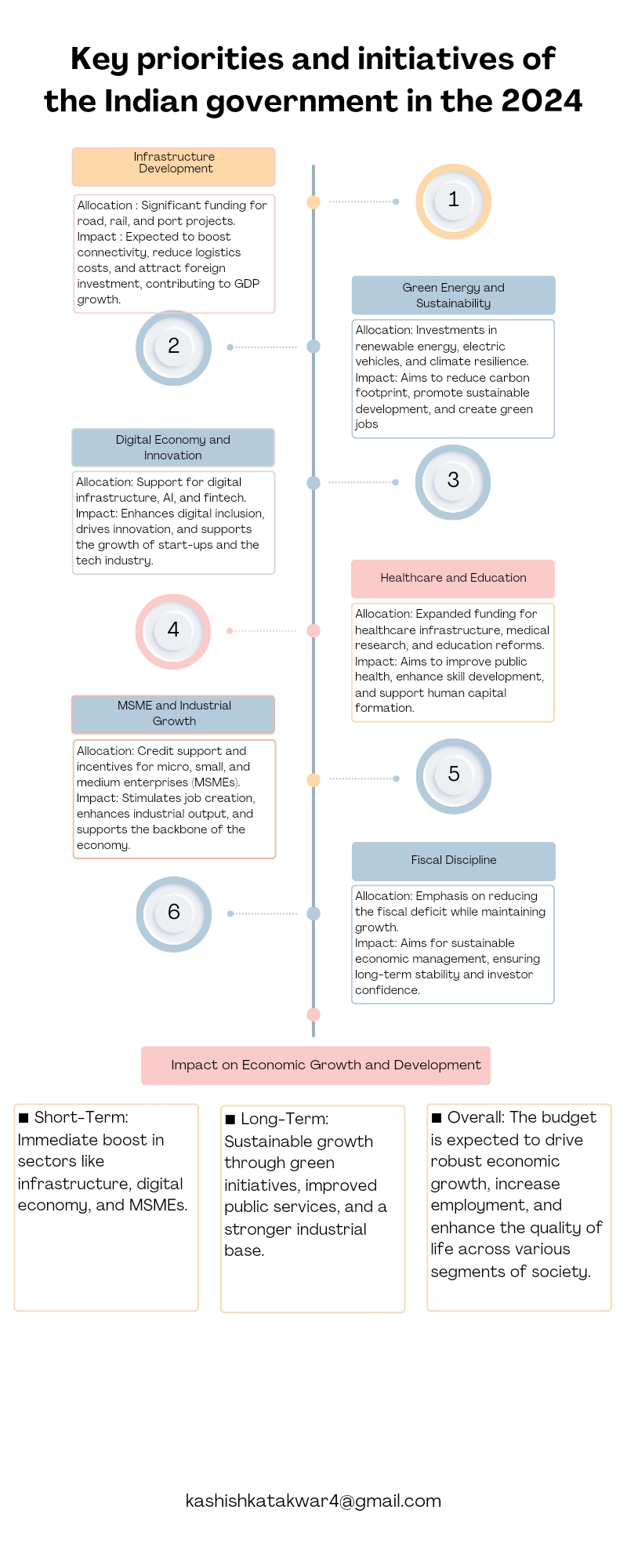
See lessWhat are the major achievements and challenges in India's healthcare sector in 2024, particularly in relation to public health and the management of emerging diseases?
Reforming India’s healthcare system is a multifaceted challenge that requires comprehensive policy reforms and effective strategies. India’s current healthcare system is characterized by the dual burden of communicable and non-communicable diseases, lack of public health resources, and wide disparitRead more
Reforming India’s healthcare system is a multifaceted challenge that requires comprehensive policy reforms and effective strategies. India’s current healthcare system is characterized by the dual burden of communicable and non-communicable diseases, lack of public health resources, and wide disparities in access to and access to healthcare services between urban and rural areas. As proposed in the National Health Policy 2017, the key to economic transformation is to increase public healthcare expenditure as a share of GDP to at least 2.5%. There is a severe shortage of doctors. Improving the use of technology through digital health initiatives such as telemedicine and health information can address inequalities in service delivery and increase efficiency.
Additionally, integrating traditional and modern medicine with quality control syst ems can increase access to and affordability of healthcare for all. Public-private partnerships, investment in healthcare, and a focus on preventive care are also critical to healthcare reform. Addressing health determinants such as sanitation, nutrition, and education is essential to improving overall health and realizing India’s health vision.
See lessAnalyze the effectiveness of the Pradhan Mantri Awas Yojana in addressing urban housing shortages.
Effectiveness of the Pradhan Mantri Awas Yojana (PMAY) in Addressing Urban Housing Shortages 1. Introduction: The Pradhan Mantri Awas Yojana (PMAY), launched in 2015, aims to address the urban housing shortages in India by providing affordable housing to all. The scheme focuses on ensuring a "HousinRead more
Effectiveness of the Pradhan Mantri Awas Yojana (PMAY) in Addressing Urban Housing Shortages
1. Introduction:
The Pradhan Mantri Awas Yojana (PMAY), launched in 2015, aims to address the urban housing shortages in India by providing affordable housing to all. The scheme focuses on ensuring a “Housing for All” approach through various financial and infrastructural incentives.
2. Key Objectives of PMAY:
Affordable Housing: PMAY aims to provide affordable housing to the economically weaker sections (EWS), low-income groups (LIG), and middle-income groups (MIG) through subsidies and financial support.
Housing Construction: The scheme targets the construction of new houses and the enhancement of existing ones in urban areas, including cities and towns across the country.
Slum Rehabilitation: PMAY includes provisions for slum redevelopment and improvement, focusing on upgrading the living conditions in slum areas.
3. Achievements and Impact:
Increased Housing Supply: As of 2024, PMAY has significantly increased the supply of affordable housing. According to the Ministry of Housing and Urban Affairs, over 1 crore houses have been sanctioned under PMAY-U (Urban) and PMAY-G (Gramin).
Financial Assistance: The scheme provides subsidies on home loans through the Credit Linked Subsidy Scheme (CLSS). For instance, the CLSS for EWS/LIG offers a subsidy of up to 6.5% on interest rates for home loans, which has benefited millions of low-income families.
Urban Development: The PMAY has led to the development of new housing projects and the upgrading of infrastructure in urban areas. For example, Ahmedabad and Bhopal have seen significant progress in housing projects under PMAY, addressing part of their urban housing needs.
4. Challenges and Limitations:
Implementation Delays: Many projects have faced delays due to issues like bureaucratic red tape, land acquisition problems, and construction delays. For instance, several states have reported delays in the completion of houses due to administrative inefficiencies.
Funding and Resources: The availability of funds and resources has sometimes been insufficient, affecting the timely execution of housing projects. States like Uttar Pradesh and Bihar have faced challenges in mobilizing adequate resources for PMAY projects.
Quality of Construction: Concerns have been raised about the quality of construction in some PMAY projects. Reports have highlighted issues such as poor construction standards and inadequate infrastructure in certain housing projects.
5. Recent Developments and Examples:
Increased Budget Allocation: In the Union Budget 2024, the government increased the allocation for PMAY, emphasizing its commitment to addressing housing shortages. This move aims to expedite project completion and expand the scheme’s reach.
Technology Integration: The adoption of technology and data analytics in project monitoring has been encouraged to improve transparency and efficiency. For instance, the PMAY Dashboard provides real-time updates on the status of housing projects, enhancing accountability.
Success Stories: Cities like Pune and Hyderabad have successfully implemented PMAY projects, leading to the construction of thousands of affordable housing units. These cities serve as examples of effective project execution and urban development under the scheme.
6. Conclusion:
The Pradhan Mantri Awas Yojana has made substantial strides in addressing urban housing shortages by providing financial assistance, promoting construction, and supporting slum rehabilitation. While there have been notable achievements, challenges such as implementation delays and resource constraints need to be addressed for the scheme to fully realize its objectives. Continued efforts to enhance project execution, improve quality standards, and ensure effective resource mobilization are essential for the success of PMAY in achieving its goal of “Housing for All.”
See less