

What do you think about the effectiveness of the recent propositions by the Finance Minister of India and why do you think so?


The Indian economy faces several rising challenges that need to be addressed to boost GDP growth: 1. **Unemployment**: A growing population means more people are looking for jobs. India needs to create enough employment opportunities, especially for the youth, to harness their potential. 2. **InflatRead more
The Indian economy faces several rising challenges that need to be addressed to boost GDP growth:
1. **Unemployment**: A growing population means more people are looking for jobs. India needs to create enough employment opportunities, especially for the youth, to harness their potential.
2. **Inflation**: Rising prices of goods and services can reduce purchasing power and affect living standards. Keeping inflation under control is crucial for economic stability.
3. **Infrastructure Development**: Poor infrastructure, like roads, railways, and power supply, can hinder business operations. Investing in better infrastructure is essential for facilitating trade and attracting investments.
4. **Agricultural Dependency**: A significant portion of the population relies on agriculture, which can be vulnerable to climate change and fluctuations in weather. Diversifying the economy and improving agricultural practices are necessary.
5. **Inequality**: Economic disparities between different regions and communities can create social tensions. Addressing these inequalities through inclusive growth policies is important.
6. **Global Competition**: As the world becomes more interconnected, Indian businesses face competition from international players. Strengthening domestic industries and fostering innovation can help them compete effectively.
By tackling these challenges, India can create a more robust economy and achieve higher GDP growth.
See less


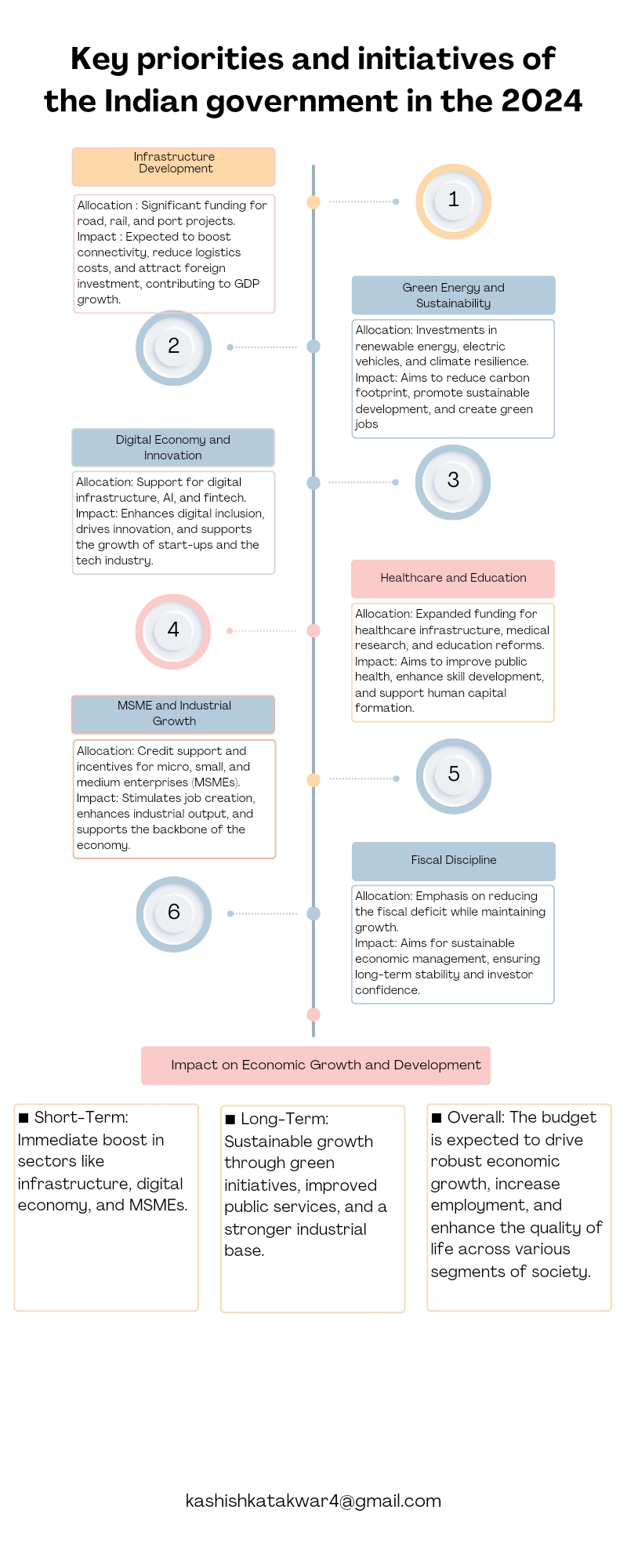



The recent proposals announced by India’s Finance Minister have created much stir, the emphasis is made on creating the economic growth, combating inflation, the development of infrastructures. While some of them appear rather useful, others make one raise an eyebrow at how they will be carried outRead more
The recent proposals announced by India’s Finance Minister have created much stir, the emphasis is made on creating the economic growth, combating inflation, the development of infrastructures. While some of them appear rather useful, others make one raise an eyebrow at how they will be carried out and what results they will yield in the future.
Key Propositions and Their Effectiveness:
1. Boosting Infrastructure Development:
As the government focuses on all round development of roads, rails, urbanization, it should spark employment, investment avenues for the private sector.
Effectiveness: Public investment particularly in infrastructures is said to be a strong multiplier for growth of practically all industries.
2. Focus on Digital Economy:
Digital payments and e-governance propositions are laudable since India is ripe for fintech, as observed.
– Effectiveness: These points could work if done rightly in eradicating inefficiencies as well as enhancing the incorporative of the financially less fortunate in the society.
3. MSME Support
There are programs for subsidies and guarantees for micro, small and medium enterprises to restore a badly affected sector because of the pandemic.
– Effectiveness: This is an important factor, yet disbursement, particularly timely and ease of access will define the outcome.
4. Agricultural Reforms:
The increase in allocation for irrigation, farm mechanization and rural development could lead to better farmers’ income earnings.
– Effectiveness: This will only be so depending on whether the benefits will extend to the small and marginal farmers.
5. Tax Reforms:
Reducing the tax burdens and offering tax relief to the citizens and companies, measures to increase the compliance level as well as disposable income,imates
– Effectiveness: The effect is a factor of the degree to which or the extent to which the shift is progressive or regressive.
Challenges:
See less1. Execution Gaps: That is why the policy implementation that starts with good intentions and positive goals may bring small or no positive change if implemented too late.
2. Fiscal Deficit Management: Expenditure control in the context of growth-oriented spending is a challenge.