

Examine the importance of the India-Japan-Australia-United States (Quad) alliance in light of the changing economic and security landscape of the Indo-Pacific area. Talk about the advantages and disadvantages of this quadrilateral cooperation in tackling regional issues like infrastructure development, marine ...
Mohit SharmaBegginer




The Quad grouping, consisting of India, Japan, Australia, and the United States, plays a significant role in the evolving security and economic architecture of the Indo-Pacific region. Here’s a detailed analysis of its significance, potential, and limitations: Significance of the Quad **1. StrategicRead more
The Quad grouping, consisting of India, Japan, Australia, and the United States, plays a significant role in the evolving security and economic architecture of the Indo-Pacific region. Here’s a detailed analysis of its significance, potential, and limitations:
Significance of the Quad
**1. Strategic Balance in the Indo-Pacific:
Counterbalancing China: The Quad is often seen as a response to China’s growing influence in the Indo-Pacific region. By fostering closer cooperation among major democracies, the Quad aims to balance China’s strategic and economic dominance, particularly in areas like maritime security and infrastructure development.
Regional Stability: The Quad contributes to regional stability by promoting a rules-based order and ensuring freedom of navigation and overflight in the Indo-Pacific, a key area for global trade.
**2. Economic and Security Cooperation:
Economic Integration: The Quad members are major economies with significant interests in the Indo-Pacific. Their collaboration helps strengthen economic ties and promotes a more inclusive economic framework in the region.
Defense and Security Collaboration: The Quad focuses on enhancing defense and security cooperation, including joint military exercises, information sharing, and strategic dialogues to address regional security challenges.
Potential of the Quad
**1. Maritime Security:
Freedom of Navigation: The Quad emphasizes the importance of maintaining freedom of navigation and upholding international law in the South China Sea and other critical maritime areas. This is crucial for ensuring the security of global shipping lanes and international trade.
Joint Exercises and Patrols: Regular joint military exercises and maritime patrols enhance the naval capabilities and interoperability of Quad members, contributing to regional maritime security.
**2. Infrastructure Development:
Quality Infrastructure Initiative: The Quad’s focus on infrastructure development includes promoting quality and sustainable infrastructure projects in the Indo-Pacific. This initiative aims to offer an alternative to China’s Belt and Road Initiative (BRI), emphasizing transparency, sustainability, and high standards.
Development Finance: Collaboration on infrastructure projects, such as port development and connectivity, helps improve regional infrastructure and supports economic growth in partner countries.
**3. Emerging Technologies:
Tech Cooperation: The Quad is increasingly focusing on emerging technologies such as 5G, cybersecurity, and artificial intelligence. Cooperation in these areas aims to address technological challenges, promote innovation, and ensure secure and resilient technology infrastructure.
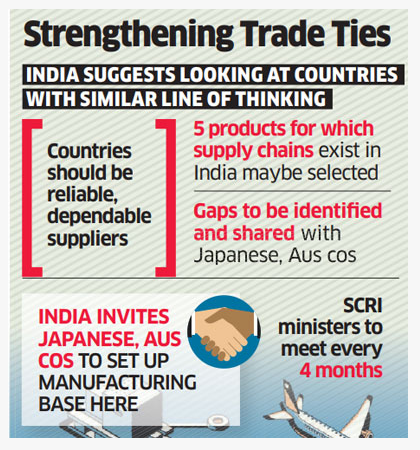
Supply Chain Resilience: The Quad members work together to enhance supply chain resilience and reduce dependency on single sources, which is crucial for securing critical technology and resources.
Limitations of the Quad
**1. Divergent National Interests:
Strategic Priorities: The member countries have different strategic priorities and geopolitical interests, which can affect the cohesion and effectiveness of the Quad. For instance, while all members share concerns about China, their approaches and strategies may vary.
Regional Focus: The Quad’s focus on specific issues may lead to tensions or disagreements among members regarding the prioritization of regional challenges and responses.
**2. Limited Institutional Framework:
Ad-hoc Cooperation: The Quad lacks a formal institutional framework and permanent secretariat, which can limit its ability to implement decisions and coordinate actions effectively. Its informal nature means that progress depends on the political will and commitment of member countries.
Coordination Challenges: Coordinating policies and actions among four diverse democracies can be challenging, particularly when addressing complex and evolving regional issues.
**3. Geopolitical Tensions:
China’s Reaction: The Quad’s activities and objectives can provoke a strong reaction from China, which may lead to increased geopolitical tensions and countermeasures by Beijing. This can complicate efforts to address regional challenges and maintain stable relations.
See lessRegional Perceptions: Some countries in the Indo-Pacific region may view the Quad’s activities with skepticism or concern, potentially leading to diplomatic challenges and affecting the group’s ability to build broad regional support.
Conclusion
The Quad grouping plays a significant role in the Indo-Pacific by providing a platform for strategic cooperation among major democracies. Its potential lies in enhancing maritime security, promoting infrastructure development, and advancing technological collaboration. However, it faces limitations due to divergent national interests, the lack of a formal institutional framework, and potential geopolitical tensions with China. The effectiveness of the Quad will depend on its ability to navigate these challenges while fostering a cohesive approach to addressing regional security and economic issues.