

Monetary policy is a set of action to control a nation’s overall money supply and achieve economic growth.


The Indian government has made efforts to align its economic planning with the Sustainable Development Goals (SDGs) and the Paris Agreement on climate change. However, integrating environmental and social considerations into the country's development priorities has presented both challenges and oppoRead more
The Indian government has made efforts to align its economic planning with the Sustainable Development Goals (SDGs) and the Paris Agreement on climate change. However, integrating environmental and social considerations into the country’s development priorities has presented both challenges and opportunities.
Aligning with the SDGs and Paris Agreement:
- India has committed to achieving the SDGs by 2030 and has taken steps to align its national development plans, policies, and programs with the global agenda.
- This includes the formulation of the National Indicator Framework to track progress on the SDGs and the establishment of the NITI Aayog (National Institution for Transforming India) to coordinate the implementation of the SDGs.
- Regarding the Paris Agreement, India has set ambitious targets for reducing its greenhouse gas emissions and expanding its renewable energy capacity, demonstrating its commitment to climate action.
Challenges in Integration:
- Balancing Economic Growth and Sustainability:
- India’s continued focus on economic growth and development has sometimes led to tensions with environmental and social considerations.
- Reconciling the demands of rapid industrialization, infrastructure development, and job creation with the need for sustainable and equitable growth remains a significant challenge.
- Institutional and Capacity Constraints:
- Effectively integrating the SDGs and climate action into economic planning requires strong institutional frameworks, technical capabilities, and coordination across various government agencies and stakeholders.
- Capacity limitations, siloed decision-making, and gaps in data and monitoring systems can hinder the integration process.
- Financing Sustainable Development:
- Mobilizing the necessary financial resources to fund sustainable development initiatives, such as renewable energy projects, environmental protection measures, and social welfare programs, is a persistent challenge.
- Striking the right balance between public and private investments, as well as accessing international climate finance, remains a key priority.
Opportunities and Emerging Trends:
- Leveraging New Technologies:
- The growth of digital technologies, renewable energy solutions, and innovative financing models can create new opportunities for sustainable development.
- Harnessing these technological advancements can help address environmental challenges and promote inclusive growth.
- Enhancing Stakeholder Engagement:
- Involving a diverse range of stakeholders, including the private sector, civil society, and local communities, in the planning and implementation of sustainable development initiatives can lead to more inclusive and responsive policies.
- Decentralized Approach and Subnational Action:
- Some states and cities in India have taken the lead in integrating sustainability and climate action into their development plans, demonstrating the potential for a more decentralized and locally-driven approach.
- Scaling up and replicating these subnational efforts can contribute to the overall progress on the SDGs and climate goals.
To effectively integrate environmental and social considerations into India’s economic planning, a comprehensive and sustained approach is required. This may involve strengthening institutional mechanisms, improving data and monitoring systems, mobilizing innovative financing, and fostering multi-stakeholder collaboration. Balancing the imperatives of economic growth, environmental sustainability, and social equity will be crucial for India’s journey towards sustainable and inclusive development.
See less


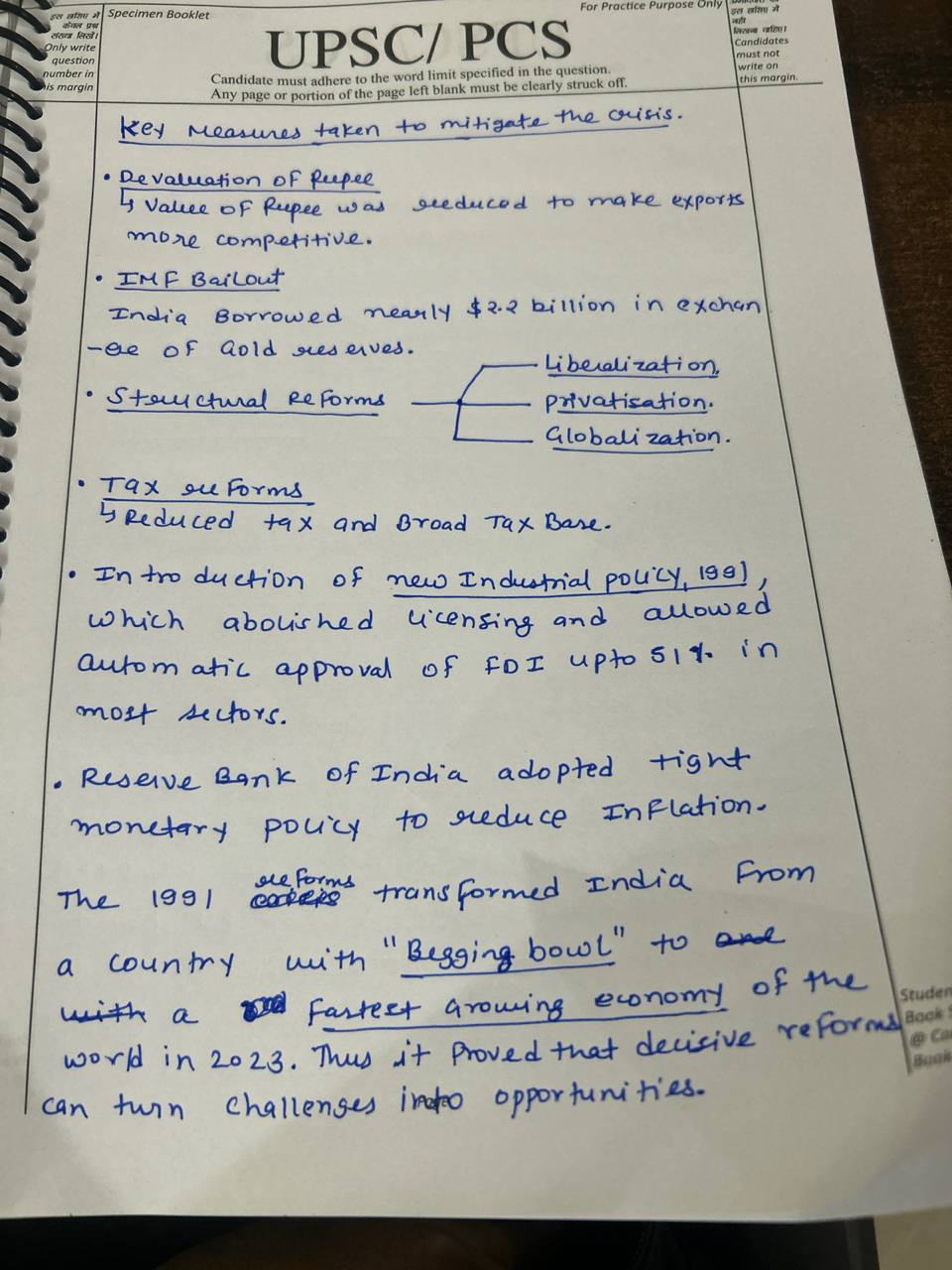


Monetary policy can be defined as the available tools that a country's central bank uses to direct the money supply of its economy and increase economic growth and employment through such operations as altering interest rates or changing bank reserve requirements. Tools of Monetary Policy Monetary pRead more
Monetary policy can be defined as the available tools that a country’s central bank uses to direct the money supply of its economy and increase economic growth and employment through such operations as altering interest rates or changing bank reserve requirements.
Tools of Monetary Policy
Monetary policy is employed by central banks in practice through various tools and devices. Some of the very common tools include:
Open Market Operations
The central bank buys or sells government securities, like bonds, in the open market. When the central bank purchases securities, it adds money in the economy; hence, there is more money. When it sells securities, it takes off some money in the economy, hence less money.
Reserve Requirements
Imagine the central banks as the headmaster of all banks. Central banks have rules for how small an amount of money each commercial bank should reserve in their vaults. A teacher might say, You should always carry at least 5 pencils in your bag. Changing such conditions influences the central bank on how much money commercial banks can lend and the quantity of money that they may produce.
Discount Rate
This discount rate is a special interest rate that allows commercial banks to borrow money from the central bank. It can be thought of as the special rate the central bank gives to commercial banks. If the central bank changes this discount rate, then how much it costs to borrow money for commercial banks changes. This affects how much they lend out to people and businesses, which in turn can affect the economy in general.
Interest Rate
See lessAnother tool that the central banks use is the interest rate to increase borrowing costs as well as curtail or boost economic activities. For example, by changing the benchmark interest rate of the central bank-overnight lending rate-the central bank can influence market interest rates that are used to calculate borrowing costs for everybody and for all businesses.