Examine how India’s energy diplomacy, in particular its interactions with major gas and oil producers, might help secure dependable and reasonably priced energy supplies to meet the nation’s expanding energy needs. Additionally, consider the geopolitical and economic ramifications of these ...
Mains Answer Writing Latest Questions
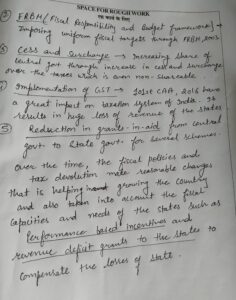
How have evolving economic dynamics impacted fiscal relations between the Union and the States in India? Answer in 250 words.
-
Primary education in rural India faces several challenges that need addressing: Infrastructure Issues: Schools often lack basic facilities like classrooms, toilets, and clean water. Solution Invest in building and improving school facilities, and encourage community involvement in maintenance. TeachRead more
Primary education in rural India faces several challenges that need addressing:
Infrastructure Issues: Schools often lack basic facilities like classrooms, toilets, and clean water.
Solution Invest in building and improving school facilities, and encourage community involvement in maintenance.Teacher Quality and Quantity: Many rural areas face shortages of qualified teachers, and existing teachers may lack proper training.
Solution: Recruit more teachers, enhance their training, and offer incentives to retain them in rural regions.Student Attendance: Distance from schools can prevent regular attendance, especially for girls.
Solution: Improve transportation options and consider setting up mobile schools or local learning centers.Economic Barriers: Economic pressures lead to low enrollment and high dropout rates.
Solution: Provide scholarships and financial support to families, and run programs to promote the importance of education.Resource Scarcity: Schools often have limited educational materials and resources.
Solution: Distribute books and learning materials through government schemes and partnerships with NGOs.Health and Nutrition: Poor health and malnutrition impact students’ ability to learn.
Solution: Implement school meal programs and regular health check-ups to support student well-being.By focusing on these points and implementing targeted solutions, primary education in rural India can be significantly improved.
See less
Elaborate on the comparison between Foreign Exchange Regulation Act and Foreign Exchange Management Act. What are the major differences between the two Acts and suggest changes, if any, that are required.
-
Here are some major differences between the Foreign Exchange Regulation Act and the Foreign Exchange Management Act: FERA and FEMA manage India's foreign currency and payments differently. In 1973, the Indian Parliament passed FERA, which took effect on January 1, 1974, to manage and save foreign cuRead more
Here are some major differences between the Foreign Exchange Regulation Act and the Foreign Exchange Management Act:
- FERA and FEMA manage India’s foreign currency and payments differently. In 1973, the Indian Parliament passed FERA, which took effect on January 1, 1974, to manage and save foreign currency at a time of low reserves. FEMA replaced the restricted FERA framework on June 1, 2000, after Parliament authorized it in 1999 to facilitate orderly foreign currency management.
- FERA’s rigorous restrictions reflected the economy and focused on foreign currency management and conservation. A complex 81-section law defined “Authorized persons” carefully and based residence status on citizenship. FERA violations were criminal crimes that carried the possibility of jail and barred legal representation. In addition, infractions were non-compoundable and could not be addressed outside of court.
- However, FEMA’s free and flexible regulation reflected India’s 1990s liberalization ambitions. With just 49 parts, FEMA’s structure is simpler and defines “Authorized persons,” including banks. The past six months of presence in India determines FEMA resident status, not citizenship. FEMA violations are civil infractions punishable by fines, but failure to pay may lead to incarceration. In contrast to FERA, breaches may be settled and the accused can be represented. FEMA added specific directors and courts to streamline appeals compared to FERA Supreme Court appeals.
- FERA’s cautious approach needed RBI approval for FX transactions, limiting operational flexibility. This regulation was repealed by FEMA, making currency transactions easier. FEMA also included information technology requirements to support a modernizing economy, unlike FERA. FERA to FEMA represents India’s transformation from a controlled to a liberalized and growth-oriented economy.
How has the decline in employment in India’s formal economy been caused by globalization? Does a rise in informalization harm the nation’s development? (200 words) [UPSC 2016]
-
Impact of Globalization on Formal Sector Employment and Informalization in India Reduction in Formal Sector Employment: Outsourcing and Automation: Globalization has led to a significant increase in outsourcing and automation. Many Indian companies have outsourced labor-intensive processes to countrRead more
Impact of Globalization on Formal Sector Employment and Informalization in India
Reduction in Formal Sector Employment:
- Outsourcing and Automation: Globalization has led to a significant increase in outsourcing and automation. Many Indian companies have outsourced labor-intensive processes to countries with lower labor costs, such as Bangladesh and Vietnam. Automation has also reduced the need for manual labor in sectors like manufacturing and services, leading to job losses in the formal sector.
- Economic Liberalization: Since the 1991 economic reforms, India has witnessed liberalization which has intensified competition. This has prompted companies to optimize operations, often resulting in downsizing and layoffs to cut costs and improve efficiency.
- Shift to Service Sector: There has been a noticeable shift from manufacturing to the service sector, which is often less regulated. Many service sector jobs are part-time or contractual, reducing the share of permanent employment in the formal sector.
Increased Informalization and its Impact:
- Prevalence of Informal Jobs: The rise in informal employment has been characterized by unregulated work, lack of job security, and minimal social benefits. Workers in the informal sector often face poor working conditions and inadequate wages.
- Detrimental Effects on Development: Increased informalization can be detrimental to development as it leads to lower tax revenues, hampers effective labor market regulations, and limits access to social security. This undermines economic stability and income equality.
Conclusion:
Globalization has indeed contributed to the reduction of formal sector employment in India by driving outsourcing, automation, and economic liberalization. While informalization provides employment opportunities, it poses significant challenges for economic development due to its unregulated nature and adverse impacts on workers’ rights and welfare. Balancing globalization with robust policies to protect workers and formalize employment is crucial for sustainable development.
See less
What are assets that do not perform (NPAs)? Describe the steps the government has recently made to combat the threat posed by non-performing assets (NPAs) in India. (Answer in 200 words)
-
This answer was edited.
NPA stands for Non-performing assets (NPAs). As per the Reserve Bank of India NPAs are loans or advances, due for more than 90 days. In other words, an asset becomes non-performing when it stops generating income for the bank. In case of agricultural advances cropping seasons are taken into cRead more
NPA stands for Non-performing assets (NPAs). As per the Reserve Bank of India NPAs are loans or advances, due for more than 90 days. In other words, an asset becomes non-performing when it stops generating income for the bank. In case of agricultural advances cropping seasons are taken into consideration instead of 90 days. Increasing NPAs is not a good sign for the banking sector and economy as it shows the inability of people to repay the loan.
Types of NPAs
Non-performing assets are categorized into various types based on specific criteria.
1. Substandard Assets: The assets have remained NPA for a period less than or equal to 12 months.
2. Doubtful Assets: Assets that have remained in the substandard category for 12 months.
3. Loss Assets: Assets where loss has been identified by the bank or external auditors or the RBI, but the amount has not been written off.
Measures Taken to Control NPAs by the Government
1. Insolvency and Bankruptcy Code (IBC), 2016:
It aims to improve the ease of doing business and a single-step solution to resolve insolvency issues.
To oversee the implementation of the law and insolvency professionals.
The incorporation of the IBC has significantly improved the recovery rates of bad loans by providing quicker resolution and restructuring of assets.
2. Asset Quality Review (AQR):
The RBI introduces an AQR to identify stressed assets in the banking system. This exercise focused on bringing transparency and improving the recognition of NPAs on the bank’s books.
3. Strategic Debt Restructuring (SDR), 2015:
If corporations are unable to repay their bank loans, the banks have the option to convert part or all of the loans into equity shares.
4. Mission Indradhanush:
This initiative was launched to revise the functioning of PSBs and identify issues like accountability, governance, and the overall condition of the banking sector.
It includes appointing professionals to major positions, empowering risk control measures, and improving the efficiency of bank operations.
5. Debt Recovery Tribunal (DRT), 2013:
It is governed by the Recovery of Debt Due to Banks and Financial Institutions Act, of 1993.
The aim was to shorten the time needed for case settlements.
6. Joint Lenders Forum (2014):
This measure is implemented to prevent the situation where a loan is taken from one bank to repay loans from other banks.
7. 5:25 Rule (2014):
It is also known as the Flexible Restructuring of Long Term Project Loans to Infrastructure and Core Industries and involves the refinancing of long-term projects.
8. Corporate Debt Restructuring (2005):
It minimizes the company’s debt burden by extending the repayment period and lowering the interest rates.
9. Asset Reconstruction Companies (ARC)
This measure helps in recovering value from distressed loans without going through the time-consuming process of court.
10. The SARFAESI Act (Securitization and Reconstruction of Financial Assets and Enforcement of Security Interest Act), 2002:
This act allows banks and financial institutions to auction residential or commercial properties to recover loans of defaulters.
The amendment in 2016 aimed to encourage banks to take possession of collateral security and sell them without the interference of courts.
11. Bad Bank – National Asset Reconstruction Company Limited (NARCL):
The government suggested setting up a ‘bad bank’ to manage and dispose of stressed assets of banks.
It will facilitate the aggregation and resolution of large-value NPAs along with the India Debt Resolution Company Limited (IDRCL).
12. Empowering Governance in Banks:
It includes the establishment of the Banks Board Bureau (BBB) to recommend appointments of directors and ensure the professionalization in bank management.
Improved investigation and accountability norms to avoid the reoccurrence of large frauds.
13. One-Time Settlement Schemes:
Banks have been encouraged to offer one-time settlement schemes to borrowers, especially in the MSME sector, to expedite the recovery process.
14. MSME Debt Restructuring:
The government and RBI have provided relief to the MSME sector by allowing the restructuring of their stressed assets without devaluing them.
See less
Roadmap for Answer Writing 1. Introduction Definition of Cropping Pattern: Explain what cropping pattern is and its significance in agriculture. Context: Briefly introduce how changes in consumption patterns and marketing conditions have influenced cropping patterns in India. 2. Changes in Cropping Pattern in India A. ...
-
Best Answer
Model Answer Introduction The cropping pattern in India, which refers to the types and sequences of crops produced in a given area, has evolved due to various factors, especially changes in consumption patterns and marketing conditions. Traditionally influenced by climate and soil, these recent shifRead more
Model Answer
Introduction
The cropping pattern in India, which refers to the types and sequences of crops produced in a given area, has evolved due to various factors, especially changes in consumption patterns and marketing conditions. Traditionally influenced by climate and soil, these recent shifts highlight the dynamic nature of Indian agriculture.
Changes in Cropping Pattern
From Food Crops to Cash Crops
Initially, the Green Revolution focused on food grains like wheat and rice. However, states like Maharashtra and Punjab are now increasingly cultivating cash crops such as sugarcane and cotton, driven by market demand.
Introduction of GM Crops
Genetically modified crops like Bt Cotton have transformed cotton farming in Gujarat and Maharashtra, offering higher yields and pest resistance.
Organic Farming
Sikkim has become India’s first fully organic state, catering to the rising consumer demand for organic produce perceived as healthier and more sustainable.
Multi-Cropping and Crop Rotation
Farmers in Punjab and Haryana are adopting multi-cropping and crop rotation techniques, such as alternating wheat, rice, and mustard, to enhance soil fertility and maximize yield.
Horticulture and Specialty Crops
States like Himachal Pradesh and Jammu & Kashmir are seeing increased fruit cultivation (e.g., apples and cherries) due to growing domestic and export markets.
Revival of Traditional Crops
Nutrient-dense millets like ragi and jowar are experiencing a resurgence in states like Karnataka, supported by government initiatives promoting these traditional grains for their health benefits.
Influence of Changes in Consumption Patterns
Health Awareness
With a growing focus on health, crops like quinoa and chia seeds are being cultivated in regions such as Tamil Nadu and Himachal Pradesh to meet consumer demand for nutritious foods.
Fast Food Culture
The rise of fast-food chains has increased potato cultivation in states like Uttar Pradesh for fries and other processed foods.
High Protein Demand
The fitness trend has led to increased cultivation of fodder crops like alfalfa in Haryana and Rajasthan to support livestock production.
Global Cuisine and Beverage Industry
The influence of international food trends has prompted the cultivation of herbs like basil in Kerala, while the demand for tea and coffee has boosted production in Assam and Karnataka.
Influence of Marketing Conditions
E-commerce and Globalization
Platforms like Big Basket are facilitating direct sales of organic products, while globalization has opened export markets for crops like grapes from Maharashtra.
Retail Chains and Contract Farming
National retail chains are encouraging farmers in Punjab and Haryana to grow high-demand vegetables like bell peppers through assured procurement agreements.
Improved Logistics
Enhanced supply chain infrastructure has made it feasible to cultivate perishable crops, leading to increased strawberry and apple farming in Himachal Pradesh.
Market Information
Real-time market data apps are empowering farmers to adapt their cropping choices based on demand fluctuations, as seen with mustard cultivation in Rajasthan.
Conclusion
The evolving cropping patterns in India reflect a complex interplay of consumption trends and marketing dynamics. Leveraging technology, improving financial systems, and enhancing agricultural education will enable farmers to adapt to changing demands and maximize their benefits in the market.
See less
What innovative strategies can be employed to promote sustainable development in rapidly urbanizing regions while preserving local cultural heritage and natural ecosystems?
-
Urbanization, especially rapid forms, act as some of the biggest threats to sustainable development. Innovative strategies that can be applied to address these challenges while preserving local cultural heritage and natural ecosystems: 1. Eco-friendly Urban Planning: Green Infrastructure: Increase aRead more
Urbanization, especially rapid forms, act as some of the biggest threats to sustainable development. Innovative strategies that can be applied to address these challenges while preserving local cultural heritage and natural ecosystems:
1. Eco-friendly Urban Planning:
Green Infrastructure: Increase areas in the urban setting such as parks, urban forestry and green roofs. These spaces have great impact on ecology, make the air fresh, make the life of residents nicer.
-Smart Growth: Support a type of development that is compact and integrated into cities, where activities are conducted within a pedestrian or bike-friendly environment and without the need for cars to get around or where new developments expand the city’s boundaries, spreading out in a way that discourages people from using their personal vehicles.
* **Sustainable Transportation:** Ensure that metro, bus rapid transit and other public transportation systems, cycling tracks, and pedestrian-oriented areas are developed to address traffic problem and the consequent air pollution.2. Resource Efficiency:
-Renewable Energy: Use of solar, wind, and geothermal energy and other natural resources in providing the city with power and energy. Promote energy use efficient buildings and devices so as to conserve on energy.
-Water Conservation: Some of these measures with regards to water saving are: use of rain water for watering, recycling of grey water, and use of drought tolerant landscape.
-Waste Management: Adopt integrated waste management and reduction approaches such as the three Rs which are reduce, recycle and reclaim in a bid to reduce the rate of littering the environment and at the same time produce useful products like fertilizers from the compost.3. Cultural Heritage Preservation:
-Heritage Conservation Zones: Recode precisely the certain zones and refrain from constructing and developing them in order to preserve the oldest constructions and other important cultural landmarks.
-Community Engagement: Exploit the local success factors into the city planning goals in order to observe preservation of cultural heritage features.
-Cultural Tourism: Let there be cultural tourism most particularly because it is cheap and culturally conserving while propagating culture.
4.Ecological Preservation:Urban Green Belts
See less
The recreation within the residence boundaries should be done without invasion of natural ecosystems by establishing green belts around cities.
Ecological Restoration. Restore more degraded wetland and forests ecosystems to higher state of biodiversity for more environmental quality gains.
Environmental or environmental-orientated land use planning as compared to needs of land use planners together with sensitivity to impacts attributable to the developmental process for urban habitat.
Examine the effects of cutting-edge breakthroughs like gene editing, blockchain, and artificial intelligence on India’s intellectual property rights (IPR) framework and determine whether new laws and regulations are necessary to meet the problems these disruptive technologies present.
-
To do organic farming in India without hurting the environment, start by using natural fertilizers like compost and cow dung instead of chemical ones. These keep the soil healthy. Rotate your crops each season to maintain soil fertility and prevent pests. Mulching with straw or leaves can help retaiRead more
To do organic farming in India without hurting the environment, start by using natural fertilizers like compost and cow dung instead of chemical ones. These keep the soil healthy. Rotate your crops each season to maintain soil fertility and prevent pests. Mulching with straw or leaves can help retain moisture and prevent evaporation. Instead of synthetic pesticides, use natural pest control measures such as neem oil or the introduction of beneficial insects. Drip irrigation and rainwater collection can help to save water. Grow a variety of crops and create habitats for beneficial creatures to promote a healthy environment. Avoid synthetic pesticides and instead use organic approaches to manage soil and pests. This way, healthy crops can be grown without hurting the environment and supporting sustainable agricultural methods.
See less


Role of India's Energy Diplomacy in Securing Energy Supplies 1. Introduction to India's Energy Diplomacy India’s energy diplomacy plays a crucial role in securing reliable and affordable energy supplies to meet the country’s growing demand. Given India’s status as a major energy consumer with limiteRead more
Role of India’s Energy Diplomacy in Securing Energy Supplies
1. Introduction to India’s Energy Diplomacy
India’s energy diplomacy plays a crucial role in securing reliable and affordable energy supplies to meet the country’s growing demand. Given India’s status as a major energy consumer with limited domestic reserves, it engages actively with major oil and gas producers to ensure a stable and diverse energy supply. This diplomacy involves forging strategic partnerships, investing in energy infrastructure, and navigating complex geopolitical landscapes.
2. Key Aspects of India’s Energy Diplomacy
a. Engagement with Major Oil and Gas Producers
Strategic Partnerships: India has established strong bilateral relationships with key oil and gas-producing countries to secure energy supplies. This includes partnerships with Saudi Arabia, Russia, Iran, and the United Arab Emirates (UAE).
Investment in Energy Assets: Indian companies have invested in oil and gas assets abroad to secure long-term supplies. For instance, ONGC Videsh has acquired stakes in oil fields in countries like Russia and Brazil.
b. Diversification of Energy Sources
Diversification Strategy: India seeks to diversify its energy sources to reduce dependency on any single country. This includes not only oil and gas but also investments in renewable energy and alternative fuels.
Recent Example: The signing of a Strategic Partnership Agreement with the UAE for energy cooperation includes both traditional and renewable energy investments, showcasing India’s diversified approach.
c. Energy Infrastructure and Logistics
Infrastructure Development: India is involved in developing infrastructure that facilitates energy trade, such as pipelines and LNG terminals. Projects like the Chabahar Port in Iran and the Central Asia-South Asia (CASA-1000) power project are examples of this effort.
Recent Example: The India-Mongolia Oil Pipeline project, which aims to enhance energy connectivity between India and Mongolia, is an example of strategic infrastructure investment.
3. Geopolitical and Economic Implications
a. Geopolitical Implications
Influence in Global Energy Markets: By engaging with major producers, India enhances its influence in global energy markets. This helps India negotiate better terms and access energy supplies more effectively.
Regional Stability: India’s partnerships with countries like Iran and Russia can impact regional geopolitics. For example, India’s investments in Iranian energy projects are affected by the broader geopolitical tensions involving Iran and Western nations.
b. Economic Implications
Energy Security: Strategic partnerships ensure a more secure and stable supply of energy, which is vital for India’s economic growth. Access to reliable energy sources helps stabilize domestic energy prices and supports industrial growth.
Economic Growth: Investments in energy assets abroad and in energy infrastructure contribute to job creation and economic growth both domestically and internationally.
4. Challenges and Strategic Considerations
a. Geopolitical Tensions
Sanctions and Trade Barriers: India’s engagement with countries under international sanctions, such as Iran, presents challenges. U.S. sanctions on Iran, for example, impact India’s ability to engage freely in Iranian energy markets.
Example: The U.S.-Iran tensions and the resultant sanctions have affected Indian investments in Iranian oil fields and LNG projects.
b. Price Volatility and Market Dynamics
Oil Price Fluctuations: Global oil price volatility can impact the cost of energy imports and thus influence India’s energy security. India’s strategy includes managing price risks through long-term contracts and strategic reserves.
Recent Example: The COVID-19 pandemic led to significant fluctuations in oil prices, highlighting the need for India to have flexible and resilient energy procurement strategies.
c. Environmental and Sustainability Concerns
Transition to Renewable Energy: While securing fossil fuel supplies is important, India must balance this with its commitment to renewable energy and climate goals. Investments in fossil fuels should be aligned with long-term sustainability objectives.
Example: India’s commitment to the Paris Agreement and its ambitious targets for renewable energy capacity underscore the need for a balanced approach to energy diplomacy.
5. Conclusion
India’s energy diplomacy is pivotal in securing reliable and affordable energy supplies to meet its growing demand. Through strategic partnerships with major oil and gas producers, investments in energy infrastructure, and diversification of energy sources, India aims to enhance its energy security and economic stability. However, navigating geopolitical tensions, managing economic implications, and aligning with sustainability goals are crucial for the effective implementation of its energy diplomacy. Balancing these factors will be key to ensuring a stable and secure energy future for India.
See less