

Sakshi SinghBegginer
Lost your password? Please enter your email address. You will receive a link and will create a new password via email.
Please briefly explain why you feel this question should be reported.
Please briefly explain why you feel this answer should be reported.
Please briefly explain why you feel this user should be reported.

The integration of advanced precision agriculture technologies and data analytics can significantly address challenges related to food security, resource efficiency, and climate resilience in India's diverse agricultural landscape in several ways: 1. Food Security: - Yield Optimization: Precision agRead more
The integration of advanced precision agriculture technologies and data analytics can significantly address challenges related to food security, resource efficiency, and climate resilience in India’s diverse agricultural landscape in several ways:
1. Food Security:
– Yield Optimization: Precision agriculture technologies, such as GPS and remote sensing, help in monitoring crop health and optimizing inputs like water, fertilizers, and pesticides, leading to increased crop yields.
– Early Warning Systems : Data analytics can forecast potential pest outbreaks, disease threats, and adverse weather conditions, enabling proactive measures to safeguard crops.
2. Resource Efficiency :
– Efficient Resource Use : Precision irrigation systems, guided by data analytics, ensure that water is used efficiently, reducing wastage and conserving this critical resource.
– Optimized Input Application : Advanced data analytics enable precise application of fertilizers and pesticides, minimizing excess use and reducing environmental impact.
3. Climate Resilience :
– Adaptive Practices: Data analytics can help in developing adaptive farming practices tailored to local climatic conditions and variability, improving resilience to climate change.
– Climate-Smart Agriculture: Technologies such as climate modeling and simulations can support the implementation of climate-smart agriculture practices, including crop diversification and conservation tillage.
4. Diverse Agricultural Landscape:
– Customized Solutions: Precision agriculture allows for tailored solutions based on regional soil types, crop varieties, and climatic conditions, addressing the diverse needs of India’s agricultural landscape.
– Real-Time Data: Continuous monitoring and real-time data collection help farmers make informed decisions, adapting to local conditions and improving overall productivity.
Overall, these technologies and data-driven approaches can enhance agricultural productivity, ensure more efficient use of resources, and build resilience against climate variability, contributing to a more secure and sustainable food system in India.
See lessWhere does human capital come from? Emphasize the part that human capital plays in a nation’s economic development . (Answer in 200 words)

What are the sources of human capital? Highlight the role that human capital plays in the economic growth of a country. Population becomes human capital when investment is made in education, training, and medical care. India is the world's most populous country, but looking at the population from aRead more
What are the sources of human capital? Highlight the role that human capital plays in the economic growth of a country.
Population becomes human capital when investment is made in education, training, and medical care.
India is the world’s most populous country, but looking at the population from a productive perspective emphasizes its ability to play an important role in the economic growth of the country.
The quality of a population depends upon the literacy rate, health of a person as indicated by life expectancy, and skill formation acquired by the people of the country.
Education: By providing quality education and industry-specific training, we can increase the quality of the population. This will solve the problem of unemployment to some extent by providing quality industry-specific training. Investment in the number of colleges and universities and recruitment of teachers can be a greater source of turning the population into human capital.
Health: In a highly populated country, people must be educated about the health and prevention of disease. Social awareness is the greatest weapon a country has. Investment in healthcare institutions, hospitals, and health awareness programs is the backbone of the economic growth of the country.
Investment in human capital through education, training, and medical care yields a return just like investment in physical capital. This can be seen directly in the form of higher incomes earned because of the higher productivity of more educated or better-trained people, as well as the higher productivity of healthier people.
India’s Green Revolution is a dramatic example of how the input of greater knowledge in the form of improved production technologies can rapidly increase the productivity of the land. India’s IT revolution is another example of how human capital has come to acquire a higher position than that of material, plant, and machinery.
Hence, human capital can turn the challenges of a population into solutions for the economic growth of a country.
See lessTalk about the several problems that India’s port infrastructure is facing and mention the recent steps the government has taken to solve them. (Answer in 200 words)

India, having a coastline of more than 7500 kilometres, is serviced by 13 major ports and more than 200 notified minor and intermediate ports. The Economic Survey 2021-22 has called for improved port governance and augmentation as one of the key drivers of the infrastructure sector and a necessary vRead more
India, having a coastline of more than 7500 kilometres, is serviced by 13 major ports and more than 200 notified minor and intermediate ports. The Economic Survey 2021-22 has called for improved port governance and augmentation as one of the key drivers of the infrastructure sector and a necessary vehicle for social and economic transformation.
However, many issues and impediments have hindered the development of the port infrastructure in India, which include:
With the acknowledgement of the crucial role of the port infrastructure modernisation and augmentation, following measures have been undertaken by the government:
The country’s marine sector is intricately linked to economic trade and competitiveness. The Maritime Indian Vision 2030 is a step in the right direction to enhance the port infrastructure and give the necessary impetus for rapid and efficient expansion of India’s port sector.
See lessRoadmap for Answer Writing 1. Introduction Definition: Briefly define Public-Private Partnership (PPP) and its role in infrastructure. Context: Mention the appraisal of 125 PPP projects in India worth INR 1.72 lakh crore during 2020-2021 (Source: Ministry of Finance, Government of India). 2. Why PPP ...

Model Answer Introduction Public-private partnerships (PPPs) are formal agreements between public and private entities to collaboratively manage risks and benefits in infrastructure provision. In 2020-2021, India appraised 125 PPP projects with a total investment of INR 1.72 lakh crore, highlightingRead more
Public-private partnerships (PPPs) are formal agreements between public and private entities to collaboratively manage risks and benefits in infrastructure provision. In 2020-2021, India appraised 125 PPP projects with a total investment of INR 1.72 lakh crore, highlighting their significance.
PPPs enable governments to tap into private capital for financing complex infrastructure projects, ensuring that private entities receive returns through government guarantees.
Private companies are incentivized to innovate and implement cost-effective solutions, leading to improved quality and efficiency in infrastructure development.
Public projects often face delays due to inefficiencies. The involvement of the private sector ensures that projects are completed within stipulated timelines.
While PPPs leverage private expertise, ownership remains with the public sector, addressing concerns regarding privatization.
The Indian government has adopted the PPP model for railway station redevelopment, exemplified by the Rani Kamlapati Station in Bhopal.
Developing railway infrastructure is capital-intensive, and PPPs provide access to private funds and advanced technology to overcome financial constraints.
With an operating ratio of approximately 98, Indian Railways can benefit from private investment aimed at enhancing operational efficiency through modern technology and management practices.
Shared use of rail tracks in PPP projects generates additional revenue streams for states while reducing costs for private investors.
PPP projects can improve passenger amenities such as Wi-Fi, clean restrooms, and lounges, benefiting users and generating revenue for private partners.
The entry of private players introduces competition, leading to improved services and modernization of railway infrastructure, previously dominated by a monopoly.
Despite challenges like land acquisition delays and regulatory hurdles, PPPs offer crucial solutions for financing, designing, and maintaining complex infrastructure projects, including railway systems.
See lessRoadmap for Answer Writing 1. Introduction Brief Introduction: Start with a general introduction about livestock and animal health management in India. Explain the importance of such government initiatives in the context of enhancing agricultural sustainability and animal welfare. Mention the role of the ...
Model Answer Introduction The Rashtriya Gokul Mission and the National Animal Disease Control Programme (NADCP) are key initiatives launched by the Indian government to improve livestock management and animal health. These programs aim to enhance milk production, conserve indigenous cattle breeds, aRead more
The Rashtriya Gokul Mission and the National Animal Disease Control Programme (NADCP) are key initiatives launched by the Indian government to improve livestock management and animal health. These programs aim to enhance milk production, conserve indigenous cattle breeds, and control diseases affecting livestock, contributing to sustainable agricultural practices in India.
Overview: The Rashtriya Gokul Mission, launched in December 2014, focuses on the conservation and development of indigenous bovine breeds. It is designed to improve the productivity of livestock while preserving native cattle species.
Objectives:
Components:
Significance:
Overview: Launched in 2019, the National Animal Disease Control Programme (NADCP) focuses on controlling two major diseases affecting livestock: Foot and Mouth Disease (FMD) and Brucellosis. The program’s goal is to safeguard animal health and improve livestock productivity.
Objectives:
Funding:
Components:
Significance:
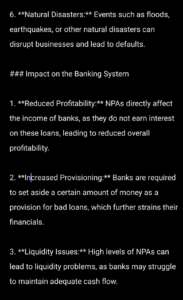
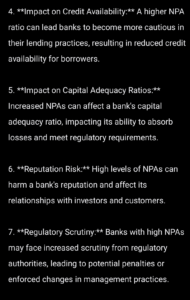
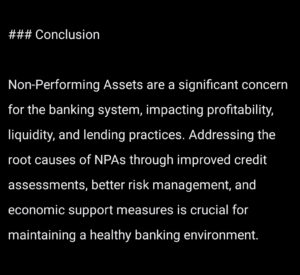
Define NPA (Non-Performing Assets). Elaborate the cause and impact of NPA in Banking System.
How effective are current laws and regulations in protecting women from violence and harassment?

Current laws and regulations aimed at protecting women from violence and harassment have shown mixed effectiveness. In many countries, comprehensive legal frameworks, such as the Domestic Violence Act and Sexual Harassment of Women at Workplace Act in India, provide robust mechanisms for addressingRead more
Current laws and regulations aimed at protecting women from violence and harassment have shown mixed effectiveness. In many countries, comprehensive legal frameworks, such as the Domestic Violence Act and Sexual Harassment of Women at Workplace Act in India, provide robust mechanisms for addressing abuse and harassment. These laws include provisions for swift legal recourse, protection orders, and penalties for offenders.
However, the effectiveness of these laws is often undermined by implementation challenges. Inadequate training of law enforcement, societal stigma, and bureaucratic hurdles can impede the protection these laws are meant to offer. Many women are reluctant to report abuse due to fear of retaliation, social ostracization, or lack of trust in the legal system. Additionally, cultural norms and patriarchal attitudes can further weaken the enforcement of these protections.
Globally, efforts such as the Istanbul Convention aim to create a unified approach to combatting violence against women, emphasizing prevention, protection, and prosecution. Despite these efforts, significant gaps remain.
To enhance effectiveness, it is crucial to improve law enforcement training, raise public awareness, and ensure accessible support services for victims. Strengthening community engagement and fostering a culture of zero tolerance towards violence and harassment are essential for the true efficacy of these laws.
See less






Indian professionals pursuing careers abroad after education in India raises questions about "brain drain" versus globalization benefits. - Brain Drain: Talented individuals leaving India deprives the country of skilled workforce, hindering national development and progress. - Globalization benefitsRead more
Indian professionals pursuing careers abroad after education in India raises questions about “brain drain” versus globalization benefits.
– Brain Drain:
Talented individuals leaving India deprives the country of skilled workforce, hindering national development and progress.
– Globalization benefits:
Remittances, knowledge transfer, and international connections can benefit India, fostering global collaborations and economic growth.
– Ethical implications:
Individuals choosing to work abroad may prioritize personal growth over contributing to India’s development, raising ethical concerns.
– Counterargument:
Acquiring global experience and expertise can enable individuals to contribute meaningfully to India’s growth upon return.
– Government role:
Encouraging return migration, creating opportunities, and fostering innovation can harness the benefits of globalization while minimizing brain drain.
Way Forward:
India should adopt a balanced approach, acknowledging both perspectives, and create an ecosystem that encourages talent to contribute to national growth while allowing for global exposure and collaboration, ensuring ethical considerations align with individual and national aspirations.
See less