

Are there any notable success stories or ongoing projects that highlight the potential benefits and challenges of using CRISPR in agriculture?
Mains Answer Writing Latest Questions

Aman VermaBegginer
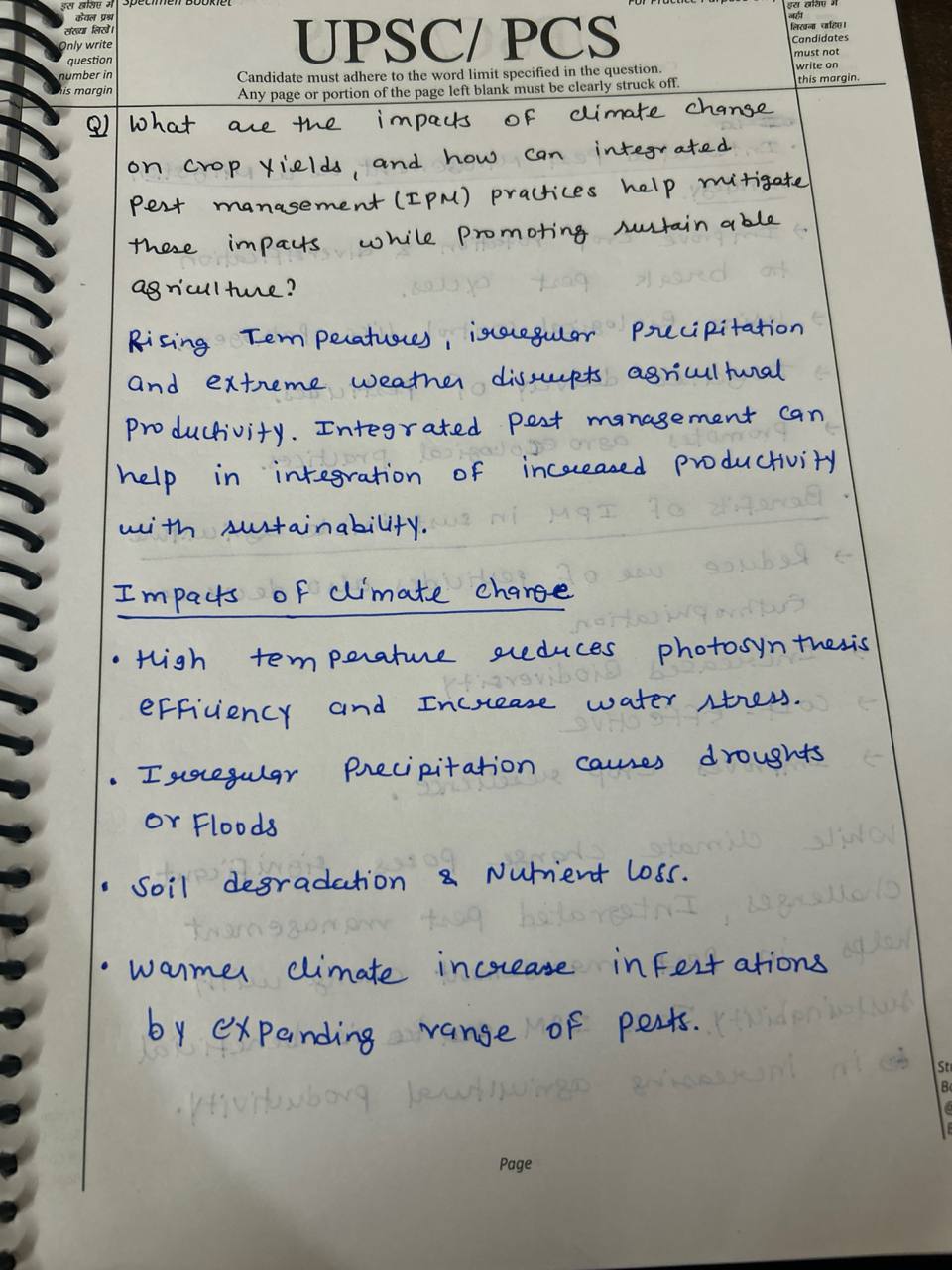
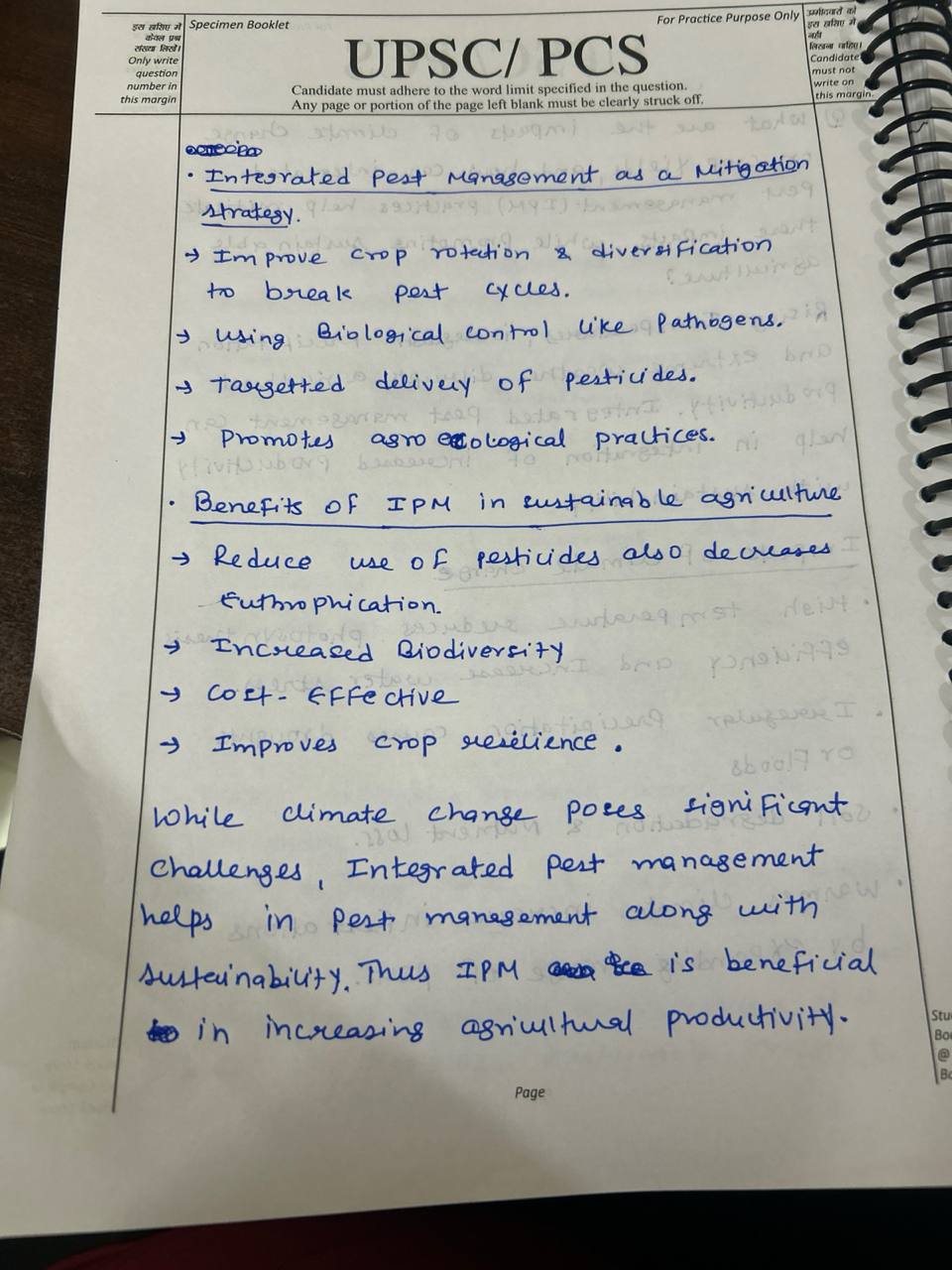
What are the impacts of climate change on crop yields, and how can integrated pest management (IPM) practices help mitigate these impacts while promoting sustainable agriculture?


How can the adoption of advanced agricultural technologies, such as genetically modified organisms (GMOs) and precision farming, balance the need for increased food production with concerns about environmental sustainability and ethical implications for biodiversity?
-
The adoption of advanced agricultural technologies such as GMOs and precision farming offers a potential solution to the challenge of balancing increased food production with environmental sustainability and ethical concerns about biodiversity. GMOs, for example, have the ability to increase crop yiRead more
The adoption of advanced agricultural technologies such as GMOs and precision farming offers a potential solution to the challenge of balancing increased food production with environmental sustainability and ethical concerns about biodiversity. GMOs, for example, have the ability to increase crop yields, enhance nutritional content, and improve resistance to pests and diseases, thereby reducing the need for harmful pesticides and promoting sustainable agricultural practices. Precision farming, on the other hand, utilizes technology like GPS and sensors to optimize the use of resources such as water, fertilizer, and pesticides, leading to more efficient production and reduced environmental impact.
See less
To address concerns about biodiversity loss, it is essential to carefully assess the potential impacts of these technologies on the ecosystem and consider implementing measures to mitigate any negative effects. This may involve implementing buffer zones around fields with GMO crops to protect surrounding natural habitats, and promoting integrated pest management strategies to minimize the impact on non-target species. Additionally, ensuring transparency and engagement with stakeholders in decision-making processes can help address ethical concerns and promote responsible use of these technologies. By implementing these safeguards and measures, advanced agricultural technologies can contribute to meeting the growing global demand for food while preserving our environment and biodiversity for future generations


Beyond maximizing productivity, how can we optimize outcomes across production, rural development, environmental impact, social justice, and food consumption?
-
Your point is correct because maximizing food production alone fails to create an enduring food system that stands both for sustainability and fairness. A comprehensive solution is necessary because it must evaluate systems through various standards. 1. Shift Focus Beyond Yield: It is paramount to fRead more
Your point is correct because maximizing food production alone fails to create an enduring food system that stands both for sustainability and fairness. A comprehensive solution is necessary because it must evaluate systems through various standards.
1. Shift Focus Beyond Yield:
It is paramount to focus food production on creating nutritionally dense crops which fight against disease rather than doing only socioeconomic mathematics.
This means that the system should prioritize quality and flavor along with local adaptation instead of focusing on quantity as this approach supports local economies while enhancing agrobiodiversity.2. Integration of Social and Environmental Considerations:
The business maintains complete transparency regarding payment terms to farmers and workers and communities in the supply chain while treating everyone fairly.
The company will conserve biodiversity through maintaining soil conditions to realize water conservation while combating climate change and increasing diversity in the ecosystem.
The business must involve local communities in the decision-making of the food system since this meets their local needs.3. Promote Sustainable Consumption Patterns:
All stakeholders should minimize food waste throughout the whole supply chain from production up to the point of consumption reaches the end.
People should transition to plant-based diets gradually because plant-based diets pose lower environmental threats.
Local farmers should be preferred providers because people must consume food products from their respective region at each time of the year to reduce transportation needs while boosting regional economies.4. Innovation and Partnership
Agroecological methods require support to integrate old knowledge and modern methods for the development of robust food systems that are sustainable.
See less
Research and development investments should be made on climate-resistant plants with sustainable farming procedures and modern food processing systems.
The food system will advance through enhanced collaboration that links farmers with researchers and policymakers and consumers to build sustainability in complex food systems.

What strategies can address the growing impacts of climate change, energy security concerns, and regional dietary shifts while ensuring food availability?
-
1. Sustainable Agreements regarding Climate. Promote and produce varieties of drought- and heat-resistant crops. For more effective soil health and water preservation, implement crop rotation, cover cropping, and no-till agriculture. To cut water usage and enhance effectiveness of available water, aRead more
1. Sustainable Agreements regarding Climate.
Promote and produce varieties of drought- and heat-resistant crops.
For more effective soil health and water preservation, implement crop rotation, cover cropping, and no-till agriculture.
To cut water usage and enhance effectiveness of available water, apply precise agriculture and use drippers.2. sustainable energy systems: thats
Renewable energy supply: A change in renewable energy supply helps to reduce reliance on fossil fuels as a food production source by means of wind mills and solar panels.
Energy efficient methods: Process, transportation, and storage energy use efficiency to ultimately lower total food consumption in the network.3. Eating modifications
Shift to plant-based, non-animal dietary: Plant-base diets have even less environmental damage than meat-centred food supplies.
There is no food wasted anywhere in the chain. Bring food waste down from production to consumption.4. Innovations and technology:
Precision agriculture means using existing technologies like GPS, drones, and sensors wisely to ensure resource inputs are correct; monitor crop health; and relevant data can be generated.
Conduct studies to produce new technology including gene editing so that more resilient crops are grown using biotechnology.5. Policy and Government:
Encouragement of sustainable agricultural methods including organic farming subsidies and research and development expenditures should be legislated to support sustainable agriculture.
Setting up carbon price systems would help to accelerate the acceptance of low-carbon farming.
International cooperation can be enhanced about food security, mitigation of climate change, and sustainable development.
6. Involvement with the Community.
Empower local people: Communities ought to have the ability to choose their food system.
See less
Support the local food system: since they rely on regional rather than far-away transportation, local food systems and regional food systems less promote food independence.

Vandana RaniBegginer
-
Few organisms find it easy to grow in other planetary climatic regions. Technology, however, has developed solutions that are new and innovative: Controlled Environment Agriculture (CEA): Greenhouses: Modern greenhouses have incorporated sophisticated means of climate control, integrated and automatRead more
Few organisms find it easy to grow in other planetary climatic regions. Technology, however, has developed solutions that are new and innovative:
Controlled Environment Agriculture (CEA):
Greenhouses: Modern greenhouses have incorporated sophisticated means of climate control, integrated and automatic watering systems, and LED supplemental lighting, regardless of the weather outside.
Vertical Farming: This technique involves use of the available space in that the plants are planted in what may be referred to as tiers. It sometimes employs goggled conditions involving hydro or aeroponic systems, which returns little reliance on soil in managing resource exploitation.Biotechnology:
Genetic Engineering: Through biotechnology scientists are able to apply for instance change ability in the plants in order to increase their ability to withstand temperatures change, drought, high salinity and other stressful conditions. This includes the process of trans placing genes from other organisms, which have such characteristics as desired.
Tissue Culture: By using this method the number of plants with such desirable traits, including disease or stress tolerance can be easily multiplied.Precision Agriculture:
Sensors and Monitoring: Sophisticated transducers and data acquisition instruments can measure environmental factors, plant status, and resources on as-needed basis. Any such data may be used to enhance the efficiency of irrigation, fertilizing and other practices of crop management.-Drones and Remote Sensing: To identify stressed areas and enhance the usage of resources, large commercial farm models would be useful to view from aerials and satellites.
Water Management Technologies:
Water-Hardiness Crops: The ability to produce a plant type that is drought-resistant is the first success towards gardening in areas that have limited water supply.
-Efficient Irrigation Systems: Sprinkle irrigation and drip irrigation and micro irrigation are water saving irrigation techniques since water is supplied directly to the root area of the plants.
See less

Lakshika BhardwajBegginer
Discuss the potential of agroforestry in sustainable agricultural development in India. What are the ecological, economic, and social benefits of integrating trees with agricultural crops?
-
Agroforestry holds significant potential for sustainable agricultural development in India, offering a range of ecological, economic, and social benefits: Ecological Benefits: Soil Health Improvement: Trees in agroforestry systems help prevent soil erosion, improve soil structure, and enhance nutrieRead more
Agroforestry holds significant potential for sustainable agricultural development in India, offering a range of ecological, economic, and social benefits:
- Ecological Benefits:
- Soil Health Improvement: Trees in agroforestry systems help prevent soil erosion, improve soil structure, and enhance nutrient cycling through leaf litter decomposition.
- Biodiversity Conservation: Agroforestry promotes biodiversity by providing habitats for wildlife, insects, and beneficial organisms, contributing to ecosystem resilience.
- Climate Resilience: Tree cover in agroforestry systems mitigates climate change impacts by sequestering carbon dioxide, reducing greenhouse gas emissions, and moderating microclimates.
- Economic Benefits:
- Diversified Income: Agroforestry diversifies farmers’ income sources through additional products such as fruits, nuts, timber, and medicinal plants, reducing dependency on a single crop.
- Improved Yield Stability: Trees provide shade and wind protection, reducing crop stress and enhancing overall yield stability.
- Cost Savings: Trees contribute to natural pest and disease management, reducing the need for chemical inputs and associated costs.
- Social Benefits:
- Livelihood Security: Agroforestry enhances food and economic security for farmers, particularly in marginal and rainfed areas, by providing sustainable livelihood options.
- Community Development: Agroforestry fosters community cohesion through shared management of resources and knowledge exchange among farmers.
- Health and Nutrition: Tree products such as fruits and nuts improve dietary diversity and nutrition outcomes, especially in rural areas.
In conclusion, agroforestry offers a holistic approach to sustainable agriculture in India by integrating trees with crops, ensuring environmental conservation, economic viability, and social well-being for farming communities. Its promotion and adoption can contribute significantly to achieving long-term agricultural sustainability goals in the country.
See less - Ecological Benefits:

shivani chandraBegginer
-
Tailored Solutions for Small Farms: Low-Tech Sensors & Data Collection: Develop affordable, easy-to-use sensors that collect data on soil moisture, temperature, and pests, accessible even for farmers with limited technological literacy. Offline Functionality: Design AgTech tools that can functioRead more
Tailored Solutions for Small Farms:
Low-Tech Sensors & Data Collection: Develop affordable, easy-to-use sensors that collect data on soil moisture, temperature, and pests, accessible even for farmers with limited technological literacy.
Offline Functionality: Design AgTech tools that can function offline, allowing farmers in areas with poor internet connectivity to still benefit from data analysis.
SMS & Voice-Based Interfaces: Utilize SMS and voice-based interfaces to deliver weather alerts, market information, and agricultural advice in local languages, catering to those without smartphones or internet access.
Promoting Digital Literacy & Accessibility:Community Training Programs: Organize training programs at the village level, using local champions and educators to teach farmers about basic digital skills and navigating AgTech tools.
Low-Cost Devices & Data Plans: Collaborate with mobile service providers to develop subsidized data plans and affordable smartphones specifically designed for agricultural applications.
Community Knowledge Sharing Platforms: Create online and offline platforms where farmers can share knowledge, best practices, and troubleshoot issues related to AgTech.
Focus on Information Sharing and Decision-Making:AI-powered Localized Weather Forecasts: Develop AI models that provide hyper-localized weather forecasts for specific regions, helping farmers make informed decisions about planting, irrigation, and harvesting.
Digital Marketplaces: Create online platforms that connect small-scale farmers directly with consumers or local businesses, bypassing middlemen and increasing their profit margins.
AI-powered Pest & Disease Detection: Develop AI-powered tools that can identify pests and diseases through smartphone images, allowing farmers to take timely action with minimal resources.
Collaboration for Sustainability:Public-Private Partnerships: Encourage partnerships between governments, NGOs, and private tech companies to develop affordable and accessible AgTech solutions for small-scale farmers.
See less
Focus on Open-Source Technology: Promote open-source technologies for AgTech tools, allowing for wider adoption and customization by local developers catering to specific regional needs.
Data Security and Privacy Training: Educate farmers about data security and privacy practices to ensure their information is protected when using AgTech tools.
By implementing these strategies, AgTech advancements can become a bridge, not a barrier, for small-scale farmers. By providing them with the right tools, knowledge, and resources, we can empower them to improve their yields, access better markets, and contribute to a more sustainable and equitable food system.


Qadira Mohammed ThambyBegginer
-
Teaching Agriculture as a separate subject to school students can be highly beneficial for several reasons, though whether it is strictly necessary depends on the context and priorities of the educational system. Here are some arguments in favor of incorporating agriculture education: Benefits of TeRead more
Teaching Agriculture as a separate subject to school students can be highly beneficial for several reasons, though whether it is strictly necessary depends on the context and priorities of the educational system. Here are some arguments in favor of incorporating agriculture education:
Benefits of Teaching Agriculture as Separate Subject
- Practical Skills and Knowledge: Students learn essential skills related to food production, resource management, and sustainability. This knowledge is vital, especially in rural areas where agriculture is a significant part of the economy and lifestyle.
- Environmental Awareness: Agricultural education promotes understanding of ecosystems, biodiversity, and the impact of human activities on the environment. This can lead to more environmentally conscious behavior and decision-making.
- Food Security: Understanding agricultural practices can contribute to food security by equipping future generations with the knowledge to produce and manage food resources efficiently.
- Career Opportunities: Introducing agriculture in schools can inspire students to pursue careers in agriculture, agribusiness, environmental science, and related fields, addressing the need for skilled professionals in these areas.
- Health and Nutrition: Education about agriculture can include lessons on healthy eating, the origins of food, and the importance of nutrition, contributing to better health outcomes for students.
- Community and Cultural Connections: In many cultures, agriculture is deeply connected to traditions and community life. Teaching it can help preserve these cultural practices and strengthen community bonds.
Contextual Considerations
- Urban vs. Rural Settings: In rural areas where agriculture is a primary occupation, teaching it as a separate subject may be more crucial than in urban settings. However, even urban students can benefit from understanding where their food comes from and how it is produced.
- Integration with Other Subjects: Some education systems might choose to integrate agricultural topics into existing subjects like biology, geography, and environmental science rather than teaching it as a standalone subject. This can ensure that students still receive the necessary knowledge without overloading the curriculum.
- Curriculum Priorities: The decision to teach agriculture separately depends on the overall goals and priorities of the educational system. It requires balancing various subjects to provide a well-rounded education while meeting local needs and priorities.
Conclusion
While it may not be strictly necessary to teach agriculture as a separate subject, doing so can offer significant benefits in terms of practical skills, environmental awareness, and career opportunities. Whether or not to implement it depends on the specific needs of the community, the structure of the educational system, and how effectively agricultural education can be integrated with other subjects.
See less


AbhiramiBegginer
Discuss the role of biotechnology in advancing sustainable agriculture. In your answer, analyze the potential benefits and risks associated with genetically modified crops, and evaluate the ethical considerations that need to be addressed to ensure the responsible deployment of biotechnological ...
-
The Role of Biotechnology in Advancing Sustainable Agriculture Biotechnology enhances sustainable agriculture by improving crop yields, reducing environmental impacts, and boosting food nutrition. Through genetic engineering, it develops crops resilient to pests, diseases, and adverse conditions, prRead more
The Role of Biotechnology in Advancing Sustainable Agriculture
Biotechnology enhances sustainable agriculture by improving crop yields, reducing environmental impacts, and boosting food nutrition. Through genetic engineering, it develops crops resilient to pests, diseases, and adverse conditions, promoting food security and reducing chemical inputs. However, deploying genetically modified (GM) crops involves both benefits and risks.
Potential Benefits
- Increased Yields: GM crops have higher yields due to improved pest and disease resistance.
- Pest/Disease Resistance: Reduced need for chemical pesticides lowers production costs and pollution.
- Environmental Sustainability: Crops tolerating drought/saline conditions promote sustainable land use.
- Nutritional Enhancement: Biofortified crops, like Vitamin A-enriched Golden Rice, address nutrient deficiencies.
- Economic Benefits: Higher yields and lower input costs increase farmer incomes.
Potential Risks
- Environmental Impact: Long-term effects, like gene flow creating “superweeds” and impacts on non-target organisms, are unclear.
- Health Concerns: Debates on allergenicity and long-term consumption effects persist.
- Economic Disparities: GM crops may benefit large farmers more, widening economic gaps.
- Biodiversity Loss: Limited GM crop cultivation reduces agricultural biodiversity.
Ethical Considerations
- Informed Consent: Transparent GM food labeling is essential.
- Intellectual Property: Policies should ensure smallholder farmers’ access to GM technology.
- Equity: GM technology benefits should be accessible to marginalized farmers.
- Environmental Stewardship: Mitigation strategies should be implemented.
- Public Engagement: Transparent communication and stakeholder involvement build trust.

CRISPR is helping improve agriculture. For example, scientists used CRISPR to produce wheat that people with gluten problems can eat. They are also used to make rice grow well and strong. For example, it prevents mushrooms from darkening too quickly. The technology could also help farmers grow cropsRead more
CRISPR is helping improve agriculture. For example, scientists used CRISPR to produce wheat that people with gluten problems can eat.
They are also used to make rice grow well and strong. For example, it prevents mushrooms from darkening too quickly.
The technology could also help farmers grow crops that survive the use of powerful chemicals to kill weeds. For example, it will be difficult for the machine to work properly and this will affect other parts of the facility that we do not want to affect. Despite these challenges, CRISPR has the potential to revolutionize agriculture and help people around the world.
See less