

Roadmap for Answer Writing 1. Introduction Define Tropical Monsoon Climate: Describe tropical monsoon climate as one characterized by seasonal reversal of winds, accompanied by distinct changes in precipitation. Mention its key features, such as high temperatures and significant seasonal rainfall, typically heavy during the ...
Mains Answer Writing Latest Questions
Hrithika SundarBegginer
Roadmap for Answer Writing 1. Introduction (1-2 sentences) Briefly define what western disturbances are and introduce their significance to the weather in India. Mention how western disturbances are a key feature of India’s winter weather. Key Points for Introduction Western disturbances are extratropical storms originating ...
-
This answer was edited.


Anita RatnamLearner
Roadmap for Answer Writing To effectively address the question “How do the Western Ghats affect the South-West monsoon in the coastal regions of South-West India?”, follow this structured approach: 1. Introduction Contextualize the Topic: Introduce the Western Ghats as a significant mountain range ...
-

Model Answer Barrier Effect The Western Ghats serve as a significant barrier to the monsoonal winds that arrive from the southwest. As these winds encounter the mountains, they are forced to rise, resulting in orographic rainfall. This effect leads to substantial precipitation in the region, with 65Read more
Model Answer
Barrier Effect
The Western Ghats serve as a significant barrier to the monsoonal winds that arrive from the southwest. As these winds encounter the mountains, they are forced to rise, resulting in orographic rainfall. This effect leads to substantial precipitation in the region, with 65% to 80% of annual rainfall occurring between June and September (Source: meteorological studies).
Gaps in the Western Ghats
Despite their overall barrier function, the Western Ghats feature gaps that allow rain-bearing winds to pass through with less precipitation. A notable example is the Palghat Gap, which is approximately 30 kilometers wide and located between the Nilgiri and Anamalai Hills in Kerala. This gap enables winds to cross over to the leeward side, leading to reduced rainfall in the immediate coastal areas (Source: geographic studies).
Variations in Mountain Topography
The topography of the Western Ghats varies significantly. In Karnataka, the broader mountains compel rain-bearing winds to travel greater distances, allowing more time for moisture to coalesce and resulting in higher rainfall (Source: hydrological analyses).
Increased Convection
The gentle slopes of the Karnataka Western Ghats absorb more sunlight, promoting greater convection compared to the steeper slopes found in Maharashtra and Kerala. This enhanced convection contributes to increased rainfall in these areas (Source: climate studies).
Distance from Peak
Interestingly, areas of heavy rainfall are often found up to 50 kilometers away from the mountain peaks. This phenomenon occurs because the distance allows for better moisture accumulation in cloud formations (Source: meteorological research).
Cyclones
Additionally, the Arabian Sea has seen more frequent cyclones in recent years during the onset of the South-West monsoon. The Western Ghats act as a barrier for these cyclonic storms, reducing their intensity and protecting the coastal regions of India (Source: climatological studies).
In summary, the Western Ghats significantly regulate South-West monsoonal rainfall in India’s coastal regions through orographic lifting, variations in topography, and their role in influencing cyclonic activity.
See less

Adheesh RamanLearner
Roadmap for Answer Writing Introduction Begin by introducing the significance of precipitation in India, noting that it constitutes 80% of the annual rainfall during the monsoon season. Mention the extreme spatial variation in precipitation from over 400 cm in some northeastern regions to ...
-
Model Answer Introduction India experiences a highly variable distribution of precipitation, with significant spatial and temporal differences across the country. Around 80% of the nation's annual rainfall occurs during the monsoon season, which plays a crucial role in agriculture and water resourceRead more
Model Answer
Introduction
India experiences a highly variable distribution of precipitation, with significant spatial and temporal differences across the country. Around 80% of the nation’s annual rainfall occurs during the monsoon season, which plays a crucial role in agriculture and water resources. However, rainfall varies from over 400 cm in the northeastern states to less than 10 cm in arid regions like Rajasthan. Various factors, such as geographical location, monsoon systems, and topography, contribute to these variations.
Spatial Variations
- Monsoon Influence: The Indian monsoon is the primary driver of precipitation. The monsoon’s onset, progression, and retreat differ across regions, influencing the rainfall distribution.
- Northeastern States: These regions receive heavy rainfall year-round, including during the Northeast Monsoon (October to December), which brings additional precipitation.
- Coastal Regions: The western coast and northeastern regions experience substantial rainfall due to the southwest monsoon and the orographic effect caused by the Western Ghats and Eastern Himalayas.
- Rain Shadow Regions: Areas such as parts of Rajasthan and the Deccan Plateau receive minimal rainfall due to the rain shadow effect created by the Western Ghats and other mountain ranges.
- Himalayan Region: The Himalayas, particularly the foothills and higher elevations, receive heavy rainfall due to the orographic lifting of moisture-laden monsoon winds.
Temporal Variations
- Monsoon Season: The southwest monsoon, from June to September, brings the majority of rainfall, with varying intensities across different regions. The northeast monsoon (October-December) impacts the eastern coast and southern peninsula with lighter rainfall.
- Seasonal and Interannual Variability: Variations in the strength and timing of the monsoon occur due to climatic phenomena like El Niño and La Niña, affecting the precipitation distribution each year.
Factors Contributing to Variations
- Indian Ocean Dipole: This climate pattern affects the monsoon by influencing sea surface temperatures, which can either enhance or reduce rainfall.
- Topography and Elevation: Mountain ranges, such as the Western Ghats and Himalayas, cause orographic lifting, leading to enhanced rainfall on windward slopes.
- Atmospheric Circulation: Patterns like the Intertropical Convergence Zone (ITCZ) and jet streams direct moisture-laden air masses, affecting precipitation.
- Local Factors: Proximity to water bodies, deforestation, and urbanization also impact local rainfall patterns.
Conclusion
Understanding the spatial and temporal variations in precipitation is crucial for managing India’s water resources and adapting to climate change. By analyzing these patterns, India can implement better strategies for water conservation and sustainable development.
See less

Malti deviLearner
List the main soil types and attributes found in India. It also describes how soil is distributed geographically throughout India. (Answer in 200 words)
-
As known India is a land of diversity in terms of culture , varied topography , different climatic conditions along with its rich culture and historical backdrop. The land is spread with a variety of soils in various parts of India ranging from alluvial soil , red soil , black soil, desert soil, anRead more
As known India is a land of diversity in terms of culture , varied topography , different climatic conditions along with its rich culture and historical backdrop. The land is spread with a variety of soils in various parts of India ranging from alluvial soil , red soil , black soil, desert soil, and many more such .
Every soil is having its significant characteristics shaped by various natural processes such as that of weathering, erosion.
Coming to the layout of various types of soil found in India along with its individual characteristics :
- ALLUVIAL SOIL – This kind of soil is seen in the Indo-gangetic plain area along with that of the costal areas, this soil is known to be very fertile and this soil is spread around most of the areas like in PUNJAB, WEST BENGAL ,HARYANA ,UTTAR PRADESH and in the coastal areas of GUJRAT, TAMIL NADU ORRISA .
Chracteristics :
- Fertile.
- It is of fine grained texture
- it is rich in minerals such as potash, lime ,and the phosphoric acid .
- good for the growth of soils such as rice, wheat , sugarcane
Black soil –
this soil is also known to be as the regur soil or popularly as the cotton soil found primarily at the deccan plateau region . This is very good soil for cotton cultivation .Found in areas such as in Madhya Pradesh , Gujrat
Chracteristics :
- It is of black colour as it is having iron in it.
- these kind of soil usually becomes sticky when it becomes wet and it develops cracks when it dries up in summer .
- Rich in calcium, iron, potash.
RED SOIL –
As the name says it is red in colour found mostly in the southern .eastern along the central regions of India . The soils found in areas like in Karnataka, Chattisgarh, Jharkhand, Andhra Pradesh and in the chota nagpur plateau . This red colour is due to that of iron oxide. Good for the production of crops like groundnut, millets, tobacoo, etc.
LATERITE SOIL : This kind of soil is mostly found in the regions which receive that of heavy rainfall along with that of high temperature. This is found in the tropical areas in the areas like Kerela, Karnataka, West Bengal, Tamil Nadu etc .
this soil contains that of Iron and Magnesium mostly within it although poor in the minerals like nitrogen , potasium etc .
This kind of soil is good for the production of crops like that of coffee, rubber, cotton cashew nuts etc .
MOUINTAIN SOIL :
This soil is also known to be as the forest soil as the name suggests found mostly in the regions such as the mountaninous regions of India mostly in the Himalayan region along with the eastern and western ghats of India . This soil is formed due to the wheathring of rocks due to high altitude.
This soil ranges from the sandy to loamy textures . Found mostly in JAMMU AND KASHMIR , Skkim, Himachal Pradesh along the hilly trains of Karnataka, Tamil Nadu etc .
This kind of soil good for cultivation of crops like that of the tea, coffee, spices, fruits that of apples , plums, etc .
This is the varied types of soil with their characteristics and the spacial distribution of soil in India.
See less


Babita SinghBegginer
Talk on the importance of sustainable soil management in India given the significant role that soil plays in the ecosystem. (Answer in 250 words)
-
This answer was edited.

Here is my infographic for the question being asked
Here is my infographic for the question being asked
See less


How do the unique properties of India’s laterite and desert soils influence local agriculture and biodiversity in their respective regions?

Vishwa MhatreBegginer
-
Alluvial soil is found in India, in the northern part of India, basically in the foothills of the Himalayas. Alluvial soil is loamy, fertile, and potash-rich soil. Here are the characteristics of alluvial soil: Water retention capacity and loamy soil: The alluvial soil has a high water retention capRead more
Alluvial soil is found in India, in the northern part of India, basically in the foothills of the Himalayas. Alluvial soil is loamy, fertile, and potash-rich soil.
Here are the characteristics of alluvial soil:
Water retention capacity and loamy soil: The alluvial soil has a high water retention capacity to absorb water.
Good for agricultural use and very fertile in nature: Most of the northern area depends on agriculture due to the good fertile soil available in this area.
Formed by the deposition of rivers and wind: From the Himalayas, the hill particles come and deposit in the foothills due to deposition and weathering.
Composition: Alluvial soil is generally in the form of fine particles of sand, silt, etc, with a high quantity of potash.
Subtypes:
Bhabar: Coarse sand and gravel deposited by rivers. Generally, big particles as compared to other particles. Found in the foothills of the Himalayas.
See less
Terai: Near the foothills and lower than Bhabar with finer alluvial deposits.
Bhangar: The older alluvial soil due to the deposition of rivers; it is less fertile as compared to Khadar soil.
Khadar: The newer and more fertile soil, changes over time, and is found in floodplains of rivers and nearby the delta region.


How do organic matters improve soil fertility?
-
Improving soil fertility is essential for sustainable agriculture soil testing is first step to know about the nutrient levels, pH levels and soil composition, based on this data farmers need to apply the strategies to improve the soil fertility composting-Recycling the kitchen waste, vegetables, aRead more
Improving soil fertility is essential for sustainable agriculture
- soil testing is first step to know about the nutrient levels, pH levels and soil composition, based on this data farmers need to apply the strategies to improve the soil fertility
- composting-Recycling the kitchen waste, vegetables, animal manure make into rich nutrient soil. It enhances the soil structure, water retention and increase the micro-organisms activity and increases a healthy soil
- crop rotation- planning a different crops in different seasons. this mechanism prevents depletion of soil fertility
- Integrating live stock with crops- growing livestock in paddy fields adds fertility to the soil


As we can observe in today’s world, agriculture is possible even in desserts. How can we justify this statement?
-
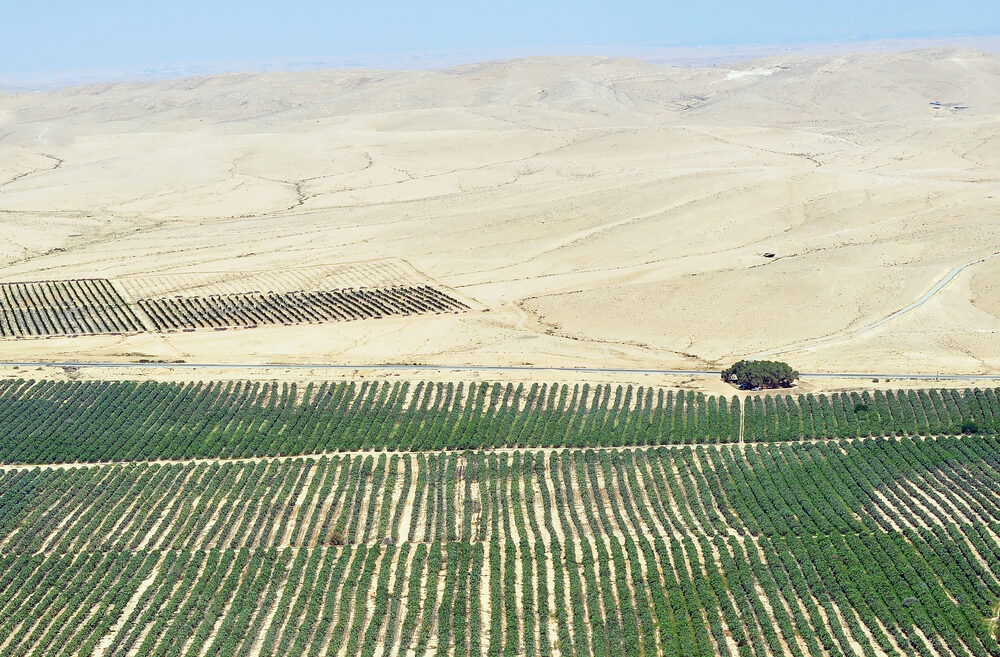
AGRICULTURE IN DESERTS Agriculture in deserts involves overcoming extreme conditions such as high temperature, poor soil quality etc...and utilizing advanced methods and techniques to cultivate crops. Countries like Israel and United Arab Emirates (UAE) are main examRead more
AGRICULTURE IN DESERTS
Agriculture in deserts involves overcoming extreme conditions such as high temperature, poor soil quality etc…and utilizing advanced methods and techniques to cultivate crops. Countries like Israel and United Arab Emirates (UAE) are main examples of successful agriculture projects. The high risk of cultivation is avoided by some methods such as drip irrigation, desalination, hydroponics, aeroponics, drought resistant crops, soil management, water harvesting, agroforestry and vertical farming.
DRIP IRRIGRATION:
By this method, water flows directly into the plant’s root and minimizes the water evaporation.
DROUGHT-RESISTANT CROPS:
Genetically modified crops are more resistant to drought that helps in cultivation with minimal amount of water.
AGROFORESTRY:
It combines the cultivation of crops and the management of trees and shrubs in same land. Soil improvement, water conservation, carbon sequestration are the benefits of agroforestry.
METHODS USED IN DIFFERENT COUNTRIES:
ISRAEL:
Israel is known for its agricultural techniques. Drip irrigation plays vital role in cultivating crops. Infact, this method is invented in Israel. They are using desalination and hydroponics widely.
UAE:
They invested heavily in transforming its arid area into agricultural area. They use vertical farming and hydroponics.
MOROCCO AND SAHEL REGION:
Farmers cultivate olive and argan trees with cereal crops and vegetables. Those long trees provide shade to those crops. Those fruits are providing extra economic benefits in Morocco.
Agroforestry restores degraded lands and improves soil quality and increases crop yields.
Countries like Israel, UAE successfully implemented many methods for enhancing food security and environmental resilience.
See less

Model Answer Tropical Monsoon Climate The tropical monsoon climate is marked by a seasonal reversal of winds and corresponding changes in precipitation. It is characterized by: Temperature: Monthly mean temperatures above 18°C, with summer temperatures ranging from 30-45°C and winter temperatures beRead more
Model Answer
Tropical Monsoon Climate
The tropical monsoon climate is marked by a seasonal reversal of winds and corresponding changes in precipitation. It is characterized by:
Distribution
This climate is found in regions of the Indian subcontinent, Southeast Asia, parts of South America, and northern Australia, notably in countries like India, Burma, Thailand, and Vietnam (Source: Global Climate Distribution).
Onset in the Indian Subcontinent
The Indian monsoon begins in June, driven by factors such as:
The process culminates in rainfall across the subcontinent from June to September.
See less