


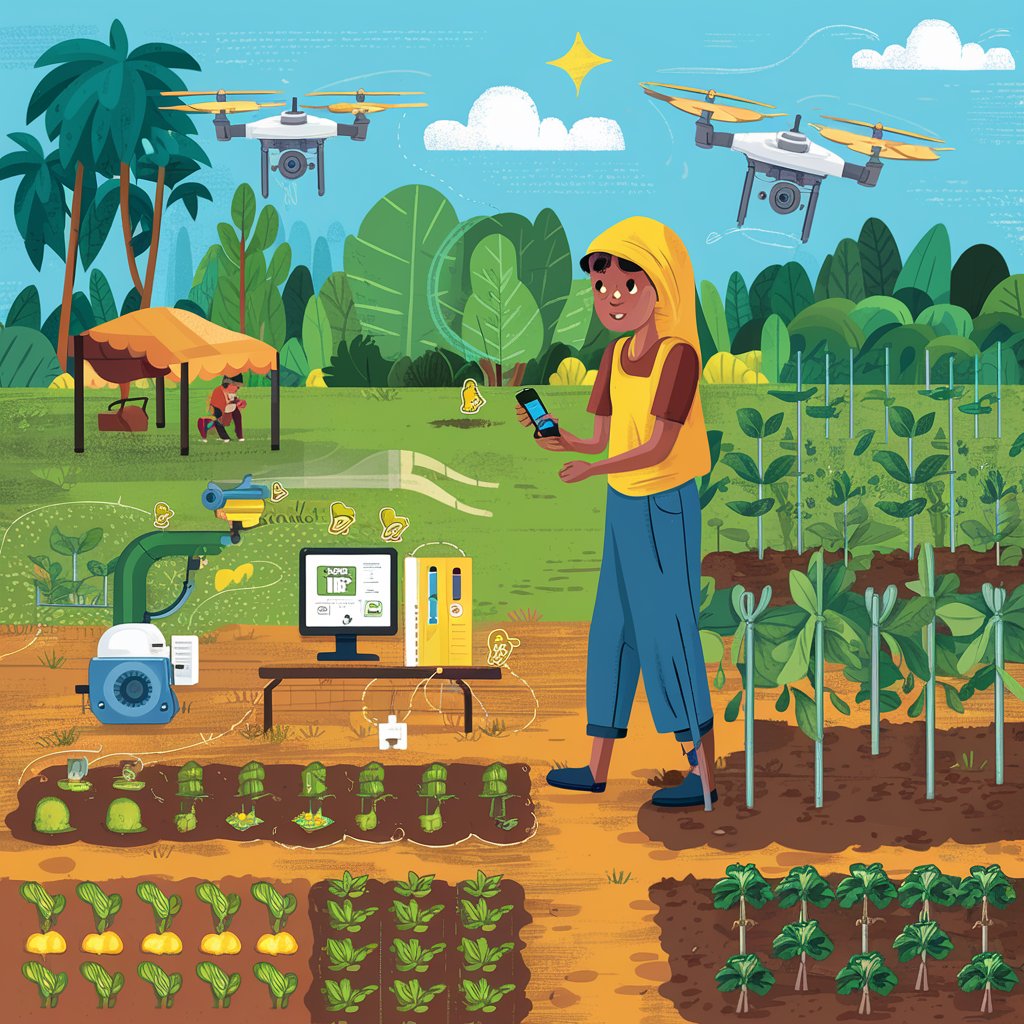
let's talk about how we can use fancy gadgets on small farms in India. Imagine you have a tiny piece of land, maybe just big enough to grow a few vegetables. Now, we're going to sprinkle some tech magic on it! First off, we've got these cool flying machines called drones. They're like littleRead more
let’s talk about how we can use fancy gadgets on small farms in India. Imagine you have a tiny piece of land, maybe just big enough to grow a few vegetables. Now, we’re going to sprinkle some tech magic on it!
First off, we’ve got these cool flying machines called drones. They’re like little helicopters that can check your crops from the sky. They tell you if your plants need water or if some pesky insects are eating them.
Then, we’ve got these smart phones and small sensors. You stick the sensors in the soil, and they send messages to your phone about how your plants are doing. It’s like your farm is WhatsApping you!
We can also use computers to figure out the best way to grow different crops in small spaces. It’s like playing a video game, but with real plants!
For those really tiny spots, we can grow plants up instead of out. Imagine a building, but instead of people, it’s full of lettuce and tomatoes!
All this tech helps small farmers grow more food in less space. It’s not about having a big farm anymore – it’s about farming smartly. Cool, no?
See less


Here are five ways to increase crop yields in agriculture: 1. Precision Farming: Using technology like drones, GPS, and sensors to optimize crop management, reduce waste, and improve resource allocation. 2. Irrigation Management: Implementing efficient irrigation systems and scheduling to reduce watRead more
Here are five ways to increase crop yields in agriculture:
1. Precision Farming: Using technology like drones, GPS, and sensors to optimize crop management, reduce waste, and improve resource allocation.
2. Irrigation Management: Implementing efficient irrigation systems and scheduling to reduce water waste and ensure crops receive the right amount of water.
3. Crop Rotation and Intercropping: Planting a diverse range of crops in rotation and together to improve soil health, reduce pests and diseases, and increase biodiversity.
4. Fertilizer and Pest Management: Using targeted fertilizers and pest control methods to minimize waste and ensure crops receive the necessary nutrients and protection.
5. Genetic Improvement: Developing and planting high-yielding, disease-resistant crop varieties through breeding and genetic engineering to improve crop potential.
These methods can help farmers increase crop yields while reducing waste and environmental impact.
See less