

What were the main lessons that Guru Nanak imparted? Describe their significance in the modern world.

Model Answer Introduction Gender inequality, as defined by the World Economic Forum (WEF), refers to the unequal treatment and opportunities based on gender. In India, this manifests in various forms, including disparities in economic participation, education, health care, and political representatiRead more
Model Answer
Introduction
Gender inequality, as defined by the World Economic Forum (WEF), refers to the unequal treatment and opportunities based on gender. In India, this manifests in various forms, including disparities in economic participation, education, health care, and political representation.
Main Factors Responsible for Gender Inequality in India
1. Patriarchal Norms and Values
Traditional gender roles in Indian society prioritize men over women, leading to systemic discrimination. This mindset entrenches unequal treatment in familial, social, and professional spheres.
2. Lack of Access to Education and Employment
Women in India often face significant barriers to education and job opportunities. According to the National Statistical Office, the female labor force participation rate is only 23% as of 2020, limiting women’s economic independence and societal involvement.
3. Discriminatory Laws and Policies
Despite legal frameworks aimed at protecting women’s rights, discriminatory practices persist. For instance, laws restricting women’s inheritance and property rights hinder their economic empowerment.
4. Violence and Harassment
High rates of gender-based violence, including domestic abuse and sexual assault, severely restrict women’s rights and freedoms. The National Crime Records Bureau reported over 3 million crimes against women in 2020, highlighting the urgent need for change.
Contribution of Savitribai Phule
Savitribai Phule, a pioneering social reformer in the 19th century, made significant strides in addressing gender inequality. She established the first girls’ school in India in 1848, advocating for girls’ education and women’s rights.
Phule founded a shelter for women victims of domestic violence and created organizations to support and empower women. Her efforts laid the groundwork for the women’s rights movement in India, inspiring future generations to advocate for gender equality.
Conclusion
Savitribai Phule’s legacy as a champion of education and women’s rights has profoundly influenced the fight against gender inequality in India. Her work not only challenged traditional gender roles but also sparked a movement that continues to inspire women today.
See less

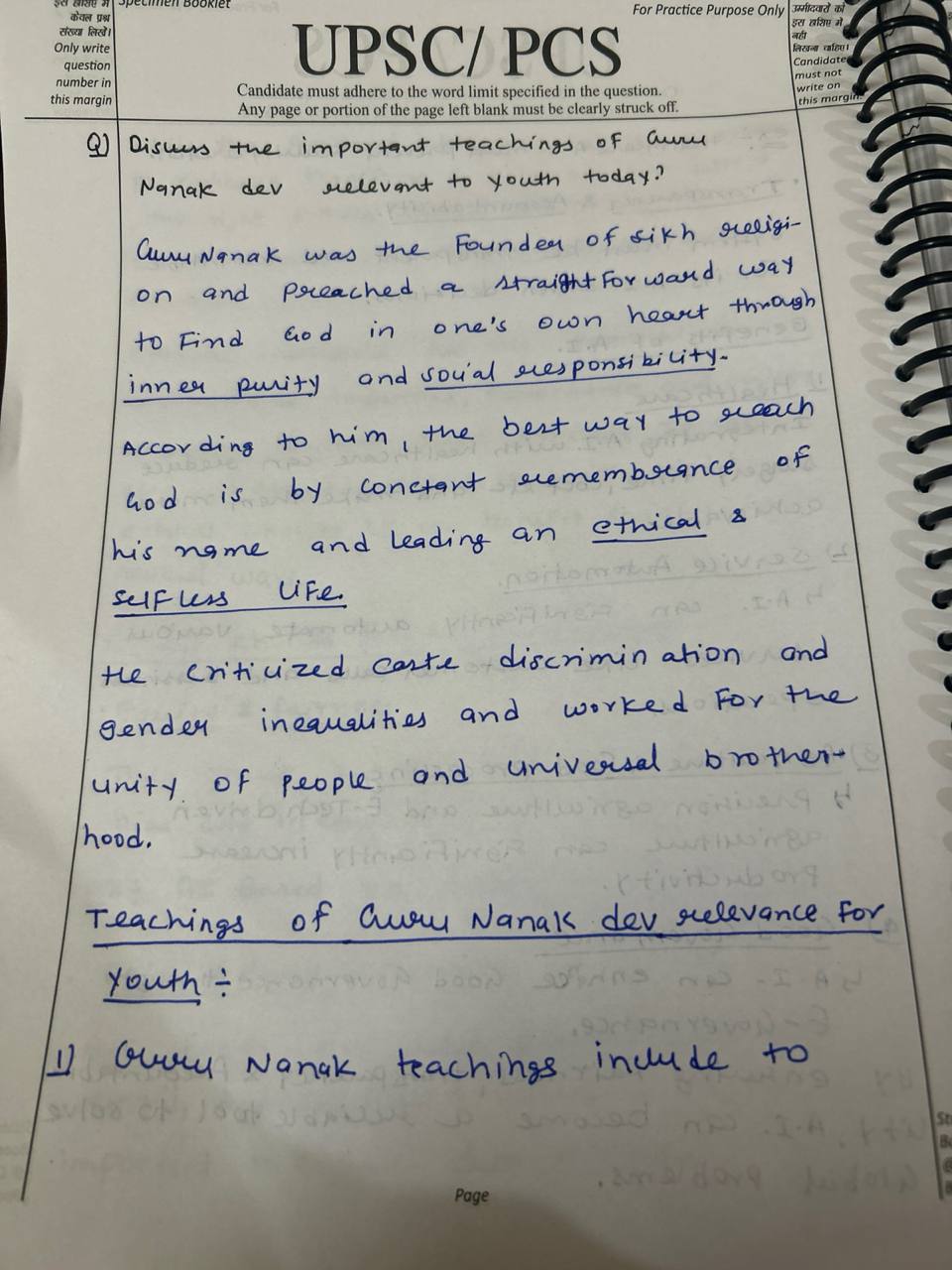
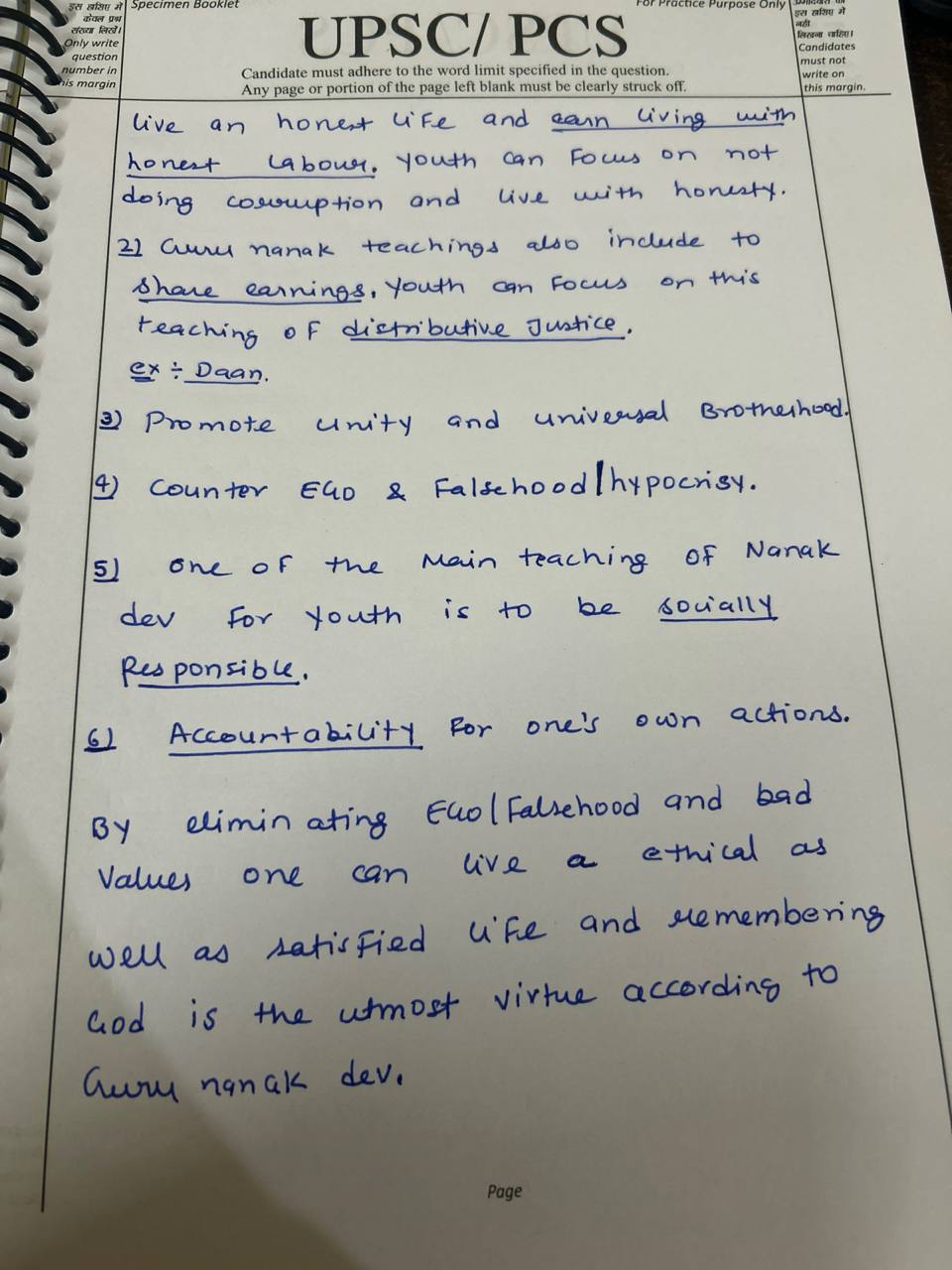


Major Teachings of Guru Nanak and Their Contemporary Relevance Core Teachings of Guru Nanak: Oneness of God: Guru Nanak emphasized the belief in a single, formless God who is the creator and sustainer of all. This teaching promotes unity and inclusivity, transcending religious boundaries. Equality aRead more
Major Teachings of Guru Nanak and Their Contemporary Relevance
Core Teachings of Guru Nanak:
Contemporary Relevance:
In summary, Guru Nanak’s teachings of unity, equality, selfless service, and honesty continue to offer valuable guidance for addressing contemporary global issues.
See less