

What role do family, friends, and media play in attitude formation?


A Growth mindset means you believe you can improve and learn new things. You see challenges as opportunities, don't fear failure and focus on getting better every day continuously. Key characteristics include - Embracing challenges involves viewing obstacles as opportunities for growth and learning.Read more
A Growth mindset means you believe you can improve and learn new things. You see challenges as opportunities, don’t fear failure and focus on getting better every day continuously.
Key characteristics include –
- Embracing challenges involves viewing obstacles as opportunities for growth and learning.
- Persisting through obstacles involves continued effort, resilience and determination despite setbacks occurring.
- Viewing failure as a learning opportunity transforms setbacks into valuable life lessons.
- Believing intelligence and abilities can be developed sees potential for continuous improvement.
- Seeking feedback and learning from criticism fosters growth through constructive self reflection always.
- Focusing on progress not perfection prioritizes incremental growth over flawless outcomes always.
- Resilience and adaptability enable flexible coping and adjustment to changing circumstances seamlessly.
To cultivate a Growth mindset –
- Recognizing and challenging fixed mindset thoughts replaces limitations with empowering possibilities instantly.
- Reframing failures as learning experiences converts setbacks into valuable growth opportunities always.
- Setting learning oriented goals focuses effort on progress, mastery and skill development continuously.
- Seeking constructive feedback encourages open mindedness, self awareness and targeted improvement opportunities always available.
- Practicing self reflection and self awareness fosters personal insight by identifying areas for continuous growth.
- Emphasizing effort not talent or natural ability rewards persistence and hard work.
- Celebrating progress and persistence reinforces motivation and acknowledging small wins fuels resilience always.
Challenges to growth mindset include fear of failure, fixed beliefs, lack of self awareness, perfectionism, external pressures and limited resources which can hinder openness to learning and change.
See less


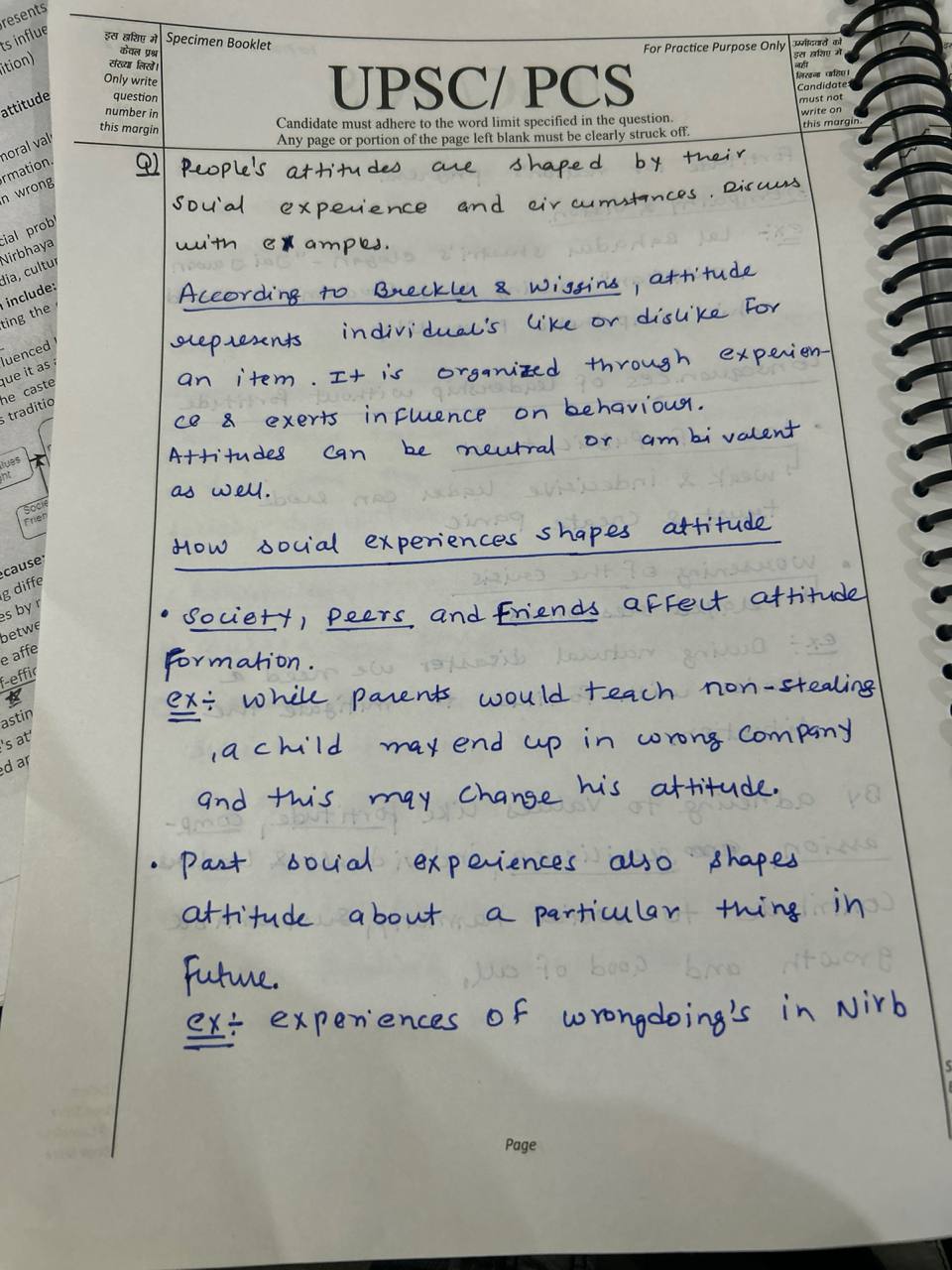
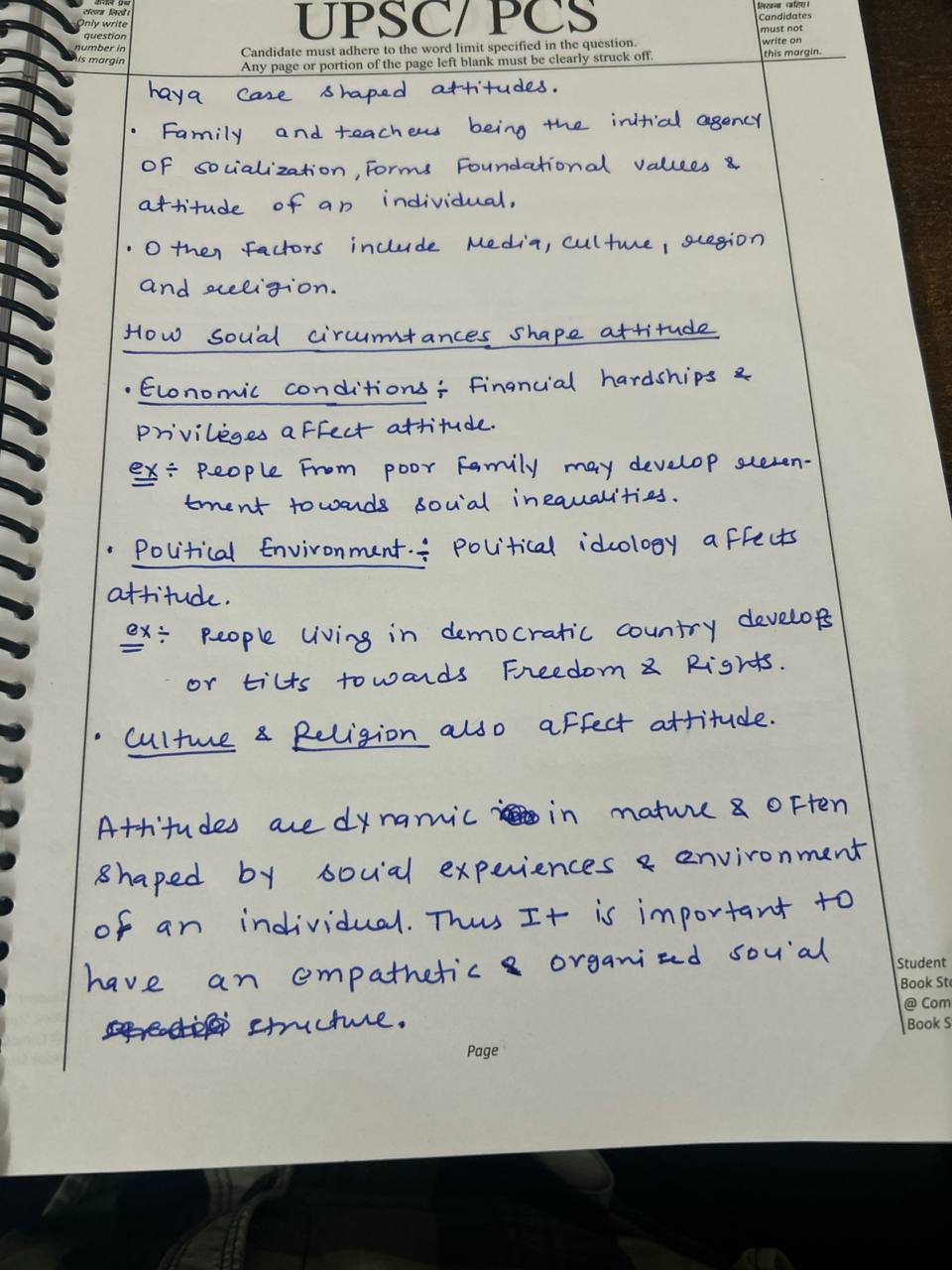


Family, friends, and media play crucial roles in shaping an individual's attitudes by influencing their beliefs, values, and behaviors. ### Family - *Early Socialization*: Family is often the first social group individuals interact with, providing foundational beliefs and values. Children absorb attRead more
Family, friends, and media play crucial roles in shaping an individual’s attitudes by influencing their beliefs, values, and behaviors.
### Family
– *Early Socialization*: Family is often the first social group individuals interact with, providing foundational beliefs and values. Children absorb attitudes from parents and siblings through observation and imitation, shaping their perceptions of the world.
– *Cultural and Religious Values*: Families pass down cultural and religious beliefs that impact attitudes on topics like politics, gender roles, and social responsibilities. These values influence how individuals perceive and interact with the world.
– *Emotional Support*: Emotional bonds within families can strengthen or modify attitudes. Supportive environments may foster positive social attitudes, while strained dynamics can lead to negative perceptions or rebellious attitudes.
### Friends
– *Peer Influence*: Friends significantly influence attitudes, especially during adolescence. Peer groups establish norms that individuals adopt to fit in, affecting attitudes toward fashion, music, and behaviors.
– *Social Comparison*: Individuals compare themselves to their friends, influencing attitudes and self-perception. For instance, a person might adopt healthier habits if their friends value fitness.
– *Shared Experiences*: Friends provide unique perspectives through shared experiences, introducing new viewpoints that encourage individuals to reevaluate beliefs and adopt more open-minded attitudes.
### Media
– *Information Dissemination*: Media is a primary information source, shaping public attitudes by framing news stories and representing issues. This influences opinions on social, political, and economic matters.
– *Stereotype Formation*: Media perpetuates stereotypes, shaping attitudes toward different groups. Repeated exposure to biased portrayals can internalize these stereotypes, affecting attitudes and behaviors.
– *Social Influence and Trends*: Social media platforms allow users to express opinions, influencing public discourse and attitude formation. Viral trends and influencers can sway public opinion and promote new ideas.
– **Reinforcement of Norms
See less