
Home/Biodiversity & Environment/Climate Change/Page 3
Climate Change
Share
Lost your password? Please enter your email address. You will receive a link and will create a new password via email.
Please briefly explain why you feel this question should be reported.
Please briefly explain why you feel this answer should be reported.
Please briefly explain why you feel this user should be reported.
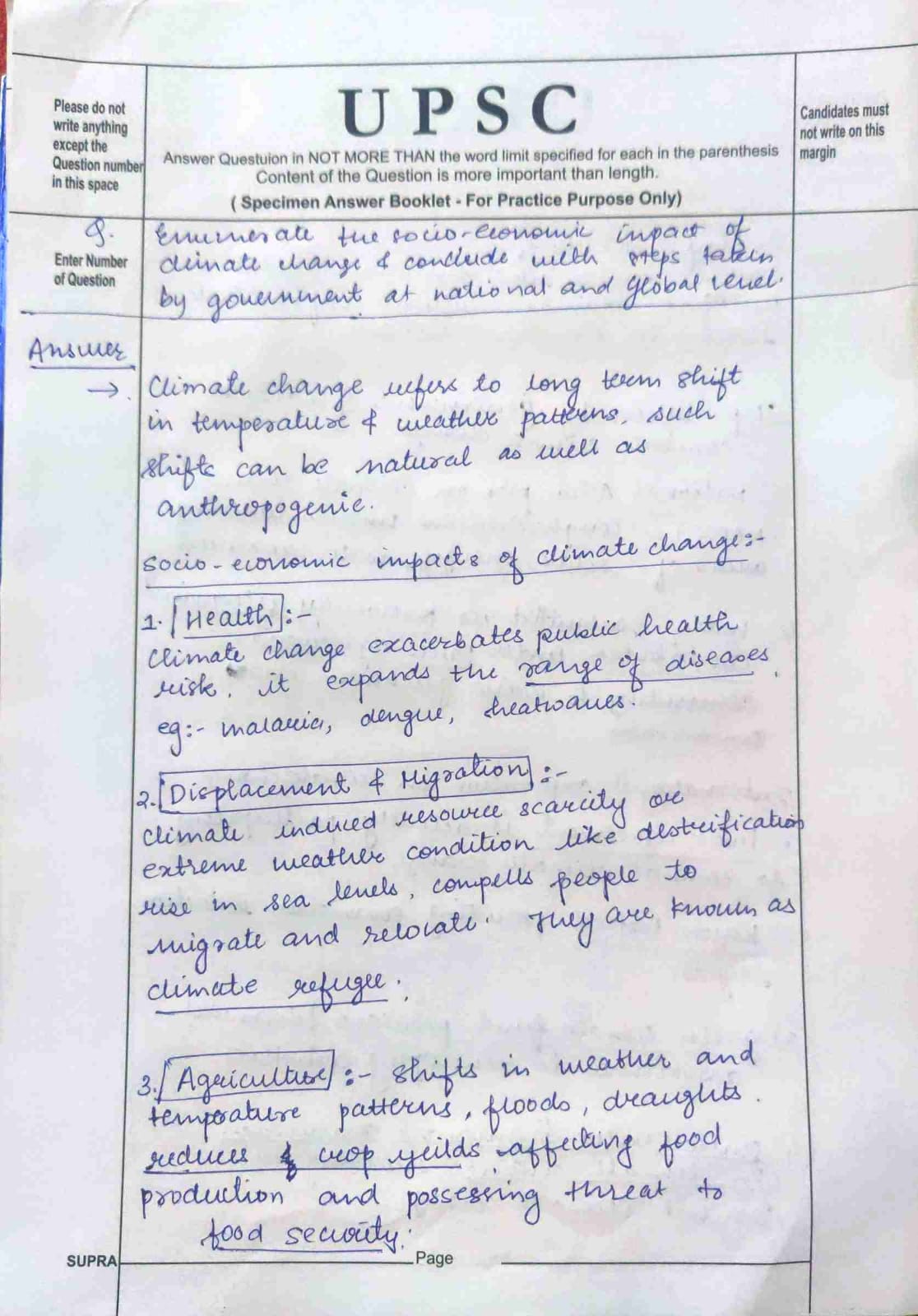
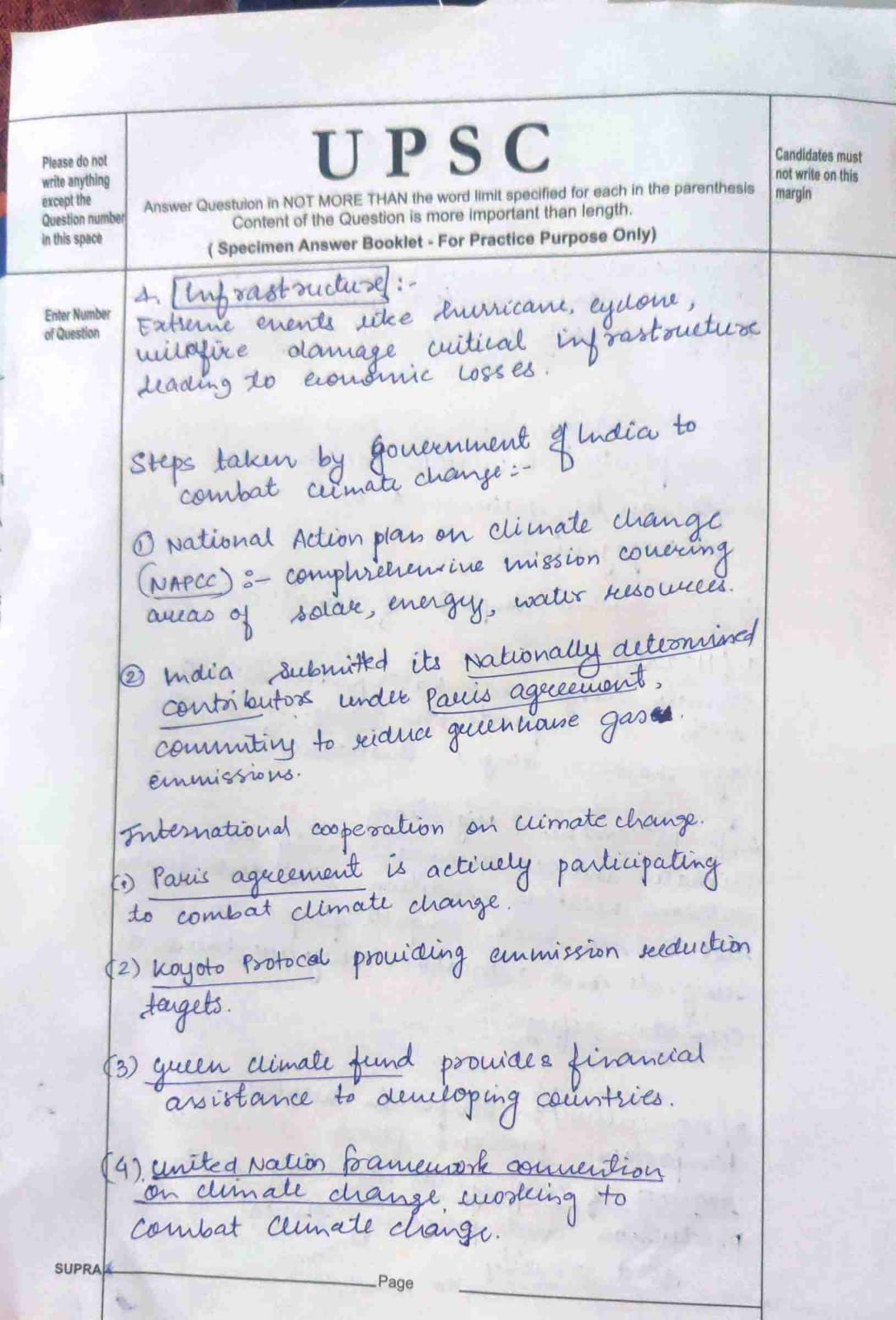
Enumerate the Socio-economic impact of climate change and Conclude with steps taken by government at national and global level.

See lessWhat is the most efficient way to reduce climate change
Today climate change is the most important issue the globe is facing which needs to be discussed at the earliest.There are several ways by which we can overcome climate change:- 1.limitising the carbon emission by controlling vehicular and industrial pollution. 2.Proper urbanisation facility and poRead more
Today climate change is the most important issue the globe is facing which needs to be discussed at the earliest.There are several ways by which we can overcome climate change:-
1.limitising the carbon emission by controlling vehicular and industrial pollution.
2.Proper urbanisation facility and population control methods.
3.Avoiding the use of hybrid food materials 4. Selection of proper area for waste disposal.
5.Afforestation.
6.Use of less electricity and electronics components.
These are the various ways by which we can overcome climate change.
See lessWhat do you think is the future of green hydrogen?
Green hydrogen, or sustainable hydrogen, is obtained without generating any harmful environmental pollutants. Its inherent benefits include zero waste generation, renewable nature of energy, and ease of storage and transport. Generated by the electrolysis process and its only by-product beingRead more
Green hydrogen, or sustainable hydrogen, is obtained without generating any harmful environmental pollutants. Its inherent benefits include zero waste generation, renewable nature of energy, and ease of storage and transport. Generated by the electrolysis process and its only by-product being water, green hydrogen can be a protagonist of the global energy transition for a cleaner and greener Earth.
Primarily, green hydrogen acts as a means of decarbonizing transport, especially in the maritime and aviation industries which account for 4.1% of global greenhouse gas emissions. Replacing these heavily combustible synthetic fuels, with green hydrogen can significantly bring these emissions down. Similarly, in the petrochemical and metallurgy industries, contributing to 6-7% CO2 emissions, green hydrogen can cause the decarbonisation of these industries. It can also act as a long-term system for energy storage due to its longevity and large compressible volume. Apart from that, green hydrogen can also be used for domestic purposes, as it is capable of reaching the desired temperature.
One might think, about the cost of using green hydrogen as its cost of production is higher than most. However, it’s something that must be done for the world to survive in the future. Thus, several government initiatives should be implemented to allocate the required funds to bring down the installation and production costs of green hydrogen.
See less‘Climate change’ is a global problem. How India will be affected by climate change? How Himalayan and coastal states of India will be affected by climate change? (250 words) [UPSC 2017]
Impact of Climate Change on India 1. General Impact on India: **1. Temperature Rise: Increase in Temperature: India has experienced a noticeable rise in average temperatures, leading to more frequent and severe heatwaves. For example, the 2015 heatwave resulted in over 2,000 deaths in Andhra PradeshRead more
Impact of Climate Change on India
1. General Impact on India:
**1. Temperature Rise:
**2. Extreme Weather Events:
**3. Agricultural Impact:
**2. Impact on Himalayan States:
**1. Glacial Melt:
**2. Increased Flood Risk:
**3. Ecosystem Disruption:
**3. Impact on Coastal States:
**1. Sea Level Rise:
**2. Saltwater Intrusion:
**3. Storm Surge:
Conclusion:
- Climate change poses significant threats to India, affecting temperature patterns, extreme weather events, agriculture, and ecosystems. Himalayan states face challenges like glacial melt and ecosystem disruption, while coastal states are vulnerable to sea level rise, saltwater intrusion, and storm surges. Addressing these impacts requires comprehensive mitigation and adaptation strategies, including enhancing disaster preparedness, investing in resilient infrastructure, and implementing sustainable water and agricultural practices.
See lessDescribe the major outcomes of the 26th session of the Conference of the Parties (COP) to the United Nations Framework Convention on Climate Change (UNFCCC). What are the commitments made by India in this conference? (250 words) [UPSC 2021]
Major Outcomes of COP26 1. Global Carbon Neutrality Goal: One of the significant outcomes of COP26 was the adoption of a global goal to achieve carbon neutrality by 2050. This commitment, endorsed by many nations, aims to limit global warming to 1.5°C above pre-industrial levels to avoid the most seRead more
Major Outcomes of COP26
1. Global Carbon Neutrality Goal: One of the significant outcomes of COP26 was the adoption of a global goal to achieve carbon neutrality by 2050. This commitment, endorsed by many nations, aims to limit global warming to 1.5°C above pre-industrial levels to avoid the most severe impacts of climate change.
2. Phasing Down Coal: The conference saw a historic agreement to phase down unabated coal power and inefficient fossil fuel subsidies. This was a key development in reducing greenhouse gas emissions, although the final language was softened from an initial phase-out to a phase-down, reflecting negotiations between coal-dependent nations and other parties.
3. Climate Finance: Developed countries reiterated their commitment to provide $100 billion annually in climate finance to developing nations by 2025. This is aimed at supporting climate adaptation and mitigation efforts in vulnerable countries.
4. Glasgow Climate Pact: The Glasgow Climate Pact was adopted, which includes commitments to strengthen national climate plans (Nationally Determined Contributions or NDCs) and enhance global efforts to adapt to climate impacts.
Commitments Made by India
1. Net-Zero Emissions Target: India committed to achieving net-zero emissions by 2070, marking a significant pledge towards long-term climate goals.
2. Renewable Energy Expansion: India set a target to increase its non-fossil fuel energy capacity to 500 GW by 2030 and meet 50% of its energy needs from renewables by 2030.
3. Green Bonds: India announced plans to issue green bonds to finance climate projects, emphasizing its commitment to mobilize climate finance for sustainable development.
4. Enhancing Adaptation Efforts: India also pledged to strengthen its climate adaptation efforts, focusing on improving resilience against climate impacts and supporting vulnerable communities.
Recent Examples: India’s pledge to enhance renewable energy was reflected in its efforts to build large-scale solar parks and invest in wind energy projects, contributing to its renewable capacity goals.
Overall, COP26 marked a significant step in global climate diplomacy, with critical commitments aimed at reducing emissions, enhancing climate finance, and accelerating the transition to a sustainable future. India’s contributions underscore its role in global climate action while balancing developmental needs.
See lessExplain the purpose of the Green Grid Initiative launched at World Leaders Summit of the COP26 UN Climate Change Conference in Glasgow in November 2021. When was this idea first floated in the International Solar Alliance (ISA)? (150 words) [UPSC 2021]
Purpose of the Green Grid Initiative 1. Global Energy Transition: The Green Grid Initiative, launched at the World Leaders Summit of COP26 in November 2021, aims to create a global network of interconnected power grids to facilitate the efficient transfer of renewable energy across borders. This iniRead more
Purpose of the Green Grid Initiative
1. Global Energy Transition: The Green Grid Initiative, launched at the World Leaders Summit of COP26 in November 2021, aims to create a global network of interconnected power grids to facilitate the efficient transfer of renewable energy across borders. This initiative supports the transition to clean energy by enabling countries to share surplus renewable energy, thereby reducing dependence on fossil fuels.
2. Enhancing Energy Access: By connecting various national grids, the initiative seeks to improve energy access and reliability, especially in regions with limited resources. It helps in balancing intermittent renewable energy sources like solar and wind by pooling them at a global level.
3. Climate Goals: The Green Grid Initiative supports the Paris Agreement targets by promoting the use of renewable energy and reducing carbon emissions globally.
Recent Examples: Countries like India and the European Union are already exploring regional grids to share renewable energy, enhancing the practical application of this initiative.
Origin in the ISA: The idea for the Green Grid Initiative was first proposed at the International Solar Alliance (ISA) summit in 2018. The ISA aimed to promote global solar energy deployment, and the Green Grid Initiative evolved from this vision to facilitate broader energy integration.
Overall, the Green Grid Initiative represents a significant step towards a more sustainable and interconnected global energy system, aligning with global climate and energy goals.
See lessDiscuss global warming and mention its effects on the global climate. Explain the control measures to bring down the level of greenhouse gases which cause global warming, in the light of the Kyoto Protocol, 1997. (250 words) [UPSC 2022]
ग्लोबल वॉर्मिंग: प्रभाव और नियंत्रण उपाय **1. ग्लोबल वॉर्मिंग क्या है?: ग्लोबल वॉर्मिंग पृथ्वी की सतह के औसत तापमान में वृद्धि को संदर्भित करता है, जो मुख्य रूप से ग्रीनहाउस गैसों जैसे कार्बन डाइऑक्साइड (CO₂), मीथेन (CH₄), और नाइट्रस ऑक्साइड (N₂O) के कारण होता है। ये गैसें सौर विकिरण को पृथ्वी की सतRead more
ग्लोबल वॉर्मिंग: प्रभाव और नियंत्रण उपाय
**1. ग्लोबल वॉर्मिंग क्या है?:
**2. ग्लोबल वॉर्मिंग के प्रभाव:
**3. ग्रीनहाउस गैसों के स्तर को कम करने के नियंत्रण उपाय:
निष्कर्ष: ग्लोबल वॉर्मिंग की गंभीरता को देखते हुए, कारगर नियंत्रण उपायों की आवश्यकता है, जिसमें कायोटो प्रोटोकॉल जैसे अंतर्राष्ट्रीय प्रयास, ऊर्जा दक्षता, नवीकरणीय ऊर्जा अपनाना और वृक्षारोपण शामिल हैं। इन उपायों को प्रभावी रूप से लागू करके ही हम ग्लोबल वॉर्मिंग के प्रभावों को कम कर सकते हैं और दीर्घकालिक पर्यावरणीय स्थिरता सुनिश्चित कर सकते हैं।
See lessExplain the mechanism and occurrence of cloudburst in the context of the Indian subcontinent. Discuss two recent examples. (150 words)[UPSC 2022]
Mechanism and Occurrence of Cloudburst in the Indian Subcontinent **1. Mechanism of Cloudburst: Cloudburst is a sudden, intense rainfall event, usually occurring in mountainous regions. It happens when moist air is rapidly lifted due to orographic effects (mountain-induced uplift), causing condensatRead more
Mechanism and Occurrence of Cloudburst in the Indian Subcontinent
**1. Mechanism of Cloudburst:
**2. Occurrence in the Indian Subcontinent:
Recent Examples:
**1. Himachal Pradesh (August 2021):
**2. Uttarakhand (October 2022):
Cloudbursts pose significant risks in the Indian subcontinent due to their sudden onset and the challenging geography of the region. Improved weather forecasting and disaster preparedness are essential to mitigate their impacts.
See lessThe Intergovernmental Panel on Climate Change (IPCC) has predicted a global sea level rise of about one metre by AD 2100. What would be its impact in India and the other countries in the Indian Ocean region? (250 words) [UPSC 2023]
Impact of Projected One-Metre Global Sea Level Rise by 2100 on India and the Indian Ocean Region Impact on India: Coastal Erosion: A one-meter rise in sea level is likely to exacerbate coastal erosion along India’s extensive coastline. This will affect major cities and industrial hubs, such as MumbaRead more
Impact of Projected One-Metre Global Sea Level Rise by 2100 on India and the Indian Ocean Region
Impact on India:
Impact on the Indian Ocean Region:
Recent Developments:
Countries in the Indian Ocean region are increasingly focusing on climate adaptation strategies. For instance, India has launched the National Adaptation Fund for Climate Change (NAFCC) to support projects aimed at mitigating the impacts of climate change, including sea level rise. Similarly, the Maldives is working on resilience-building measures and coastal protection projects to safeguard its low-lying islands.
In summary, the predicted one-metre rise in global sea levels by 2100 poses significant risks to India and the Indian Ocean region, impacting coastal erosion, flooding, population displacement, and economic stability. Regional cooperation and proactive adaptation strategies will be crucial in managing these challenges.
See lessNature-Based Solutions in Drylands
Nature-based solutions hold significant potential in combating land degradation and desertification in India’s drylands. These solutions leverage natural processes to restore ecosystems, enhance biodiversity, and improve soil health, addressing the root causes of land degradation. In drylands, practRead more
Nature-based solutions hold significant potential in combating land degradation and desertification in India’s drylands. These solutions leverage natural processes to restore ecosystems, enhance biodiversity, and improve soil health, addressing the root causes of land degradation.
In drylands, practices like agroforestry, reforestation, and watershed management can prevent soil erosion, enhance water retention, and restore degraded lands. For example, planting drought-resistant trees and native vegetation can stabilize soil and provide shade, reducing water loss and promoting biodiversity. Traditional water conservation techniques, such as building check dams and rainwater harvesting, can improve groundwater recharge and ensure a reliable water supply.
To implement these solutions effectively, community involvement is crucial. Local communities should be engaged in planning and executing projects, leveraging their traditional knowledge. Government support, including policy frameworks and financial incentives, can encourage the adoption of sustainable practices. Integrating these efforts with modern technologies, like remote sensing for monitoring land health, can enhance the effectiveness and scalability of nature-based solutions.
By combining traditional wisdom with innovative approaches, nature-based solutions can restore the productivity of India’s drylands, ensuring sustainable development while mitigating the impacts of climate change and desertification.
See less