

Talk about how the Union government will administer administrative authority and oversight over the States, including the nomination and dismissal of governors and the use of Central Armed Police Forces
Mains Answer Writing Latest Questions
Ronak LalBegginer
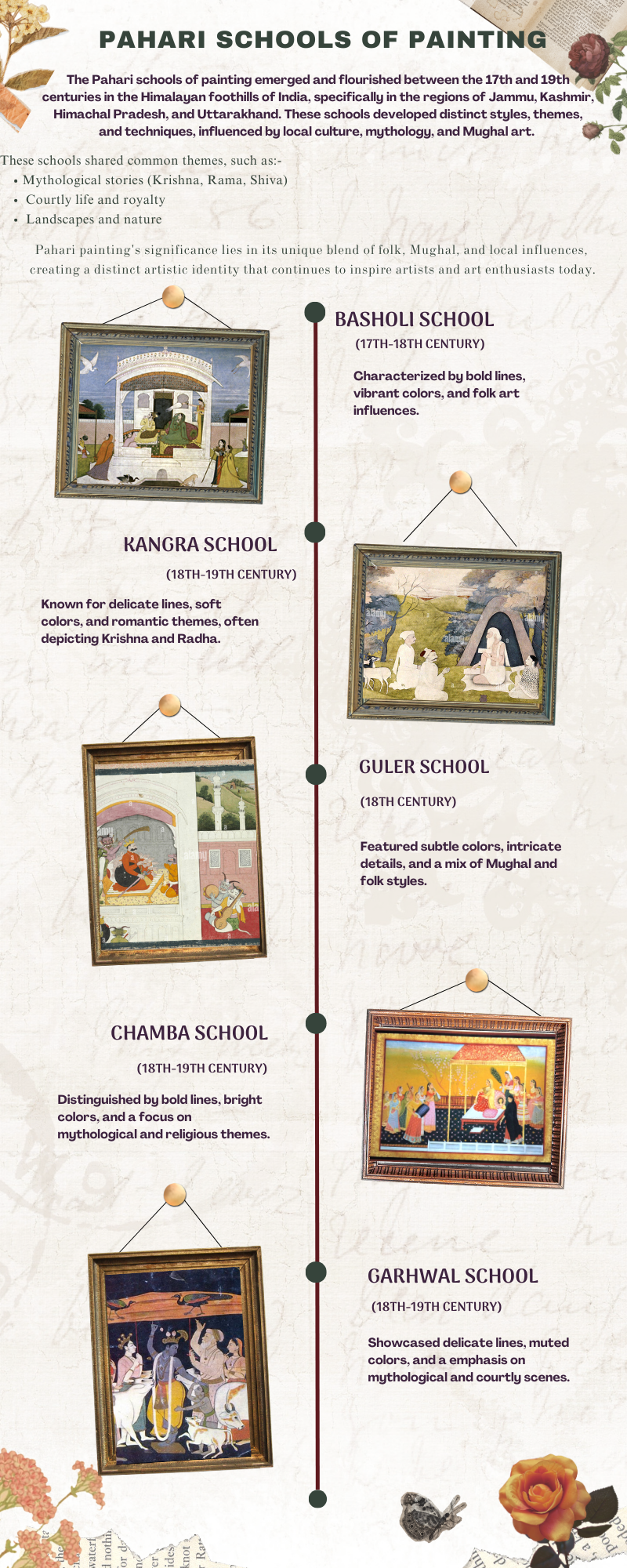
Provide a brief overview of the Pahari schools of painting that developed in India during the 17th and 19th centuries. (Answer in 200 words)

Ronak LalBegginer
What is a biome, in your opinion? Give a description of the world’s major biomes and their traits.(Answer in 200 words)
-
A biome is a large geographical area characterized by specific climate conditions, plant communities, and animal species. It is essentially a broader classification of ecosystems, defined primarily by temperature, precipitation, and the types of vegetation that dominate the region. Biomes are typicaRead more
A biome is a large geographical area characterized by specific climate conditions, plant communities, and animal species. It is essentially a broader classification of ecosystems, defined primarily by temperature, precipitation, and the types of vegetation that dominate the region. Biomes are typically classified into terrestrial (land-based) and aquatic (water-based) categories.
Major Terrestrial Biomes of the World:
- Tropical Rainforest:
- Location: Near the equator (Amazon Basin, Congo Basin, Southeast Asia).
- Climate: Hot and wet year-round, with high annual rainfall (over 200 cm).
- Vegetation: Dense, evergreen forests with multiple layers of canopy. Dominant trees include broad-leaved species.
- Animals: High biodiversity, including insects, birds, reptiles, and mammals such as jaguars, sloths, and primates.
- Characteristics: The most biodiverse biome, with rich species diversity and complex ecological interactions.
- Savanna (Tropical Grassland):
- Location: Africa (Serengeti), South America, India, Australia.
- Climate: Warm with seasonal rainfall; distinct wet and dry seasons.
- Vegetation: Grasses dominate, with scattered trees like acacias and baobabs.
- Animals: Large herbivores (elephants, giraffes, zebras) and carnivores (lions, cheetahs).
- Characteristics: Known for vast open spaces, grasslands, and large migratory wildlife populations.
- Desert:
- Location: Sahara (Africa), Arabian Desert, Australian Outback, Atacama Desert.
- Climate: Extremely low rainfall (less than 25 cm annually), hot during the day and cold at night.
- Vegetation: Sparse, with drought-resistant plants like cacti, succulents, and shrubs.
- Animals: Adapted to extreme conditions; includes reptiles, camels, foxes, and rodents.
- Characteristics: Harsh conditions with minimal vegetation; life is highly adapted to water scarcity.
- Temperate Grassland (Prairies, Steppes):
- Location: North America (prairies), Eurasia (steppes), South America (pampas).
- Climate: Moderate rainfall, warm to hot summers, and cold winters.
- Vegetation: Grasses dominate with few trees.
- Animals: Grazing animals like bison, antelope, and rodents; predators include wolves and coyotes.
- Characteristics: Fertile soils, often used for agriculture; supports large herds of herbivores.
- Temperate Deciduous Forest:
- Location: Eastern North America, Europe, East Asia.
- Climate: Four distinct seasons with moderate rainfall and varied temperatures.
- Vegetation: Broad-leaved trees like oaks, maples, and beeches that shed leaves seasonally.
- Animals: Deer, foxes, birds, and small mammals like squirrels.
- Characteristics: Rich soil, high biodiversity; forests undergo seasonal changes with vibrant autumn foliage.
- Taiga (Boreal Forest):
- Location: Northern North America, Europe, and Asia (Canada, Scandinavia, Russia).
- Climate: Cold, with long winters and short, warm summers; moderate rainfall.
- Vegetation: Dominated by coniferous trees like pines, spruces, and firs.
- Animals: Moose, bears, wolves, lynxes, and migratory birds.
- Characteristics: Largest terrestrial biome; known for its vast coniferous forests and extreme seasonal shifts.
- Tundra:
- Location: Arctic regions (Arctic tundra), high mountain tops (Alpine tundra).
- Climate: Extremely cold with short growing seasons, permafrost, and low precipitation.
- Vegetation: Low shrubs, mosses, lichens; no trees due to harsh conditions.
- Animals: Arctic foxes, caribou, polar bears, and migratory birds.
- Characteristics: Fragile ecosystem with slow recovery rates; characterized by permafrost and limited vegetation.
Major Aquatic Biomes:
- Freshwater Biomes:
- Includes: Lakes, rivers, streams, wetlands.
- Characteristics: Supports aquatic plants, fish, amphibians, and birds. Freshwater ecosystems are vital for human use (drinking water, agriculture).
- Marine Biomes:
- Includes: Oceans, coral reefs, estuaries.
- Characteristics: Covers over 70% of the Earth’s surface; supports diverse marine life including fish, corals, mammals like whales, and plankton that form the base of the food chain.
- Estuaries:
- Location: Where rivers meet the sea.
- Characteristics: High nutrient content, supports diverse species like fish, birds, and invertebrates; crucial breeding grounds for many species.
Each biome represents a unique interaction between climate, geography, and life forms, contributing to the planet’s overall ecological diversity.
See less - Tropical Rainforest:

Provide a description of atmospheric circulation worldwide. (Answer in 200 words)
-
Answer: The Earth is surrounded by a thin layer of air called the atmosphere. The air in the atmosphere moves in response to differences in temperature at the equator (warm) and the poles (cold). This movement of air is called global atmospheric circulation. The movement of air across the planet occRead more
Answer: The Earth is surrounded by a thin layer of air called the atmosphere. The air in the atmosphere moves in response to differences in temperature at the equator (warm) and the poles (cold). This movement of air is called global atmospheric circulation. The movement of air across the planet occurs in a specific pattern that is dependent on:
- Latitudinal variation of atmospheric heating.
- The emergence of pressure belts.
- The migration of belts following the apparent path of the sun.
- The distribution of continents and oceans.
- The rotation of the Earth.
The whole system is driven by the equator, which is the hottest part of the Earth. Air rises at the equator, leading to the creation of low pressure and rainfall. When the air reaches the edge of the troposphere (tropopause), it cannot go any further and so it travels to the north and south. The air becomes colder and denser, and falls, creating high pressure and dry conditions at around 30° north and south of the equator. Large cells of air are created in this way. The following are the 3 major cells:
- The Hadley Cell: This is driven by warm rising air. The Coriolis effect causes the air that has risen at the equator and moving to the poles to deflect and become increasingly westerly high up in the atmosphere that the circulation breaks down and the air sinks back towards the ground in the subtropics (30° the ‘horse latitudes’). Once the air has descended back to the ground, it returns to the equator and is deflected to the east – they are known as the easterly trade winds.
- Polar Cell: The same thing happens in the polar regions, but it is driven by sinking cold air. The sinking, cold air at the poles moves back towards the equator, but because it is slow-moving, it becomes increasingly easterly as the underlying earth moves faster, and the circulation eventually breaks down at around 70° latitude. The air then rises again and returns to the poles, resulting in another atmospheric cell.
Ferrel Cell: This lies in between the Polar and Hadley cells, and is a little more complicated. Put simply, it is the net effect of air motions from all the storms or ‘depressions’ that occur in the mid-latitudes. Air sinks in the sub-tropics and rises around 60-70°. In this region, westerly surface winds occur. These cells drive airflow, atmospheric pressure, and rainfall. The rising and sinking of air cause high and low pressure at the surface, respectively. The large-scale winds of the atmosphere initiate large and slow-moving currents of the ocean. Oceans in turn provide input of energy and water vapour into the air. These interactions take place rather slowly over a large part of the ocean.
See less

Give a thorough explanation of how coal is distributed throughout India.(Answer in 200 words)
-
Answer: Coal is a sedimentary rock with having high amount of carbon and hydrocarbons. It is combustible in nature and is classified as a non-renewable source of energy. It is found as Anthracite (90-95% Carbon content), Bituminous (60-80% Carbon content), Lignite (40-45% Carbon content) and Peat (Read more
Answer: Coal is a sedimentary rock with having high amount of carbon and hydrocarbons. It is combustible in nature and is classified as a non-renewable source of energy. It is found as Anthracite (90-95% Carbon content), Bituminous (60-80% Carbon content), Lignite (40-45% Carbon content) and Peat (>40% Carbon content). Coal is the most important and abundant fossil fuel present in India. It accounts for more than 50% of India’s energy needs. The coal-bearing strata of India are geologically classified into two main categories, viz., Gondwana coal fields and Tertiary coal fields.
- Gondwana Coal Fields: It comprises about 98 percent of the total reserves and 99 percent of the production of coal in India. In this system, there are 113 major coal fields found all over India. Gondwana coal is said to be about 250 million years old. Such fields are exclusively found in the peninsular region.
- Tertiary Coal Fields: This rock system bears coals of younger age; from 15 to 60 million years. It shares only about 1% of the total coal production in India.
Distribution and production of Gondwana coal in India:
- Jharkhand: It has over 28 percent of the coal reserves and produces more than 20 percent of coal in India. There are 21 prominent coal fields in Jharkhand among which Jharia, Bokaro, and Rajmahal coalfields are famous.
- Odisha: It is the second largest state with regard to coal reserves possessing 24.64 percent of the total reserves of India but is the third largest producer of coal contributing about 19 percent of the total coal production of the country. Talcher coalfields are one of the major •deposits.
- Chhattisgarh: It has 16 percent of the coal reserves and produces over 21 percent of coal in India. Most of the coal fields of Chhattisgarh are located in the northern part of the state. Major coal fields include Korba and Tatapani.
- West Bengal: It has over 11 percent of the coal reserves of the country but produces just over 4 percent of India’s coal. Raniganj is the largest coalfield in West Bengal.
- Madhya Pradesh: It has about 8 percent of the coal reserves but contributes about 13 percent of the total coal production of India. Currently, Madhya Pradesh is the fourth largest coal-producing state of India. Major coalfields include Singrauli and Jhingurda.
- Andhra Pradesh and Telangana: With only 7 percent of the reserves Andhra Pradesh and Telangana produce about 10 percent of India’s coal. Most of the coal reserves are in the Godavari Valley (Singreni coalfields).

- Maharashtra: It has only 3 percent reserves, but accounts for over 7 percent of the production of coal in India. Kamptee Coalfields has the major coal deposits.
Distribution and production of Tertiary Coal in India: This type of coal is present in Assam (Makum, Nazira, Mikir Hills), Meghalaya (Garo, Khasi, and Jaintia hills), Arunachal Pradesh (Namchick-Namrup coalfield), Jammu and Kashmir (Udhampur and Kalakot area) and in the Chamba district of Himachal Pradesh. There has also been a phenomenal increase in the production of lignite coal in India. Although lignite deposits are found in Tamil Nadu, Gujarat, Jammu and Kashmir, Kerala, Rajasthan, West Bengal, and Puducherry; Tamil Nadu (Neyveli coalfields) account for 90% of lignite reserves.
See less
Ronak LalBegginer
What kinds of alternative energy sources are there in India? Emphasize their role in supplying environmentally sustainable energy. (Answer in 200 words)
-
India utilizes several non-conventional energy sources, including solar, wind, hydro, biomass, geothermal, tidal, and wave energy. Solar and wind energy harness natural resources to generate clean power, significantly reducing greenhouse gas emissions. Hydropower leverages river systems for reliableRead more
India utilizes several non-conventional energy sources, including solar, wind, hydro, biomass, geothermal, tidal, and wave energy. Solar and wind energy harness natural resources to generate clean power, significantly reducing greenhouse gas emissions. Hydropower leverages river systems for reliable electricity while supporting flood control and irrigation. Biomass energy recycles organic waste into power, aiding waste management and supporting rural economies. Geothermal, tidal, and wave energy offer consistent and eco-friendly alternatives with minimal environmental impact. Collectively, these sources contribute to India’s goal of a sustainable and diversified energy mix, helping reduce reliance on fossil fuels and combat climate change.
See less

Describe in detail the various kinds of plate tectonic boundaries. (Answer in 200 words)
-
Plate tectonic boundaries are classified into three main types: three types of margins: divergent, convergent, and transform which are defined by certain tectonic activities and landforms. In a sense, the opposite of convergent boundaries happens when two tectonic plates are pulled apart. This movemRead more
Plate tectonic boundaries are classified into three main types: three types of margins: divergent, convergent, and transform which are defined by certain tectonic activities and landforms.
In a sense, the opposite of convergent boundaries happens when two tectonic plates are pulled apart. This movement leads to the creation or formation of a new crust because magma is formed from below the surface of the earth. The most famous one is mid Atlantic ridge oceanic lithosphere here, the separation of two plates takes place and a new oceanic crust is formed. On land, Transform boundaries can result in what is known as rift valleys such as the East African rift valley.
Other types of boundaries are the convergent boundaries which are boundaries that involve plates moving towards each other so that one plate is forced to subduct under the other. Which often causes numerous geological manifestations such as earthquakes, and volcanic activity. Here, the oceanic and continental plates collide and as a result, construct linear volcanic mountains, such as the Andes whereas, the oceanic and oceanic plates construct the volcanic islands, for example, the Marianas Island. This type of convergence that is continental-continental can produce vast folded mountain chains such as the Himalayas.
A transform boundary is one at which plates move horizontally in a past each other manner. The movement of the plates is restricted such that they cannot slide past each other easily and this leads to earthquakes. A familiar example is the San Andreas Fault in California through which the Pacific Plate moves northwest concerning the North American Plate.
Every type of boundary participates in the activities of the lithosphere, and these kinds of activities influence the alteration of the Earth’s surface constantly.
See less

The Indian Constitution delineates a federal structure with a strong center, providing several provisions for the administrative control and supervision of the States by the Union government. These provisions ensure the Union's ability to maintain national integrity and coordinate with the States inRead more
The Indian Constitution delineates a federal structure with a strong center, providing several provisions for the administrative control and supervision of the States by the Union government. These provisions ensure the Union’s ability to maintain national integrity and coordinate with the States in matters of national importance. Here are the key aspects:
Appointment and Removal of Governors
Appointment of Governors:
Removal of Governors:
Deployment of Central Armed Police Forces (CAPF)
Constitutional Provisions:
Deployment Mechanisms:
Administrative Control and Supervision
Control over State Legislation:
Directions to States:
Inter-State Councils and Committees:
- Article 263 provides for the establishment of an Inter-State Council to investigate and discuss subjects of common interest between the Union and the States or among States. This promotes cooperation and coordination in policy and administration.
See less