

Examine the Indian Constitution’s provisions for the formation of new states and the realignment of state borders. Then, contrast these laws with the territorial integration and devolution policies of other multilateral states, such as Spain and the United Kingdom.
Mains Answer Writing Latest Questions
Dhruv MehtaBegginer
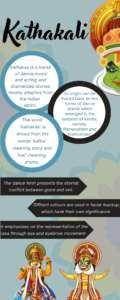
Explain the following statement: “Kathakali is a unique mix of drama, expression, and storytelling; it is not just a dance form.” In what way does it embody India’s rich cultural diversity?

Dhruv MehtaBegginer
Talk about the paintings from the Bengal School of Art’s contribution to the Indian nationalist cause. How did political expression find its way into art?
-
The Bengal School of Art led by Abanindranath Tagore, Gaganendranath Tagore, Nandlal Bose, and Jamini Roy emerged in the late 19th-century Kolkata, aimed to revive India's rich artistic heritage. It rejected Western art styles taught in colonial institutions and focused on creating a uniquely IndianRead more
The Bengal School of Art led by Abanindranath Tagore, Gaganendranath Tagore, Nandlal Bose, and Jamini Roy emerged in the late 19th-century Kolkata, aimed to revive India’s rich artistic heritage. It rejected Western art styles taught in colonial institutions and focused on creating a uniquely Indian art form to both express the nation’s cultural identity and fuel Indian nationalism.
Role of the Bengal School of Art, specifically its paintings, in the Indian nationalist movement
- Swadeshi Spirit: It echoed the Swadeshi Movement’s call for indigenous production and self-reliance. For instance, Nandalal Bose’s “Haripura Posters” exemplified Swadeshi ideals by using indigenous techniques and themes to reflect Indian life and culture.
- Promoting Self-Reliance: Abanindranath Tagore’s painting “Bharat Mata” (Mother India) is an iconic representation of the motherland as a goddess. It symbolized the idea of India as a nurturing and self-sufficient entity.
- Mass Appeal: Works of the Bengal School were often reproduced in widely read journals like “Modern Review,” thereby extending their reach beyond elite circles. This democratization of art helped to amplify its nationalist message.
- Visual Language: Artists like Jamini Roy adopted folk styles from rural Bengal, effectively providing a visual language to express abstract nationalist principles like unity among India’s diverse communities.
- Cultural Identity: Artists like Kshitindranath Majumdar portrayed traditional Bengali culture and rituals in their works. It contributed to constructing a unique Indian identity at a time when colonial rule was systematically eroding traditional practices and cultural expressions.
- Mythological Themes: Asit Kumar Haldar’s art, infused with depictions of Lord Krishna and Radha, contributed to a revival of Indian mythological themes, which in turn helped to ignite a collective consciousness rooted in a shared past.
- Anti-Colonial Sentiments: Nandalal Bose’s painting depicting “Shivaji’s Raid” celebrated the Maratha hero, serving as an artistic rallying point against foreign domination and inspiring the populace to reflect on their own capacity for resistance.
Ways in which Art become a medium for political expression:
- Visual Literacy: In a country with a high illiteracy rate, visual forms like Rangoli and Warli art served to engage those who couldn’t read or write. These traditional art forms were often used in rallies and public gatherings, democratizing the discourse surrounding nationalism.
- Iconography: The painting “Bharat Mata” by Abanindranath Tagore became synonymous with the nationalist movement, encapsulating the struggle for freedom and unity against colonial rule. This iconic image mobilized the public and offered a focal point for collective aspirations.
- Inclusivity: Different regions had their unique art forms, such as the Tanjore paintings in the South and Bengali Patua in the East. These forms were adopted to articulate a unified nationalist narrative, showcasing the country’s cultural diversity while stressing its unity.
- Subversion: Artists like Chittaprosad used stark imagery to critique colonial policies subtly. His work on the Bengal Famine, for example, exposed the harsh realities of British rule, generating both national and international condemnation.
- Propagation: Artwork was disseminated through nationalist publications like “Young India,” expanding the scope of their influence. Visual elements, including sketches and cartoons, were powerful in shaping public opinion against British policies.
- Public Spaces: Street murals and art installations in public squares served as constant reminders of the struggle. During the Quit India Movement, murals depicting freedom fighters and symbols of resistance became fixtures in public spaces, keeping the fervour of nationalism alive.
- Accessibility: The simplicity of some artworks, such as the symbol of the Charkha (spinning wheel), made them easily relatable. Posters featuring these symbols reached even the most remote areas, tying ordinary citizens to the larger cause of independence.
- Non-verbal Resistance: They offered a non-violent yet powerful avenue for resisting colonial rule. Paintings and sketches that celebrated the Salt March, for example,underlined the significance of peaceful protest and had a profound influence on the collective psyche.
Overall, the aesthetic and thematic choices made by artists of the Bengal School of Art provided a visual language that powerfully complemented the political and ideological rhetoric of the time. Art, thus, became an effective medium for political expression, merging culture and politics in a way that had a lasting impact on the Indian freedom struggle.  
See less

Dhruv MehtaBegginer
Examine how the Mughal monarchs in India supported and promoted Persian literature. What changes did this sponsorship bring about in the Indian creative and cultural landscape?
-
The Mughal era (1526-1857) marked a significant phase in Indian history, characterized by monumental architecture, flourishing arts, and cultural synthesis. One of the standout features of Mughal rule was the patronage and promotion of Persian literature, which had a transformative impact on the IndRead more
The Mughal era (1526-1857) marked a significant phase in Indian history, characterized by monumental architecture, flourishing arts, and cultural synthesis. One of the standout features of Mughal rule was the patronage and promotion of Persian literature, which had a transformative impact on the Indian cultural and artistic landscape.
Patronage and Promotion of Persian Literature by Mughal Emperors:
- Humayun: He was instrumental in laying the foundation for the rich tradition of Persian literary culture in the Mughal court. He invited several Persian scholars and poets like Mirza Ghiyasuddin Ali, thereby initiating a literary tradition that future emperors would continue.
- Shah Jahan: A connoisseur of architecture and the arts, Shah Jahan commissioned works like the ‘Padshahnama,’ a Persian text detailing his reign, which significantly enriched Persian literature related to governance and statecraft.
- Babur: ‘Baburnama,’ the memoirs of Babur written in Chaghatai Turkish, was later translated into Persian, highlighting the significance placed on the Persian language as a medium for historical documentation.
- Imperial Libraries: Libraries like the ‘Imperial Library’ in Delhi were repositories of Persian manuscripts on subjects ranging from Sufism to astronomy, promoting a rich culture of learning and academic inquiry.
- Scribal Patronage: Historians like Abd al-Qadir Badayuni were commissioned to write in Persian. Badayuni’s ‘Muntakhab-ut-Tawarikh’ serves as a crucial source for Mughal history, written in Persian to reach a wider audience.
- Poetry Assemblies (Mushairas): Organized in the Mughal courts, these gatherings attracted poets like Sauda and Siraj-ud-Din Ali Khan Arzu, who showcased their literary prowess in Persian, elevating the status of the language.
- Translation Initiatives: Major Sanskrit texts like the Rigveda and the Arthashastra were translated into Persian, underlining the Mughals’ intent to create a synthesis of cultures and broaden the scope of Persian literature.
- Persian Gazettes: The ‘Akhbarat,’ royal news bulletins, were regularly issued in Persian to disseminate royal decrees, laws, and news, underscoring the language’s role in governance.
This patronage reshaped the existing Indian cultural and artistic landscape in the following ways:
- Syncretism: The confluence of Persian and Indian traditions produced a unique Indo-Islamic culture. Eg: the Mughal painting style blended Persian miniature art with indigenous Indian techniques, creating artworks that are celebrated for their intricacy and depth.
- Language Development: The Persian influence played a pivotal role in the development of Urdu, enriching its vocabulary and script. Urdu poetry, known as ‘Ghazals,’ drew inspiration from Persian styles, as exemplified by poets like Mir Taqi Mir and Mirza Ghalib.
- Architectural Influence: Many Mughal monuments, such as the Taj Mahal, feature Persian inscriptions and poetry. These inscriptions not only added aesthetic value but also conveyed the essence of Persian literary and philosophical ideals.
- Art Forms: Miniature paintings from this period often incorporated Persian motifs, characters, and narratives. For example, the Hamzanama series of paintings blended Persian storytelling with Indian iconography.
- Literature: Stories from Persian classics like “One Thousand and One Nights” and works by Rumi found their way into Indian folklore and storytelling, adding new dimensions to the existing literary milieu.
- Music: Hindustani classical music was influenced by Persian musical scales. The introduction of Persian musical instruments like the sitar and tabla further enriched Indian musical traditions.
- Calligraphy: The art of Persian calligraphy, known as Nastaliq, was adopted in India for writing Persian and Urdu texts. The beauty and fluidity of this script influenced Indian manuscripts and even architectural inscriptions.
- Interfaith Dialogue: The Persian translations of major Hindu texts like the Mahabharata (‘Razmnama’), facilitated a deeper understanding between Hindus and Muslims, fostering a more pluralistic society.
The Mughal emperors’ patronage of Persian literature was not merely an act of cultural import but a catalyst that remodelled the existing Indian cultural and artistic milieu. The mutual exchange and assimilation of ideas led to an enriched, pluralistic, and more complex cultural mix that continues to be part of India’s diverse heritage.
See less

Dhruv MehtaBegginer
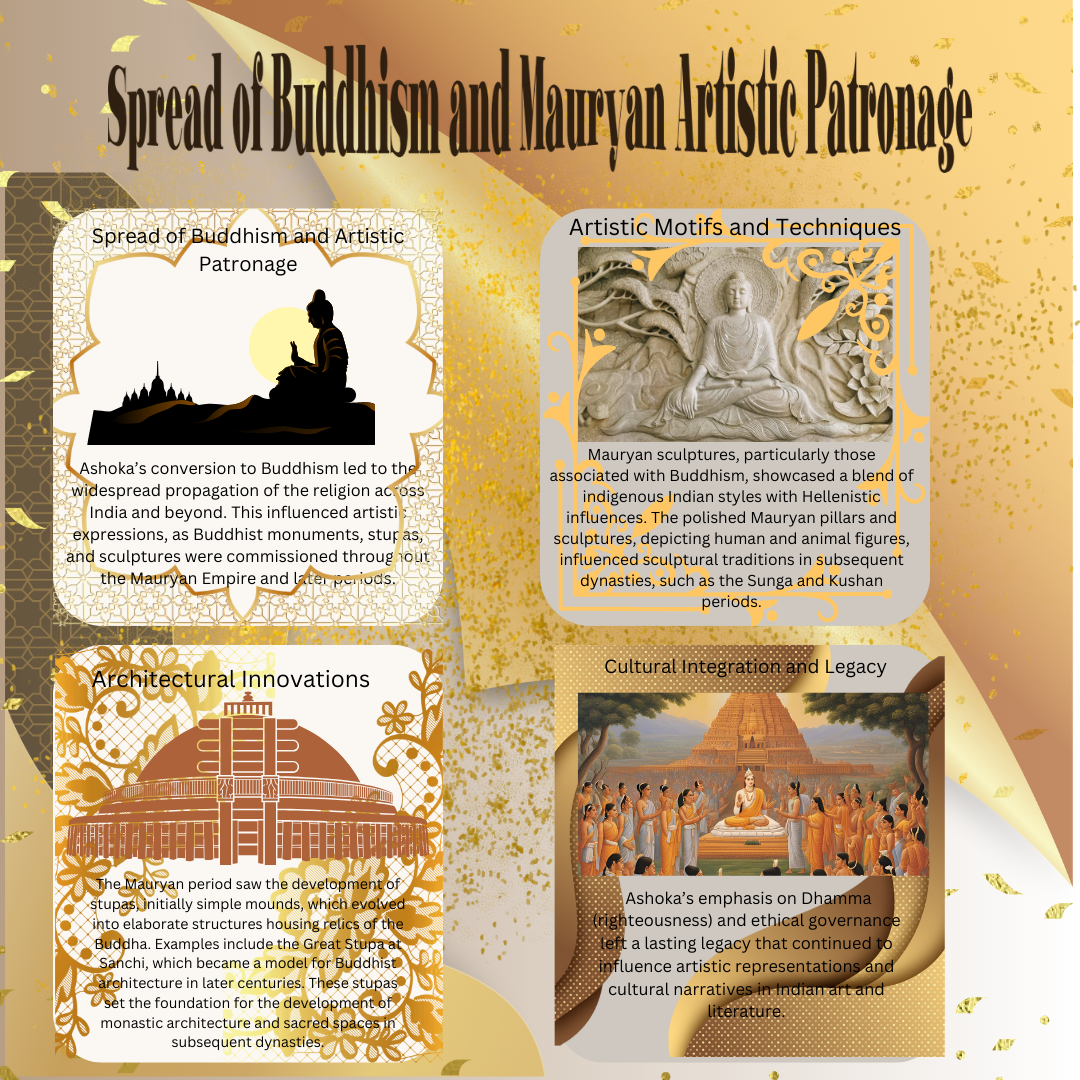
Examine how the Mauryan era affected Indian cultural legacy. In what ways did it lay the foundation for creative advancements in dynasties that followed?
-
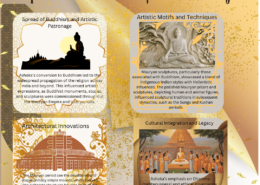
The Mauryan era, particularly during Ashoka's reign, had a significant impact on Indian cultural legacy through the promotion of Buddhism, support for grand architecture and sculpture, and the establishment of artistic benchmarks that influenced future dynasties. Its artistic, architectural, and culRead more
The Mauryan era, particularly during Ashoka’s reign, had a significant impact on Indian cultural legacy through the promotion of Buddhism, support for grand architecture and sculpture, and the establishment of artistic benchmarks that influenced future dynasties. Its artistic, architectural, and cultural contributions provided a solid groundwork for the artistic advancements observed in later periods of Indian history, demonstrating the continuity and progression of the country’s diverse cultural heritage.
See less

Dhruv MehtaBegginer
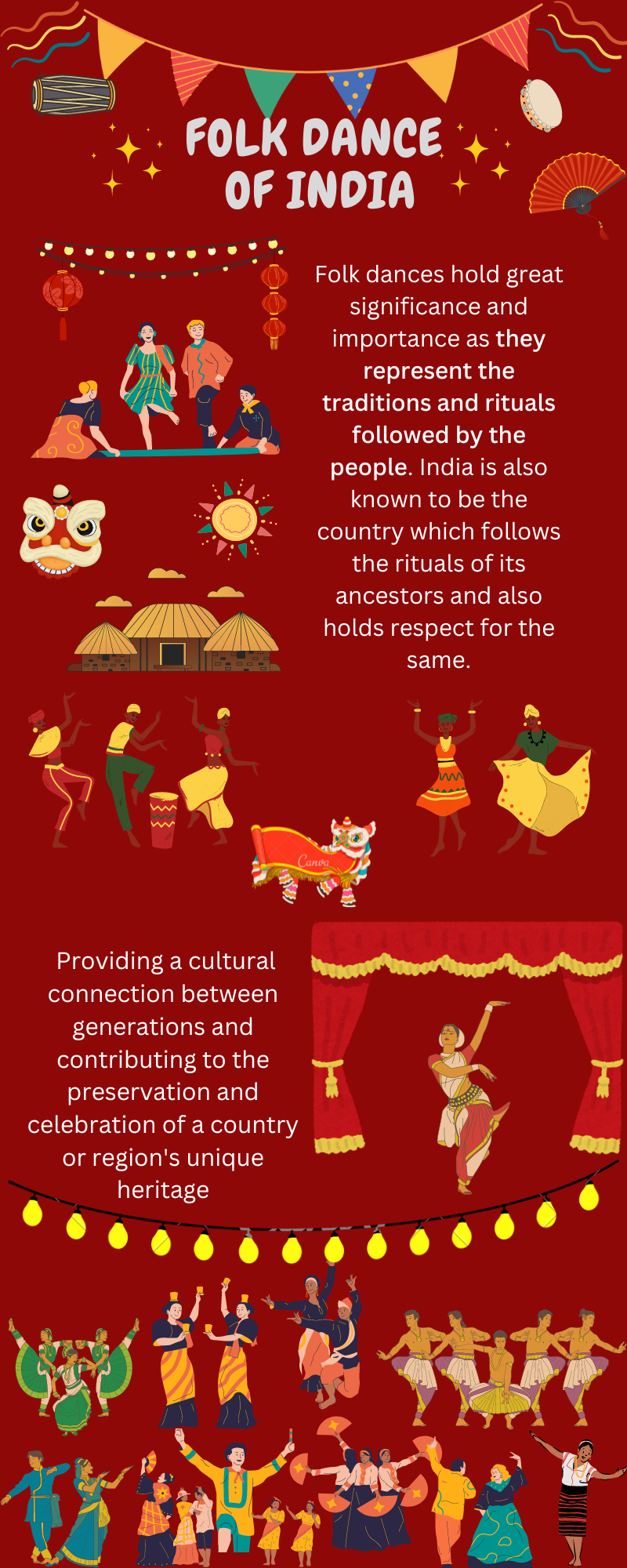
Explain how India’s folk dances represent the diversity of the country. In what ways do various dance styles serve as a cultural archive for particular societies?
-
This answer was edited.
Introduction: A folk dance is a dance developed by people that reflect the life of the people of a certain country or region. Not all ethnic dances are folk dances. It is a reflection of the culture and history of the people who perform it. They serve not just as art forms but as cultural repositoriRead more
Introduction:
A folk dance is a dance developed by people that reflect the life of the people of a certain country or region. Not all ethnic dances are folk dances. It is a reflection of the culture and history of the people who perform it. They serve not just as art forms but as cultural repositories for specific communities.Example: Kuchipudi(Andra Pradesh) , Yakshgan,Kunitha,Karga (Karnataka),Mohiniattam(Kerala) ,etc.Body:Regional Diversity Reflected in Folk Dance Forms of India in the following ways:- Garba (Gujarat): Garba is an essential part of Gujarati cultural life, especially during the Navratri festival. This dance form encapsulates the essence of Gujarat, from its agrarian society to its deeply-rooted spirituality.
- Bhangra (Punjab): Bhangra has its roots in the agricultural community of Punjab and is traditionally performed during Baisakhi, a festival marking the new harvest. It captures the vigorous spirit and industrious nature of the Punjabi people.
- Ghoomar (Rajasthan): This graceful dance form, mostly performed by Rajasthani women during special occasions, is deeply entrenched in the state’s royal history and traditions.
- Chhau (Jharkhand, West Bengal, and Odisha): This tribal martial dance integrates elements of combat into its choreography and often narrates stories of valor. Chhau mirrors the martial traditions and local folklore of these regions.
- Dandiya Raas (Gujarat): Dandiya Raas involves a pair of decorated sticks and is performed during the festival of Navratri. It reflects the state’s communal harmony and vibrant festive culture.
Ways in which these Dance forms act as a Cultural Repository for Specific Communities:
- Marital Rites: Lavani isn’t just entertainment; it’s part of the cultural rites during weddings in Maharashtra. By narrating tales of love and valour , it complements the marital ceremony, capturing the essence of conjugal life and cultural expectations.
- Gender Roles: Ghoomar serves as an epitome of traditional gender roles in Rajasthani society. It’s not just women who dance; it’s often the new brides being welcomed into households or women bidding farewell to their brothers, celebrating women’s roles in the community.
- Social Cohesion : Garba isn’t merely a dance, it’s a social institution. Conducted during Navratri, Garba nights draw communities together. The circular formation of dancers is symbolic, representing a community that stands united.
- Youth Engagement: Dandiya Raas acts as a cultural bridge. While older generations see it as a traditional expression, the younger generation engages with it as a form of social interaction. This ensures that cultural traditions are not just preserved but also adapted and passed down.
- Civic Awareness: Chhau transcends the boundaries of mere performance art by often tackling social issues through its narrative. Whether it is educating about gender equality or highlighting issues of social justice, it becomes a medium for communal education and activism.
- Seasonal Changes: Dances like Bihu in Assam are not just folk expressions; they serve to celebrate the seasonal cycles, crucial to agrarian societies. It marks the Assamese New Year heralding the onset of the harvest season, underscoring the connect with nature.
- Agricultural Celebrations: Bhangra isn’t just a festive dance; it’s a celebration of agricultural success. Performed during Baisakhi, it reinforces the community’s agricultural roots, bringing farmers and families together to celebrate their hard work and subsequent harvest.
Conclusion :
Dance that has developed without a choreographer and that reflects the traditional life of the common people of a country or region. They are the heartbeat of India’s cultural heritage. By embracing and celebrating these traditions, we keep our history alive.
See less

Carving the Map: Creating New States in India The Indian Constitution outlines a process for creating new states and reorganizing existing state boundaries. Let's delve into these provisions and compare them to territorial integration and devolution processes in other multinational states. India's PRead more
Carving the Map: Creating New States in India
The Indian Constitution outlines a process for creating new states and reorganizing existing state boundaries. Let’s delve into these provisions and compare them to territorial integration and devolution processes in other multinational states.
India’s Provisions:
Power by Parliament: Article 2 and 3 of the Constitution grant exclusive power to the Parliament to create new states or alter existing ones. This includes:
Separation of territory from existing states
Uniting two or more states or parts of states
Uniting territories with existing states
Presidential Recommendation: Bills for creating new states require a recommendation from the President.
State Legislature’s Input: The concerned state legislature must have the opportunity to express its views before Parliament makes a final decision.
Comparison with Other States:
Spain: A more decentralized approach. Regions in Spain enjoy considerable autonomy and can negotiate greater self-governance through processes outlined in the Spanish Constitution. This fosters a sense of regional identity while maintaining national unity.
United Kingdom: Devolution has granted Scotland, Wales, and Northern Ireland greater control over their internal affairs. However, unlike Spain, the UK Parliament retains ultimate authority over territorial changes.
Key Differences:
Centralized vs. Decentralized: India’s process is centralized, with Parliament holding the sole power for state creation and boundary changes. Spain and the UK allow for more regional control.
Negotiation vs. Imposition: Devolution in Spain and the UK allows for negotiation between regional governments and central authorities. India’s process can appear more top-down, with limited negotiation opportunities.
Ethnic and Cultural Considerations: While India considers regional aspirations, its process doesn’t explicitly address ethnic or cultural factors that might drive demands for new states. Spain and the UK have structures that accommodate regional identities to a greater extent.
Debates and Considerations:
Balancing National Unity with Regional Aspirations: Finding the right balance between accommodating regional aspirations for greater autonomy and maintaining national unity is a constant challenge.
Fair Representation and Development: Concerns exist that the current process might favor larger states and underrepresent smaller regions in terms of resources and development.
Conclusion:
India’s process for creating new states offers flexibility but is centralized. While it ensures national integrity, it may not fully address regional concerns. Spain and the UK’s models offer greater regional autonomy but might require adjustments to address potential fragmentation. Ultimately, each country strives to find a balance between national unity, regional aspirations, and fair representation within its specific historical and political context.
See less