


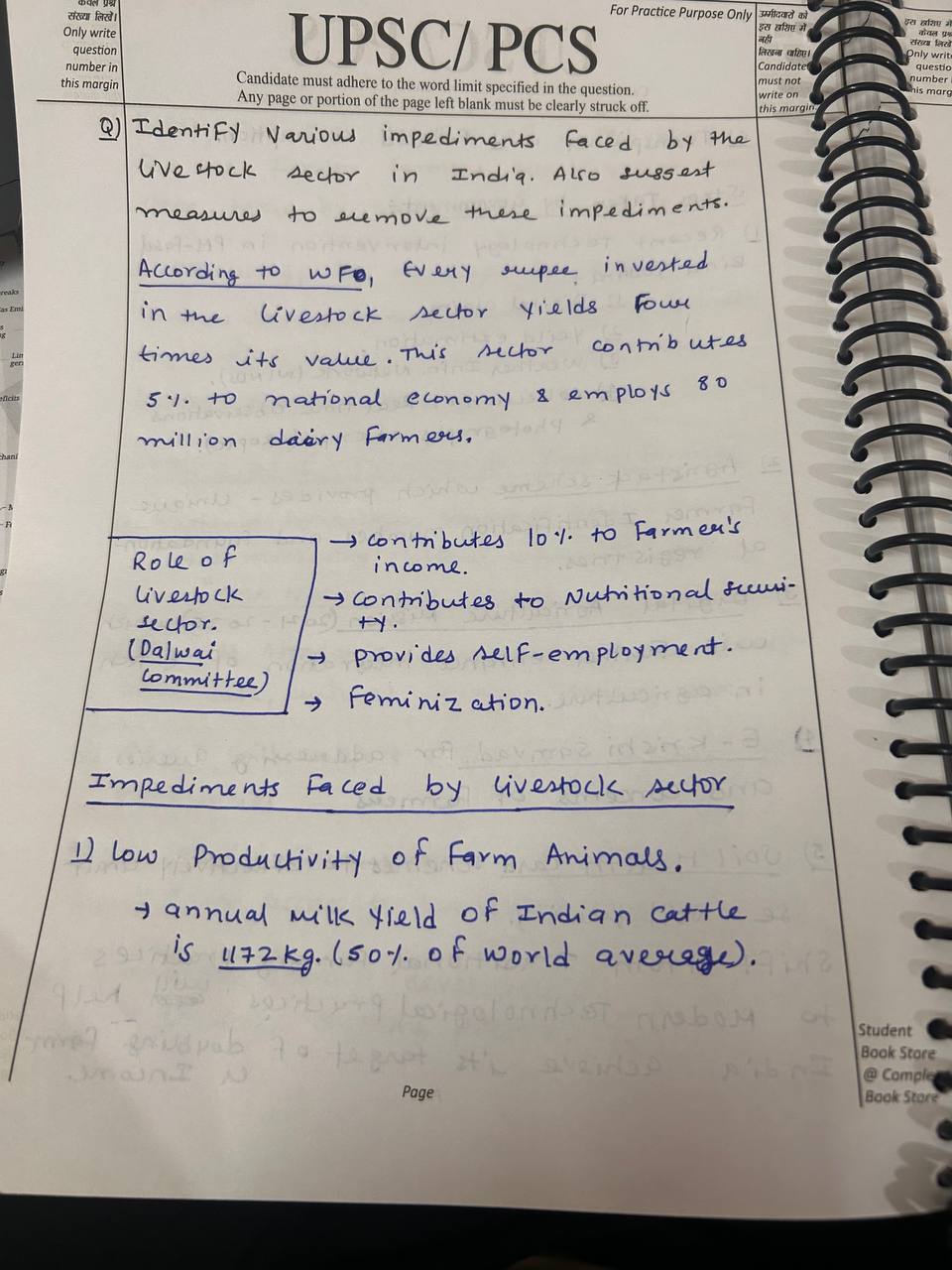
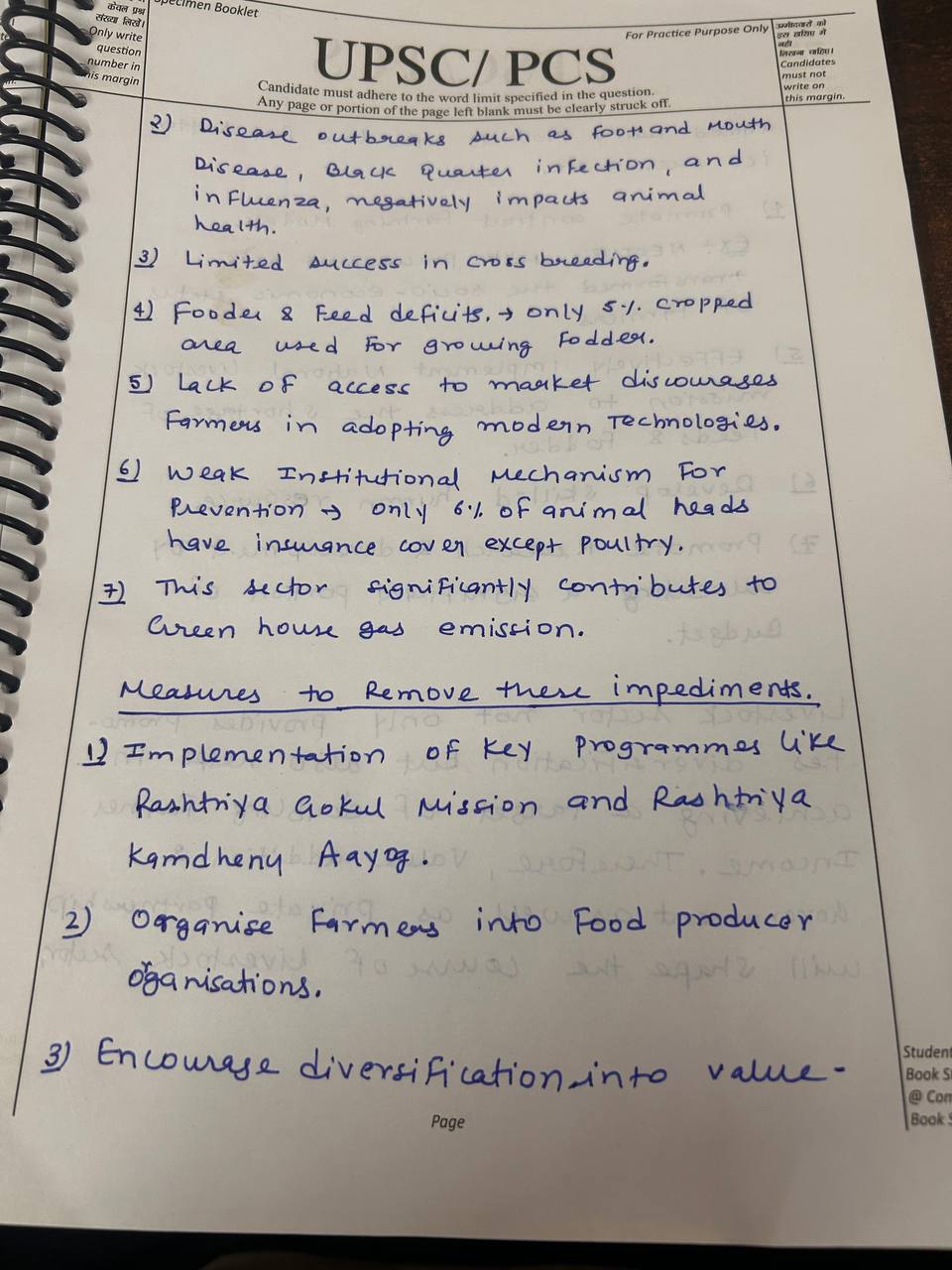
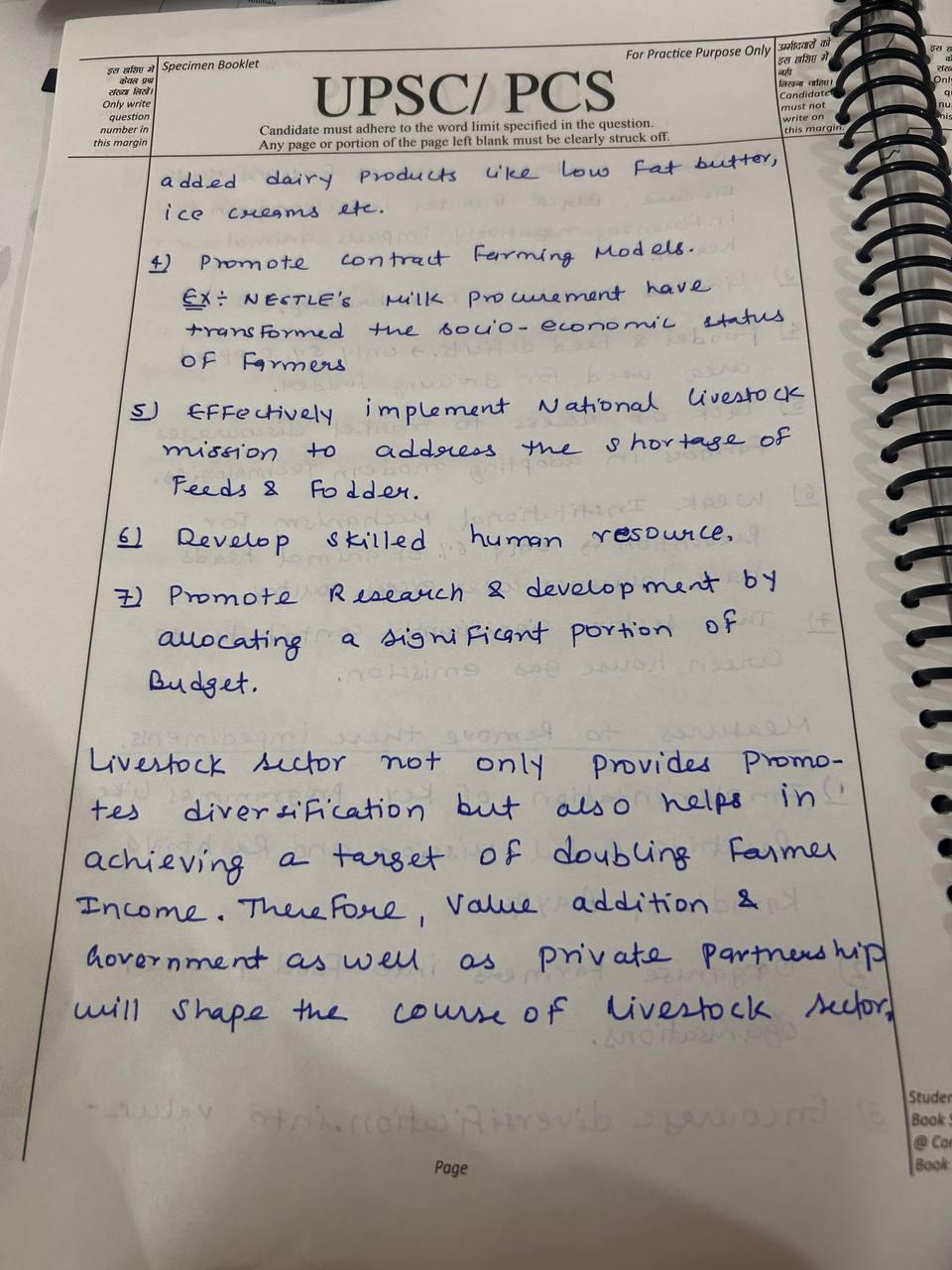
List the several obstacles that India’s cattle industry faces. Additionally, recommend actions to get rid of these obstacles.(Answer in 200 words)


Marine heatwaves happen when sea temperatures are warmer than normal for an extended period. MHWs have been observed in all major ocean basins over the recent decade. These marine heat waves have caused devastating impacts on marine ecosystems. Substantial progress in understanding past and future cRead more
Marine heatwaves happen when sea temperatures are warmer than normal for an extended period. MHWs have been observed in all major ocean basins over the recent decade. These marine heat waves have caused devastating impacts on marine ecosystems. Substantial progress in understanding past and future changes in marine heat waves and their risks for marine ecosystems is needed to predict how marine systems, and the goods and services they provide, will evolve in the future.
What causes marine heatwaves?
- The most common cause of marine heat waves are ocean currents which can build up areas of warm water and air-sea heat flux, or warming through the ocean surface from the atmosphere.
- Normally, sunlight passes through the atmosphere and heats the surface of the ocean. If there are weak winds this warm water doesn’t mix with the cooler waters below. It sits on top and continues to heat leading to marine heat waves.
- A new report from the United Nations says surface temperatures for the world’s oceans are rising at an alarming pace, causing marine “heatwaves” and accelerating sea levels that threaten fishing economies.
Ecological impacts of rising marine heatwaves:
- Marine heat waves affect ecosystem structure, by supporting certain species and suppressing others. For example, after the 2011 marine heatwave in Western Australia the fish communities had a much more “tropical” nature than previously and switched from kelp forests to seaweed turfs.
- Marine heatwaves can change the habitat ranges of certain species, such as the spiny sea urchin off southeastern Australia which has been expanding southward into Tasmania at the expense of kelp forests which it feeds upon. Rogue animals can also find their way well outside their normal range, following the warm waters of a marine heatwave.
- Marine heatwaves can cause economic losses through impacts on fisheries and aquaculture.
- Biodiversity can be drastically affected by marine heatwaves. In 2016, marine heatwaves across northern Australia led to severe bleaching of the Great Barrier Reef.
- There are severe impacts on marine ecosystems from marine heat waves including from the base of the food chain plankton, which everything in the ocean relies on, to higher trophic levels.
- There is a link between marine heat waves and harmful algal blooms. There was also some evidence of marine mammals that were eating contaminated fish and other things were suffering from the poisoning.


See less