


In India, the pre-monsoon season is marked by numerous thunderstorms and lightning incidents. Describe the formation of thunderstorms in this setting and talk about the effects of pre-monsoonal rainfall in different parts of India.


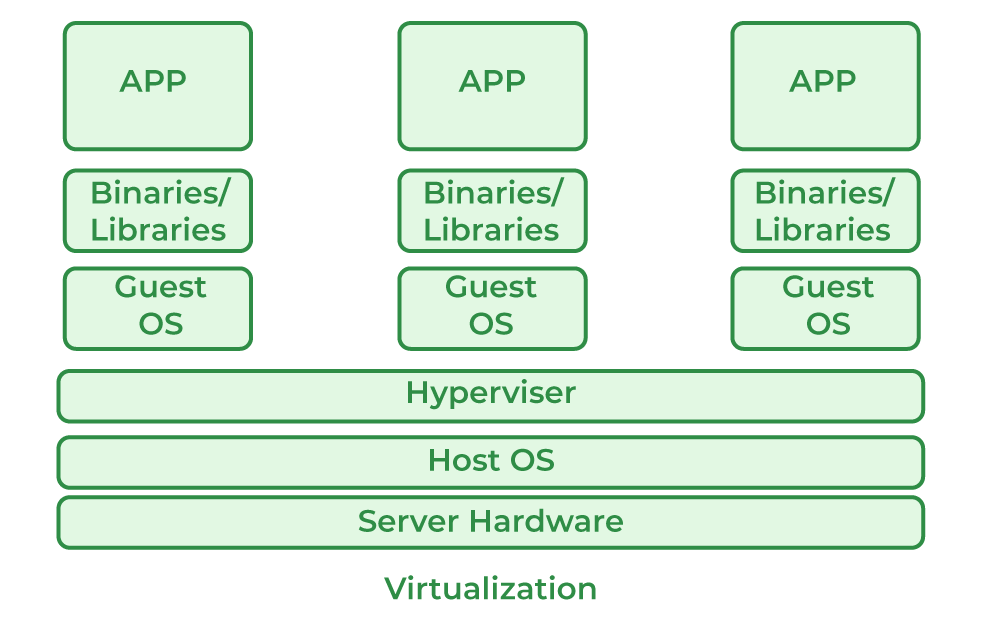
Virtualization is a technology that creates virtual instances of physical hardware resources, such as servers, storage devices, and networks. It allows multiple virtual machines (VMs) to run on a single physical machine, each with its own operating system and applications. This is achieved through aRead more
Virtualization is a technology that creates virtual instances of physical hardware resources, such as servers, storage devices, and networks. It allows multiple virtual machines (VMs) to run on a single physical machine, each with its own operating system and applications. This is achieved through a software layer called a hypervisor, which manages and allocates resources to each VM.
- Key Concepts:
- Hypervisor: Software that enables multiple VMs to run on a single physical machine. Types include Type 1 (bare-metal) and Type 2 (hosted).
- Virtual Machines (VMs): Independent instances that run their own operating systems and applications, sharing the underlying physical hardware.
- Benefits in Cloud Computing:
Top 3 Benefits:
- Resource Efficiency: Virtualization maximizes the use of physical hardware by allowing multiple VMs to run on a single server, reducing the need for additional hardware.
- Cost Savings: Reduced hardware requirements lead to lower capital and operational expenses, including energy consumption and maintenance costs.
- Scalability: Virtualization allows for easy scaling of resources. New VMs can be quickly created to handle increased demand, and redundant VMs can be removed when demand decreases.
Other Benefits:
Isolation and Security, Enhanced Disaster Recovery, Business Continuity and Flexibility etc.
Virtualization is a cornerstone of cloud computing, enabling efficient, flexible, and cost-effective resource management.
See less


A common feature of the weather during the pre-monsoon season, i.e., March, April and May, over the Indian region is the outburst of severe local convective storms which often turn into thunderstorm and lightning. The intense convection activity due to strong heating of land mass over Chhotanagpur pRead more
A common feature of the weather during the pre-monsoon season, i.e., March, April and May, over the Indian region is the outburst of severe local convective storms which often turn into thunderstorm and lightning. The intense convection activity due to strong heating of land mass over Chhotanagpur plateau and movements towards southeast and mixing with warm air mass triggers the Nor Westers to develop which is locally named as Kal-Baisakhi (Bengal region) and Bardoli Cheerha (Assam). Apart from this, Mango Showers or Blossom Showers in Kerala and coastal Karnataka regions are some famous local storms of pre-monsoon season in India. Thunderstorms are characterized by towering cloud masses (mostly Cumulonimbus) with sudden electrical discharges manifested by a lightning and thunder enjoined with vigorous circulations and thus has the potential to spawn severe weather.
Formation of thunderstorms evolves in three stages
1.Cumulus Stage
2. Mature Stage
3.Dissipating Stage
Impact of pre-monsoonal rainfall
Pre-Monsoon storms mark the beginning of agricultural activities as it helps in ploughing and getting the field ready for the season. However, these storms are also associated with hailstorm and high speed winds of short duration, which are harmful for crops like mango and other standing crops.
See less